 Save
Save My first real encounter with tom yum happened on a humid Bangkok evening, but it was years later, standing in my own kitchen on a rainy Tuesday, that I realized I could fold this vibrant soup into something entirely my own. Watching steam rise from a pot filled with lemongrass and lime while shaping wontons on the counter felt like bridging two kitchens, two traditions, one bowl. There's something magical about the moment when the spicy broth meets the delicate dumpling, when that first spoonful hits your tongue and you taste both elegance and comfort at once. This soup became my answer to wanting something complex but doable, something that tastes like you've been cooking all day when really it takes less than an hour. It's the kind of dish that makes people lean over the bowl and just breathe in before they taste it.
I made this for my neighbor Marcus one winter evening when he mentioned offhandedly that he missed the tom yum from the Thai place near his old apartment. He sat at my counter while I folded wontons, asking questions about why the broth smelled so different from anything he'd encountered, and by the time the first bowl was ready, he was already leaning in with a spoon. That's when I understood this soup works because it asks something of you but rewards that attention with flavors that feel both familiar and surprising. It's become the dish I make when I want someone to feel truly seen at my table.
Ingredients
- Ground pork (200g): Choose something with a bit of fat, not lean, so your wontons stay tender and flavorful when they cook; it binds beautifully with the sesame oil.
- Soy sauce: Use a good quality one here since it seasons the filling directly; it carries umami straight into those little pockets.
- Sesame oil (1 tsp): This adds a whisper of nuttiness that makes the filling taste richer than it is.
- Fresh ginger and garlic: Grate and mince these yourself; jarred versions taste flat against the bright broth.
- Spring onion: It adds a gentle sharpness that keeps the filling from feeling heavy.
- Chicken stock (1.5 liters): Low-sodium is essential because you're adding fish sauce and soy later; you need room to build flavor without oversalting.
- Lemongrass stalks: Smash these hard before they go in; you want to wake up those oils and release the citrus notes that define tom yum.
- Kaffir lime leaves: These are non-negotiable if you can find them; they taste like bright, floral lime in a way regular limes can't capture.
- Galangal: It's spicier and more peppery than ginger, creating depth; if you truly can't find it, fresh ginger works but use less.
- Red chilies: Fresh ones give you control; start with two and add more once you taste the broth.
- Mushrooms: Shiitake bring earthiness, button mushrooms stay tender; slice them thick enough that they don't disappear into the broth.
- Tomatoes: Quarter them rather than dice so they break down slowly and add body to the broth without clouding it.
- Fish sauce: This is the anchor, the thing that makes you pause and wonder why it smells funky in the bottle but magical in the pot.
- Lime juice: Use fresh squeezed, added at the very end so it stays bright and doesn't lose its tang.
- Baby bok choy: It wilts in seconds and adds a tender green note that balances the heat.
- Shrimp (100g, optional): They cook in the broth and absorb all those flavors; add them at the same time as the wontons.
- Wonton wrappers: Fresh ones are worth hunting for if your market has them, but frozen work perfectly fine too.
Tired of Takeout? 🥡
Get 10 meals you can make faster than delivery arrives. Seriously.
One email. No spam. Unsubscribe anytime.
Instructions
- Make your filling and fold with intention:
- Combine the pork, soy sauce, sesame oil, ginger, garlic, spring onion, and white pepper in a bowl and mix until everything is evenly distributed and the mixture holds together. Place about a teaspoon of filling in the center of each wrapper, wet the edges with water using your finger, and fold into a triangle or envelope shape, pressing firmly so the seal holds during cooking.
- Build the broth foundation:
- Bring your stock to a gentle simmer in a large pot, then add the smashed lemongrass, torn kaffir lime leaves, galangal slices, and sliced chilies. Let this infuse for about ten minutes; your kitchen should smell incredible, almost perfumed with citrus and spice.
- Layer in the vegetables:
- Add the mushrooms and tomato quarters to the simmering broth and let them cook for five minutes until softened. Then fish out the lemongrass stalks, galangal slices, and kaffir lime leaves with a slotted spoon; you've extracted their essence and now you want to remove the woody bits.
- Season and taste like you mean it:
- Stir in the fish sauce, lime juice, and sugar, then taste immediately. You might want more lime for brightness or a bit more fish sauce for depth; this is your moment to make it perfect for your own palate.
- Cook the wontons gently:
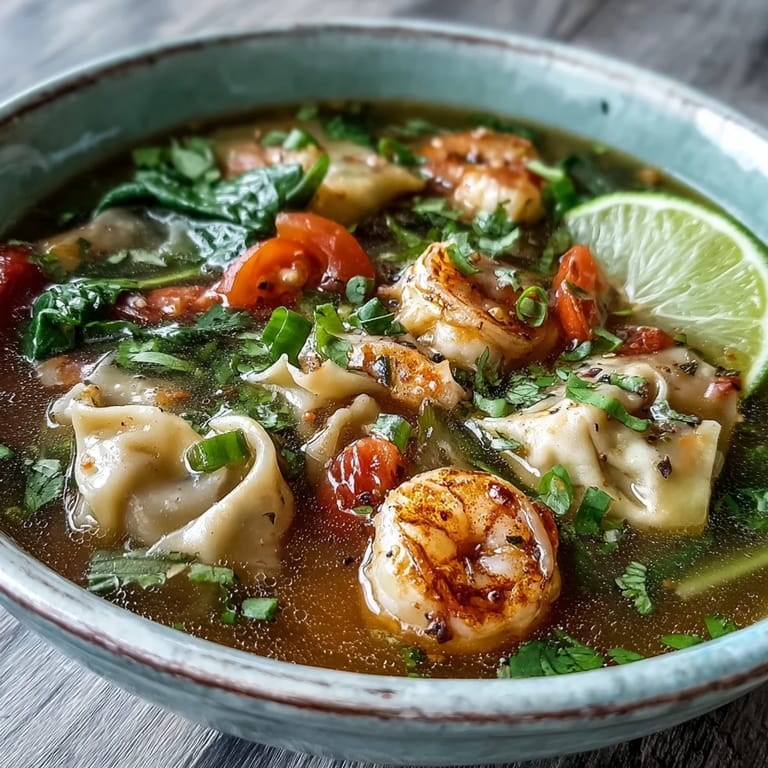
- Add your wontons and shrimp if using to the simmering broth and cook for four to five minutes until the wontons float and the shrimp turn pink. You're looking for a gentle bubble, not a rolling boil, so they don't burst.
- Wilt the greens at the last moment:
- Add your bok choy or spinach and let it sit in the heat for about one minute, just long enough to soften but not long enough to lose its color and vitality.
- Serve with ceremony:
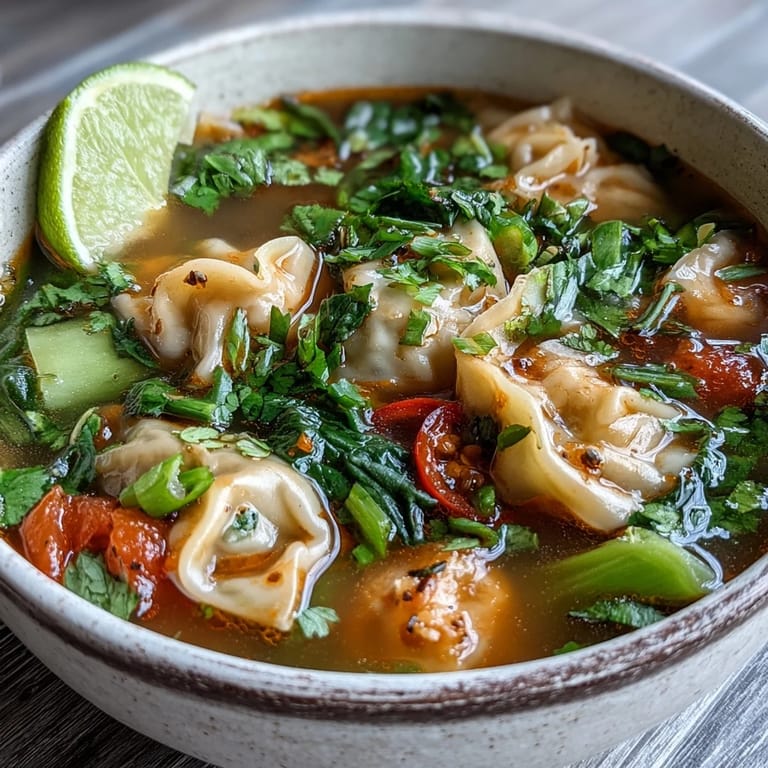
- Ladle the soup into bowls, making sure each person gets wontons and broth in equal measure. Scatter coriander leaves and sliced spring onions on top, add a lime wedge for squeezing, and drizzle with chili oil if you want heat that lingers.
 Pin it
 The first time someone closed their eyes while eating this soup and said, 'This tastes like a place I've been,' I understood why I keep making it. Food has this power to transport, and tom yum with wontons seems to unlock something in people, a memory they didn't know they were carrying. It's become less about the recipe and more about what happens when you give someone a moment of care served in a bowl.
The Art of the Wonton Fold
There's no single correct way to fold a wonton, and this knowledge should feel liberating. Some people make neat little triangles, others prefer envelope shapes, and honestly both work beautifully once they hit the broth. The key is making sure your seal is tight enough that the filling stays inside, which means pressing firmly around the edges with slightly damp fingertips. I used to rush through this part until I realized folding wontons is the meditative pause the recipe needs, a moment to slow down before you taste everything come together.
Understanding Tom Yum Balance
Tom yum is a study in balance, a soup that asks you to think about heat, tang, and umami as a conversation rather than competing flavors. The lime should spark brightness, the fish sauce should provide depth, the chilies should build heat gradually rather than assault your mouth immediately. When you taste the broth before adding the wontons, you're really asking yourself what's missing, what needs more voice, and what's already singing. This is why I always leave the lime juice for the very end; it's your final word, your chance to say whether the soup needs one more bright note before it's truly ready.
Serving and Storage Wisdom
This soup tastes best eaten immediately, when the wontons are still tender and the broth is steaming, but life happens and sometimes you need to reheat it. The broth keeps beautifully in the refrigerator for three days, though I usually store the wontons separately so they don't soften, and I fresh cook them when I'm ready to eat. If you're reheating, bring the broth to a gentle simmer and cook fresh wontons in it rather than warming everything together.
- Taste before serving: Broth flavors can flatten overnight in the fridge; a squeeze of fresh lime juice wakes everything up again.
- Cook wontons to order if possible: Fresh wontons in hot broth taste incomparably better than wontons that have been sitting in liquid.
- Keep fish sauce and lime juice within reach at the table: Let people adjust their own bowls to their heat and tang preferences.
 Pin it
 This soup proves that fusion cooking isn't about being confused about where you belong; it's about honoring where flavors come from while making something entirely yours. Serve it with jasmine rice if you want something more substantial, or serve it alone if you want the broth and wontons to be the whole story.
Frequently Asked Questions
- → Can I make wontons ahead of time?
Yes, assemble wontons up to 24 hours in advance. Arrange them in a single layer on a baking sheet dusted with cornstarch, cover tightly with plastic wrap, and refrigerate. Cook directly from the refrigerator.
- → What makes tom yum broth distinctive?
The signature comes from the holy trinity of Thai aromatics: lemongrass for citrus brightness, galangal for piney warmth, and kaffir lime leaves for floral notes. Fresh lime juice provides the characteristic tangy finish.
- → Is this soup freezer-friendly?
Freeze the broth separately for up to 3 months. Wontons freeze well uncooked—arrange on a tray until firm, then transfer to a freezer bag. Cook frozen wontons directly in simmering broth, adding 2-3 minutes to cooking time.
- → How can I adjust the spice level?
Start with fewer chilies or remove seeds to reduce heat. Add fresh chili slices at the end as a garnish for those who prefer extra spice. The broth's heat can always be balanced with additional lime juice or a touch more sugar.
- → Can I use store-bought wontons?
Absolutely. Frozen pork or shrimp wontons from Asian markets work beautifully. Skip step 1 and add frozen wontons directly to the simmering broth in step 5, cooking for 5-6 minutes until they float and are heated through.
- → What's the best way to serve?
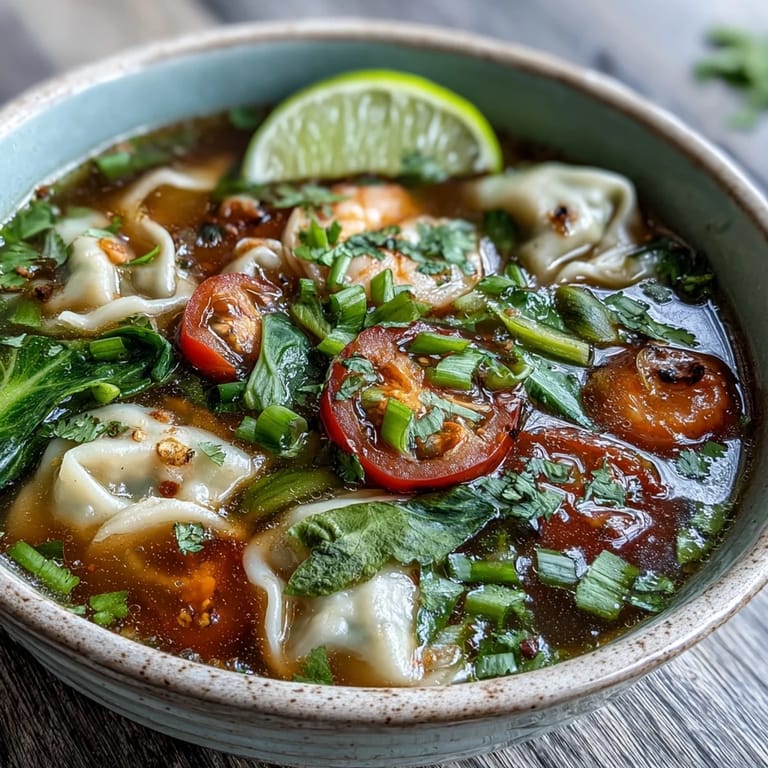
Ladle piping hot into deep bowls, ensuring each portion gets 4-5 wontons, plenty of broth, and vegetables. Pass lime wedges, extra chili oil, and fresh herbs at the table so diners can customize their bowls to taste.