 Save
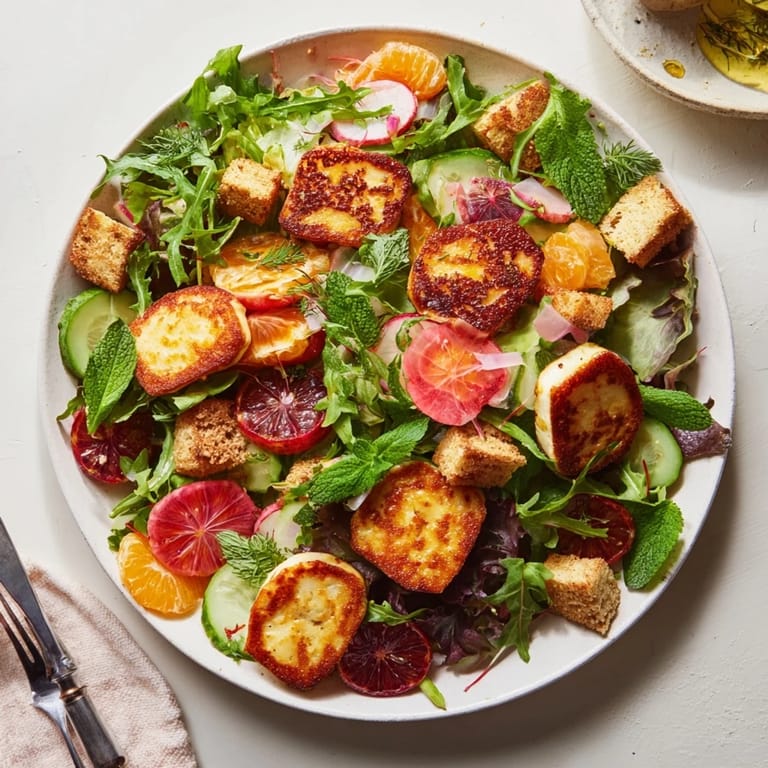
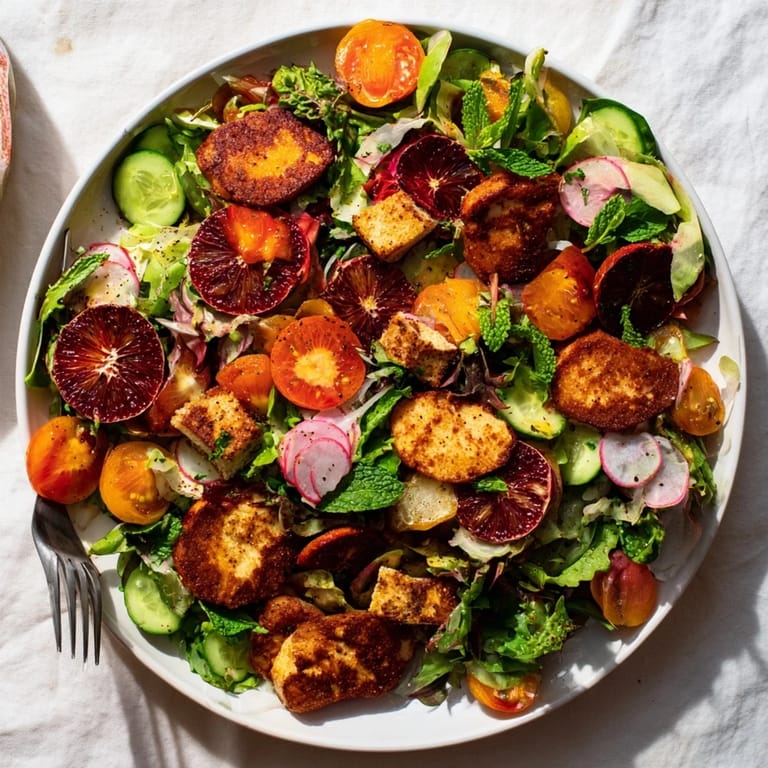
Save The first time blood oranges appeared in my market basket, I had no plans beyond admiring their ruby-stained flesh. Then I remembered that block of halloumi sitting in my fridge, and suddenly I was standing at my stove, watching cheese turn golden while citrus perfumed the entire kitchen. That impulsive lunch became the salad I now make whenever winter feels endless and I need something that screams brightness.
My friend Sarah stopped by mid-prep once, suspicious of the cheese-in-salad concept, and proceeded to eat three servings straight from the bowl. Now she texts me every blood orange season asking if Im making it again. Thats the kind of reaction that turns a random Tuesday lunch into a permanent repertoire staple.
Ingredients
- 200 g halloumi cheese, sliced: Halloumi squeaks when you eat it, and frying it creates this incredible golden crust while keeping the inside tender and salty
- 2 blood oranges, peeled and sliced into rounds: Their stunning crimson color and subtle berry notes make regular oranges feel boring by comparison
- 200 g mixed salad greens: I love a mix of peppery arugula, fresh mint, and crisp romaine for layers of flavor and texture
- 1/2 cucumber, sliced: Provides cool crunch that balances the warm fried cheese perfectly
- 200 g cherry tomatoes, halved: Little bursts of sweetness and juice throughout every bite
- 4 radishes, thinly sliced: Adds a peppery bite and pretty pink color contrast
- 1 small red onion, thinly sliced: Sharp and aromatic, it cuts through the rich cheese and ties all the flavors together
- 2 thick slices sourdough bread, cut into cubes: Day-old sourdough transforms into the most satisfying croutons with a great chew
- 3 tbsp extra virgin olive oil: The foundation of your dressing, so use the good stuff youd drizzle on fresh bread
- 1 tbsp fresh lemon juice: Bright acid that wakes up all the vegetables and pairs beautifully with the blood orange
- 1 tsp ground sumac: This tart, fruity spice is what makes the dressing taste authentically Middle Eastern
Tired of Takeout? 🥡
Get 10 meals you can make faster than delivery arrives. Seriously.
One email. No spam. Unsubscribe anytime.
Instructions
- Crisp your sourdough:
- Preheat oven to 180°C (350°F) and toss your bread cubes with olive oil and salt until evenly coated. Spread on a baking sheet and bake 8–10 minutes until golden, turning once halfway through.
- Whisk the dressing:
- In a small bowl, combine olive oil, lemon juice, red wine vinegar, sumac, pomegranate molasses, salt, and pepper. Whisk until emulsified and set aside to let flavors meld.
- Fry the halloumi:
- Heat olive oil in a nonstick skillet over medium heat. Add halloumi slices and fry 1–2 minutes per side until deeply golden. Transfer to a plate and resist snacking while you finish assembling.
- Build your salad base:
- In a large bowl, combine your greens, cucumber, tomatoes, radishes, and red onion. Toss gently to distribute everything evenly.
- Add the stars:
- Arrange blood orange slices and warm halloumi on top, then scatter those sourdough croutons across the salad.
- Dress and serve:
- Drizzle with the sumac vinaigrette and toss everything together gently. Serve immediately while the halloumi is still warm and the croutons are at their crispest.
 Pin it
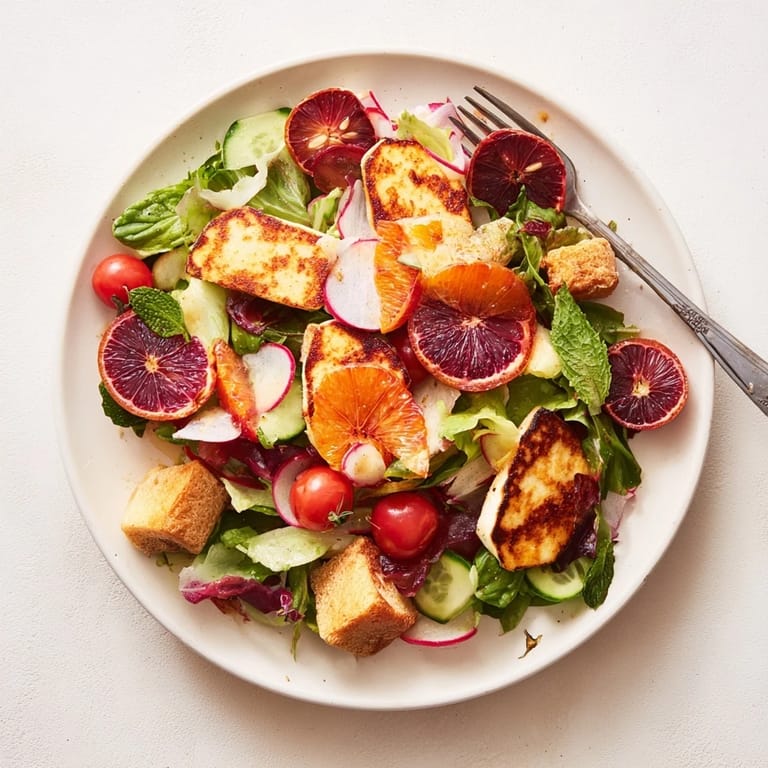
 After making this for my sisters birthday lunch, she declared it wasnt just a salad but a main event. Watched three people who usually complain about salad go back for seconds, picking through the bowl for the perfect ratio of warm cheese to crisp crouton to sweet citrus.
Timing Is Everything
The magic happens when you serve this while the halloumi still holds its heat and the croutons havent had time to soften from the dressing. I prep everything else ahead, but the frying and final toss happen right before plates hit the table.
The Sumac Secret
Sumac changed my salad game completely. Its tart and slightly fruity, like lemon met a berry in spice form. If you cant find it, extra lemon juice works, but youll miss that distinctive Middle Eastern brightness that makes this recipe sing.
Make It Your Own
Sometimes I toss in pitted Kalamata olives or toasted pine nuts when I want to add more substance. A handful of fresh pomegranate seeds takes it over the top during winter months when theyre in season.
- Let the dressing sit for 10 minutes before using so the sumac really blooms
- Use a vegetable peeler for paper-thin onion slices that wont overwhelm
- Pat your halloumi dry with paper towels before frying for less splatter
 Pin it
 This salad is what happens when winter citrus meets summer energy, and somehow it all makes perfect sense on the plate.
Frequently Asked Questions
- → Can I prepare halloumi ahead of time?
Halloumi is best served freshly fried while warm and golden. You can slice the cheese and prepare the dressing and vegetables in advance, then fry the halloumi just before serving to maintain its crispy exterior and soft interior.
- → What makes a good substitute for blood oranges?
Regular navel oranges work beautifully if blood oranges aren't in season. You can also try cara cara oranges for their pink hue, or even grapefruit segments for a more tart, tangy twist that pairs well with the sumac dressing.
- → How do I store leftover fattoush?
Store the undressed salad components separately in airtight containers in the refrigerator for up to 2 days. Keep the croutons in a sealed bag at room temperature to maintain their crunch. Halloumi can be reheated in a skillet before assembling leftovers.
- → Can I make this gluten-free?
Simply substitute regular sourdough bread with your favorite gluten-free bread cubes. The preparation method remains the same—toss with olive oil and bake until golden crisp. Most other ingredients are naturally gluten-free.
- → What does sumac taste like?
Sumac has a tart, lemony flavor with subtle earthy notes. It's a staple spice in Middle Eastern cuisine that adds a beautiful reddish-purple color and bright acidity to dishes. In this fattoush, it perfectly balances the rich halloumi and sweet oranges.