 Save
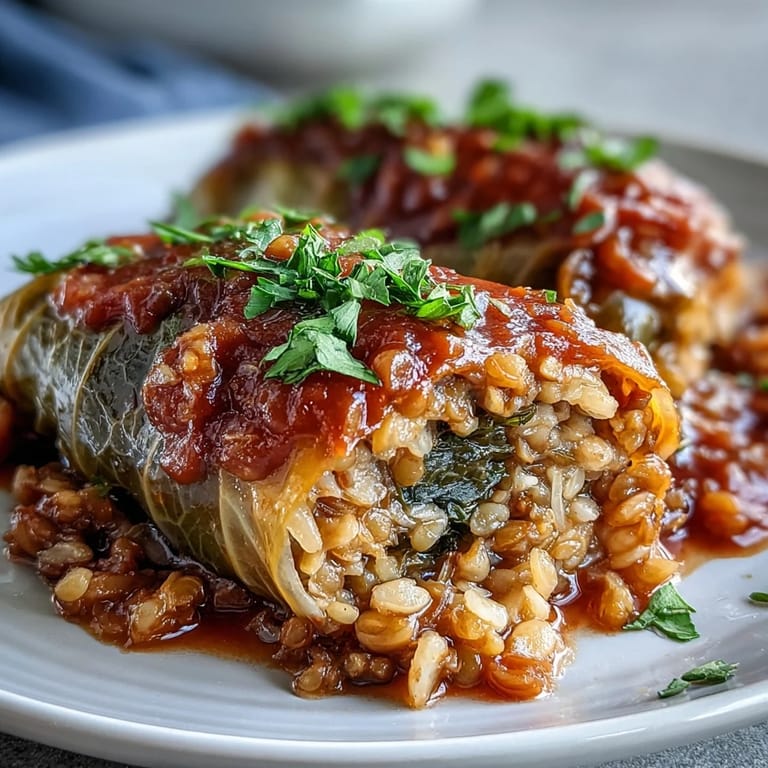
Save My neighbor brought over a platter of stuffed cabbage one rainy Sunday, and I couldn't stop thinking about how something so humble could taste so rich and satisfying. When she mentioned it was completely plant-based, I was shocked. A week later, I was peeling cabbage leaves in my own kitchen, determined to recreate that cozy, soul-warming experience. The smell of tomatoes bubbling with garlic filled my apartment, and I knew I'd found something special.
I made these for a potluck once, and my friend's grandmother—who grew up making traditional stuffed cabbage—asked for the recipe. She couldn't believe there was no meat inside. That moment taught me that good food transcends ingredients, it's all about the care you put into it. Now I make a double batch every time because they disappear faster than I expect.
Ingredients
- Green cabbage: Choose a head that feels heavy and firm, the outer leaves should peel away easily once blanched, and don't worry if a few tear, you'll have extras.
- Brown rice: I cook mine with a pinch of salt and let it cool completely so it doesn't turn mushy in the filling.
- Green or brown lentils: These hold their shape beautifully and add a nutty, earthy flavor that balances the sweetness of the tomatoes.
- Onion and garlic: The base of almost everything I cook, they bring warmth and depth that makes the whole dish come alive.
- Carrot: Grating it fine helps it blend into the filling and adds a subtle sweetness I didn't expect to love.
- Tomato paste: A little goes a long way, it concentrates the tomato flavor and gives the filling body.
- Smoked paprika: This is my secret weapon, it adds a gentle smokiness that makes people think you cooked this all day.
- Fresh parsley: Brightens everything up and makes the filling taste fresh and vibrant, not flat.
- Crushed tomatoes: I use good quality canned ones because they're consistent and save time without sacrificing flavor.
- Dried oregano: It pairs perfectly with tomatoes and gives the sauce that classic Italian-meets-Eastern-European vibe.
Tired of Takeout? 🥡
Get 10 meals you can make faster than delivery arrives. Seriously.
One email. No spam. Unsubscribe anytime.
Instructions
- Prep the cabbage:
- Boil a big pot of salted water and carefully lower the whole cabbage in, peeling off leaves as they soften, about 2 to 3 minutes each. It's a little awkward at first, but you'll get the hang of it quickly.
- Make the filling:
- Heat olive oil and cook the onion and garlic until they smell sweet and buttery, then stir in the carrot and spices. Combine everything with the rice and lentils in a bowl, taste it, and adjust the salt because this is your chance to get it just right.
- Prepare the sauce:
- Sauté another round of onion and garlic, add the crushed tomatoes and oregano, then let it simmer gently. The sugar is optional, but I add it when my tomatoes taste too sharp.
- Assemble the rolls:
- Lay each leaf flat, trim the thickest part of the stem, then spoon filling at the base and roll it up like a little bundle. Tuck the sides in as you go so nothing spills out.
- Bake:
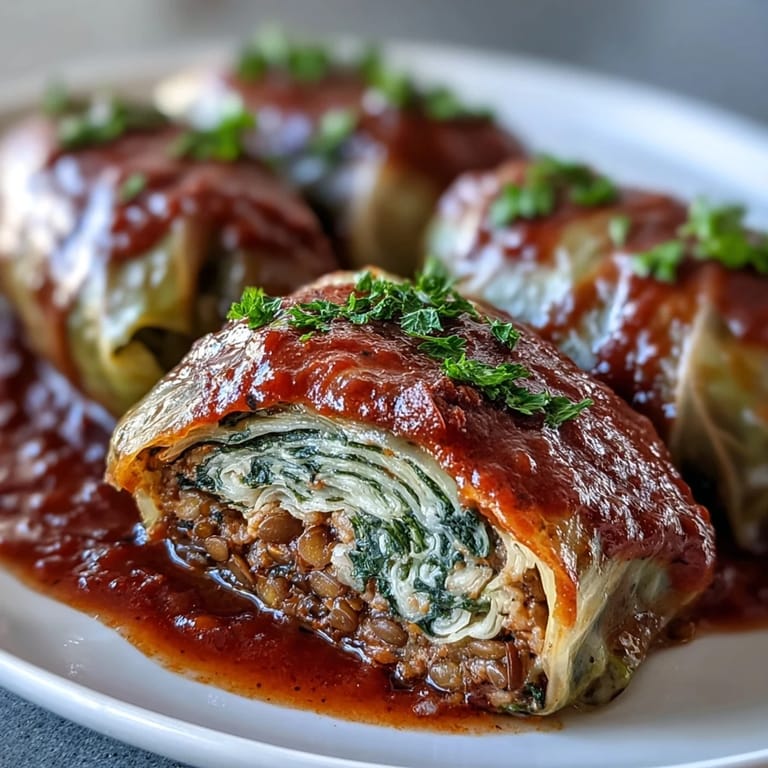
- Pour some sauce on the bottom of your baking dish, nestle the rolls seam-side down, cover with remaining sauce and foil. Bake covered, then uncover at the end so the tops get a little caramelized and bubbly.
 Pin it
 One evening I served these with mashed potatoes and watched my partner go back for thirds. He's not vegan, but he didn't miss the meat once. That's when I realized this dish isn't about replacing anything, it's about celebrating what's already here: grains, vegetables, warmth, and time spent in the kitchen.
Storage and Reheating
These rolls keep beautifully in the fridge for up to four days, and honestly, they taste even better after the flavors have had time to meld. I reheat them in the oven covered with foil, or in the microwave if I'm in a rush. They also freeze really well, just make sure they're fully cooled, wrap them tightly, and they'll last up to three months.
Serving Suggestions
I love serving these with a dollop of vegan sour cream or cashew cream on top, though a sprinkle of fresh dill works too. A side of crusty sourdough bread is perfect for soaking up the sauce, and a simple green salad with lemon vinaigrette balances the richness. If you're feeding a crowd, roasted potatoes or buttery polenta make it feel like a feast.
Customizations and Swaps
You can easily swap the brown rice for quinoa or farro if that's what you have on hand. I've added finely chopped mushrooms to the filling before and loved the extra umami depth it brought. If you like heat, a pinch of red pepper flakes in the sauce does wonders.
- Try using savoy cabbage for a more delicate, tender leaf that's easier to roll.
- Add a handful of chopped walnuts to the filling for a bit of crunch and richness.
- Stir a tablespoon of balsamic vinegar into the sauce for a tangy, complex finish.
 Pin it
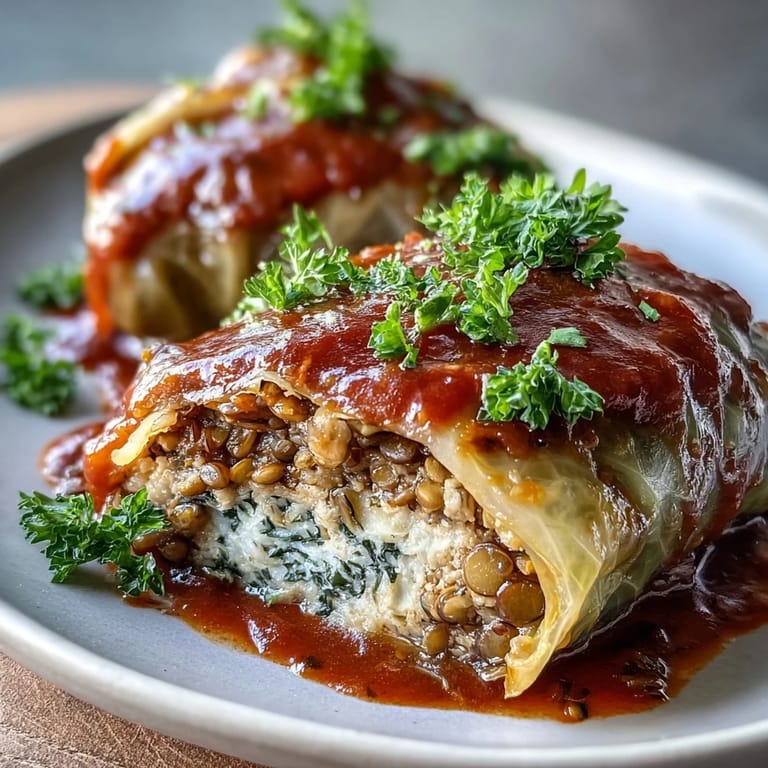
 These rolls have become my go-to when I want to feel grounded and nourished, like I'm taking care of myself and anyone I'm feeding. There's something deeply satisfying about pulling a bubbling dish out of the oven and knowing you made it with your own hands.
Frequently Asked Questions
- → Can I prepare the cabbage rolls ahead of time?
Yes, you can assemble the rolls up to 24 hours in advance. Cover tightly and refrigerate, then bake when ready. Add 10-15 minutes to the baking time if cooking from cold.
- → How do I prevent the cabbage leaves from tearing?
Blanch the leaves just until pliable, about 2-3 minutes. If a leaf tears, overlap two smaller leaves to create one wrapper, or patch tears by overlapping the torn edges when rolling.
- → What can I substitute for lentils in the filling?
You can use cooked chickpeas, black beans, or crumbled firm tofu. Finely chopped mushrooms also work well and add a meaty texture to the filling.
- → Can I freeze leftover cabbage rolls?
Absolutely. Let them cool completely, then freeze in an airtight container for up to 3 months. Reheat in the oven at 350°F until warmed through, about 30-40 minutes from frozen.
- → What type of cabbage works best for this dish?
Green cabbage is traditional and works perfectly. Savoy cabbage is an excellent alternative with its tender, pliable leaves that are easier to roll. Avoid red cabbage as it can bleed color.
- → How do I know when the cabbage rolls are fully cooked?
The rolls are done when the cabbage is very tender and can be easily pierced with a fork, and the sauce is bubbling around the edges. This typically takes about 55-60 minutes total baking time.