 Save
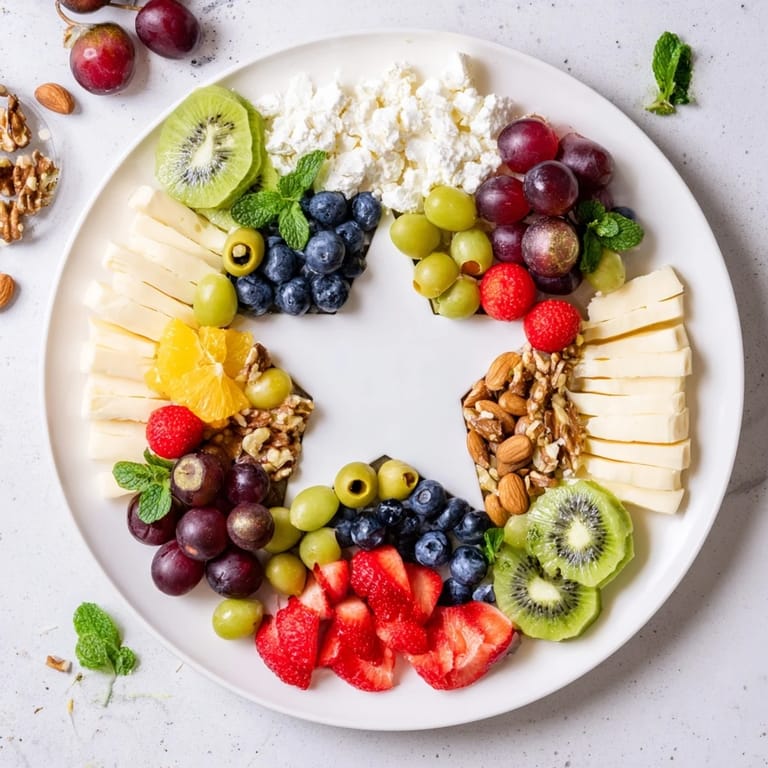
Save I'll never forget the moment I first discovered the magic of negative space on a platter. It was at a gallery opening where a friend served what looked like an ordinary charcuterie board, but as guests approached, they gasped—the empty spaces formed a perfect star, like the artist had carved light itself onto the plate. That evening, watching people pause to admire before eating, I realized food could be art, and art could be delicious. From that moment on, I knew I had to master this puzzle.
I made this platter for my daughter's tenth birthday party, and what started as just another appetizer became the highlight of the afternoon. She watched me arrange everything and whispered, 'Mom, it's like magic'—and honestly, that's when I fell in love with this technique. The kids didn't just eat; they wondered. They noticed. They remembered.
Ingredients
- Brie cheese, sliced (100 g): Creamy and sophisticated, brie creates those luxurious white clusters that frame your negative space beautifully. The soft edges catch light and add elegance—this is your visual anchor
- Manchego cheese, sliced (100 g): This golden Spanish cheese adds warmth and crumbly texture, breaking up the platter's visual rhythm. Its firm slice holds its shape, crucial when precision matters
- Goat cheese, crumbled (100 g): Tangy and bright, goat cheese fills small gaps with rustic charm. Crumble it just before arranging—it's forgiving and photographs beautifully
- Seedless red grapes (1 cup): These are your color jewels. Their perfect spheres roll into corners and create visual flow, plus they're naturally cheerful without overshadowing your design
- Strawberries, halved (1 cup): Ruby red and iconic, strawberries add romantic flair. The cut edge reveals a fresh pink interior that catches eyes
- Kiwi, sliced (1): Green and graphic with tiny seeds, kiwi provides contrast and a pop of unexpected color. The thin slices lay flat and organized
- Blueberries (1/2 cup): Small and dark, blueberries fill micro-gaps and add depth. They're humble but essential for finishing touches
- Thin crackers (12): These are your architectural elements. Their straight edges help define clusters and frame the negative space like a picture's border
- Roasted almonds (1/2 cup): Toasted nuts add earthy texture and warm brown tones. They're substantial enough to anchor ingredient clusters
- Green olives, pitted (1/4 cup): Jewel-like and savory, olives provide visual punctuation. Their irregular shapes break monotony
- Fresh mint leaves: More than garnish, mint brings freshness and movement to the platter's edges, making it feel alive
- Edible flowers (optional): These are your signature flourish—delicate and unexpected, they transform good into unforgettable
Tired of Takeout? 🥡
Get 10 meals you can make faster than delivery arrives. Seriously.
One email. No spam. Unsubscribe anytime.
Instructions
- Envision Your Shape:
- Close your eyes and see it—what story do you want your platter to tell? A star for celebration, a heart for love, initials for intimacy? Sketch it lightly on parchment paper, making sure it fits your platter's dimensions. I like to practice with a pencil first, imagining how guests will discover the shape. Your confidence in the design matters
- Create Your Guide:
- Place the parchment on your serving platter as a subtle roadmap. This is your architectural blueprint, and it's okay to follow it exactly. Even experienced artists use guides—this is strategy, not cheating
- Build Your Cheese Clusters:
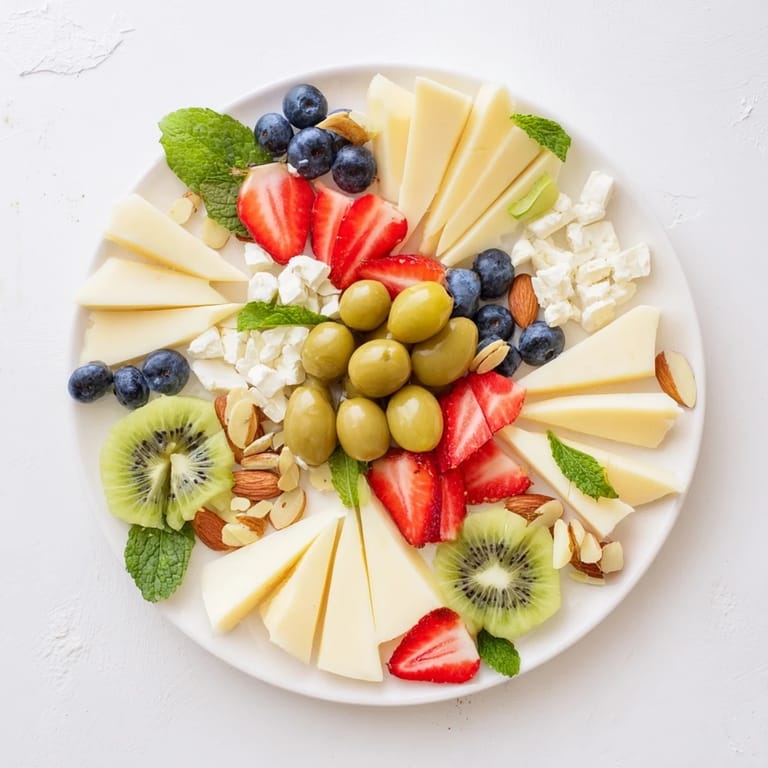
- Begin with cheese, arranging brie, manchego, and goat cheese in distinct clusters around your outlined design. Think of them as sentries guarding the empty space. Leave breathing room between clusters—they should frame the negative space, not crowd it. Notice how each cheese's color tells a different story
- Weave in the Fruit:
- Now comes the meditative part. Place grapes, strawberry halves, and kiwi slices carefully, respecting the invisible boundary of your shape. This is where precision becomes art. Your hands learn the language of spacing. Every placement is intentional
- Add Texture and Contrast:
- Scatter almonds in small piles and distribute olives to add visual rhythm and substance. Don't overthink this—let clusters form naturally, but keep the negative space pristine. These elements are your jazz notes in an otherwise structured composition
- Reveal the Magic:
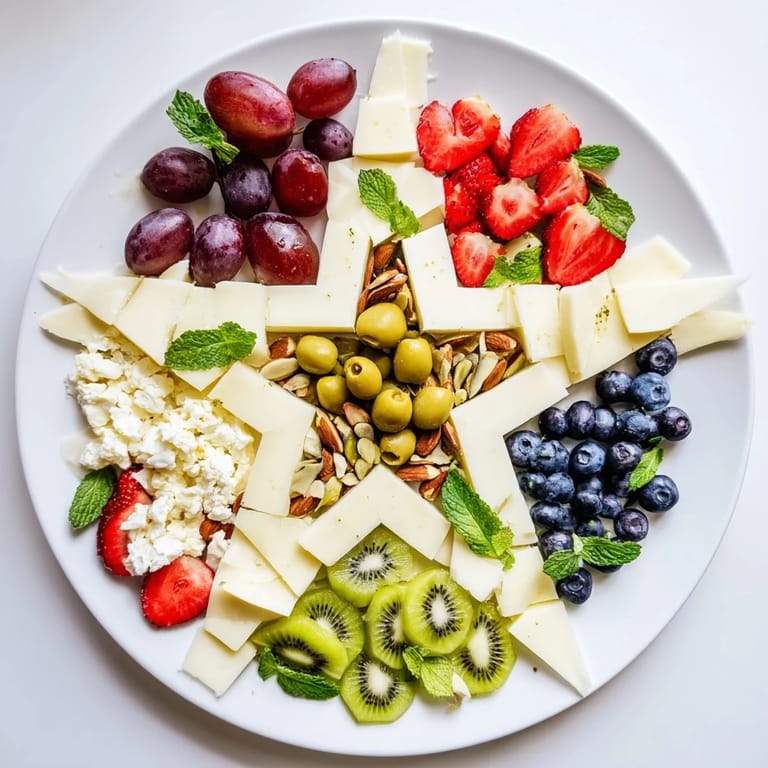
- Gently, almost ceremonially, lift the parchment away. This is the moment everything changes. The negative space emerges, clean and striking, like you've revealed something that was always meant to be there. Take a breath—you've done something remarkable
- Apply the Final Flourish:
- Scatter mint leaves around the platter's perimeter and add edible flowers strategically. They should dance across the surface, adding movement and freshness. This is when your platter becomes not just food, but a moment worth remembering
- Serve with Intention:
- Present the platter as you would a piece of art. Encourage guests to admire before eating. Watch their faces light up. That moment—when they finally understand what they're seeing—that's the real nourishment here
 Pin it
 There was a moment during a dinner party when a guest actually cried looking at the platter. She said it reminded her that thoughtfulness still existed, that someone had taken time to make something impossible look effortless. That's when I understood: this recipe is about more than presentation—it's about love made visible.
Design Ideas That Transform the Moment
Your negative space shape is your signature. A five-pointed star is timeless and celebratory. A simple heart works for anniversaries or Valentine's gatherings. Initials spell personalization—I once made this for a wedding rehearsal dinner with the couple's intertwined initials as the negative space, and every guest understood the intimacy of that choice. For a dessert version, try a crescent moon or constellation pattern. The shape is your voice speaking through arrangement.
Transformation: From Savory to Sweet
The beauty of this recipe is its fluidity. For a dessert evolution, replace cheeses with dark chocolate squares, manchego with white chocolate shards, and brie with gold-dusted truffles. Substitute crackers for biscotti pieces, swap berries for dried apricots and figs, and use pistachios instead of almonds. The technique remains identical; only the ingredients whisper a different story. I've done both versions at the same party, and guests marveled at how the same visual principle could express two completely different moods.
- Dark chocolate pairs beautifully with raspberries and pistachios for a sophisticated sweet arrangement
- Edible flowers become even more precious against chocolate and gold—consider pansies or violets
- A drizzle of honey or warmed chocolate sauce around the platter's edge adds luxury without disrupting your negative space
Pairing and Presentation Philosophy
This platter demands to be seen before it's eaten. Serve it on a neutral background—white ceramic, dark slate, or natural wood—so your ingredients and negative space become the only story. Pair with sparkling wine or crisp white for savory versions; dessert versions shine with champagne, dessert wine, or strong coffee. The key is giving your guests permission to pause, to notice, to feel that this effort was made specifically for them. That's the real recipe.
 Pin it
 Every time I make this platter, I'm reminded that the simplest ingredients become extraordinary when arranged with intention. You're not just feeding people; you're creating an experience they'll tell others about for years.
Frequently Asked Questions
- → What is negative space in plating?
Negative space refers to the intentional empty areas on the platter that form distinct shapes or patterns by arranging food around them.
- → Can the platter be adapted for dessert?
Yes, substitute cheeses and crackers with chocolates, biscotti, and dried fruits to create a dessert-focused arrangement.
- → How do I maintain the negative space shapes?
Use parchment paper with the design sketched lightly as a guide and place food items carefully around it, removing the paper once arranged.
- → Are there allergen considerations?
The platter contains milk, tree nuts, and gluten, so substitute gluten-free crackers if needed and verify ingredients for allergies.
- → What occasions suit this platter style?
This visually striking platter works well for parties, special events, or gatherings where presentation impresses guests.