 Save
Save The first time I made a posset, I was immediately struck by how something so elegant could come together in barely twenty minutes. I'd been invited to a dinner party and wanted to serve something that felt special without spending the entire day in the kitchen. The moment the warm cream mixture hit the hollowed lemon shell, I knew I'd found something magical—something that looked like it belonged in a fine restaurant but tasted like pure, unapologetic comfort.
I served this to my partner on a quiet Thursday night when we were both exhausted from work, and suddenly we were sitting at the kitchen table like it was a proper occasion. There was something about eating something this refined from a lemon shell that made us laugh—fancy but playful, which felt exactly right for us.
Ingredients
- Double cream (500 ml): This is the soul of the posset; it needs to be heavy cream, not whipping cream, because the higher fat content gives you that silky texture that's essential.
- Caster sugar (140 g, plus 6–8 tsp for topping): Caster sugar dissolves quickly into the cream without grittiness, which is why it's worth seeking out if you can find it.
- Lemon zest (from 2 lemons): Don't skip this step; the zest carries the brightness that makes the whole dish sing.
- Freshly squeezed lemon juice (90 ml): Fresh juice is non-negotiable here—bottled will taste flat and won't give you that chemical reaction that thickens the posset.
- Large lemons (6 for shells): Look for lemons that are relatively symmetrical and sturdy; you're about to hollow them out, so fragile ones won't cooperate.
Tired of Takeout? 🥡
Get 10 meals you can make faster than delivery arrives. Seriously.
One email. No spam. Unsubscribe anytime.
Instructions
- Hollow your lemon vessels:
- Halve the lemons lengthwise and use a small spoon or melon baller to gently scoop out the flesh, being careful not to puncture the skin. Trim a thin slice from the bottom of each shell so they sit flat and stable on your serving plate.
- Heat the cream gently:
- Combine the cream, sugar, and lemon zest in a saucepan over medium heat, stirring until the sugar dissolves completely. Once it reaches a gentle boil, let it bubble softly for about 3 minutes, then take it off the heat—you want warm cream, not scalded.
- Add the lemon juice:
- Stir in the fresh lemon juice and watch as the mixture transforms and thickens slightly; this is the chemistry that makes posset special. Let it cool for about 10 minutes, then strain out the zest for a perfectly smooth finish.
- Fill and chill:
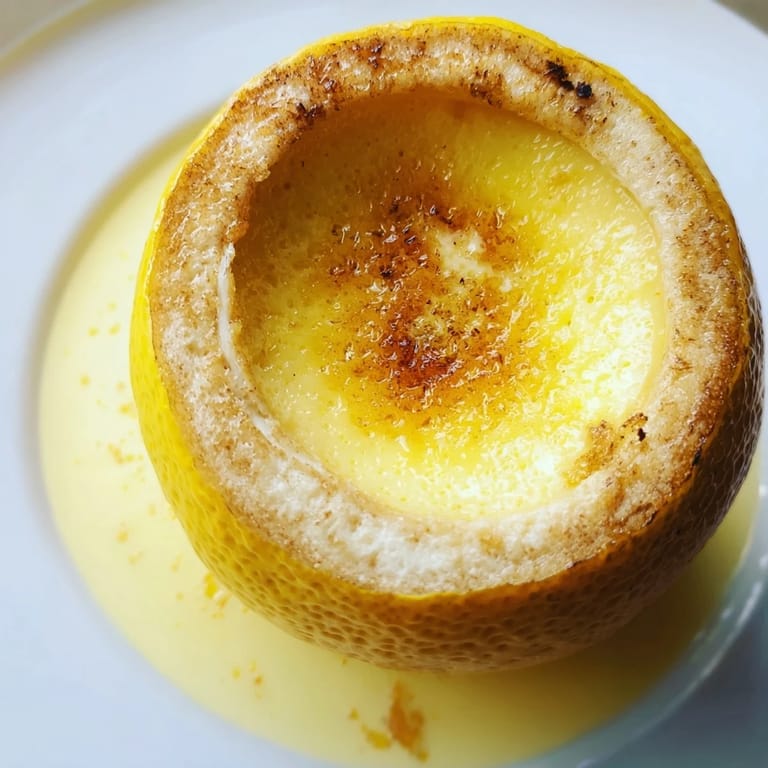
- Pour the warm posset carefully into each lemon shell until it's nearly full. Refrigerate for at least 3 hours until the mixture is set and cool to the touch.
- Torch and serve:
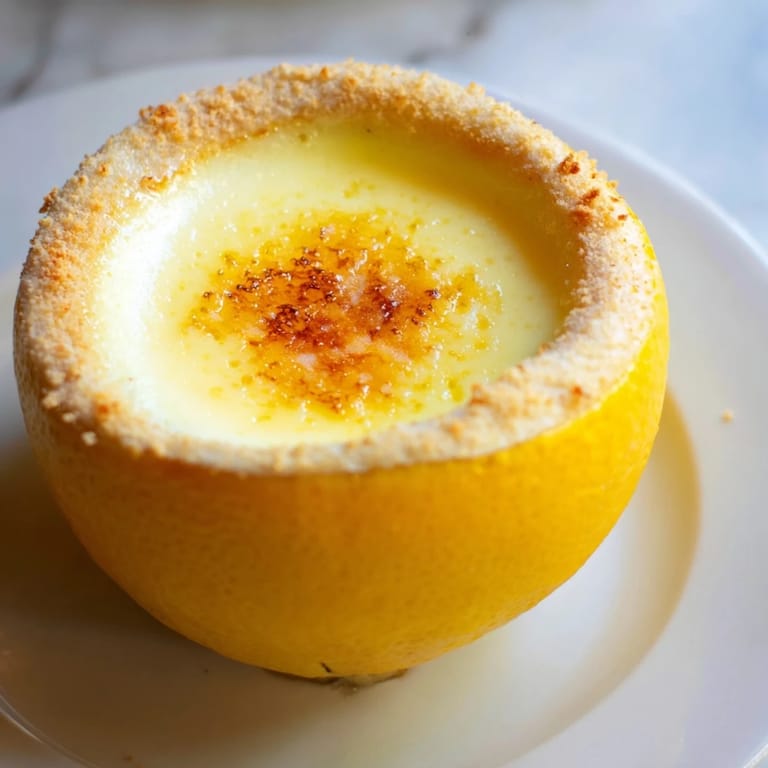
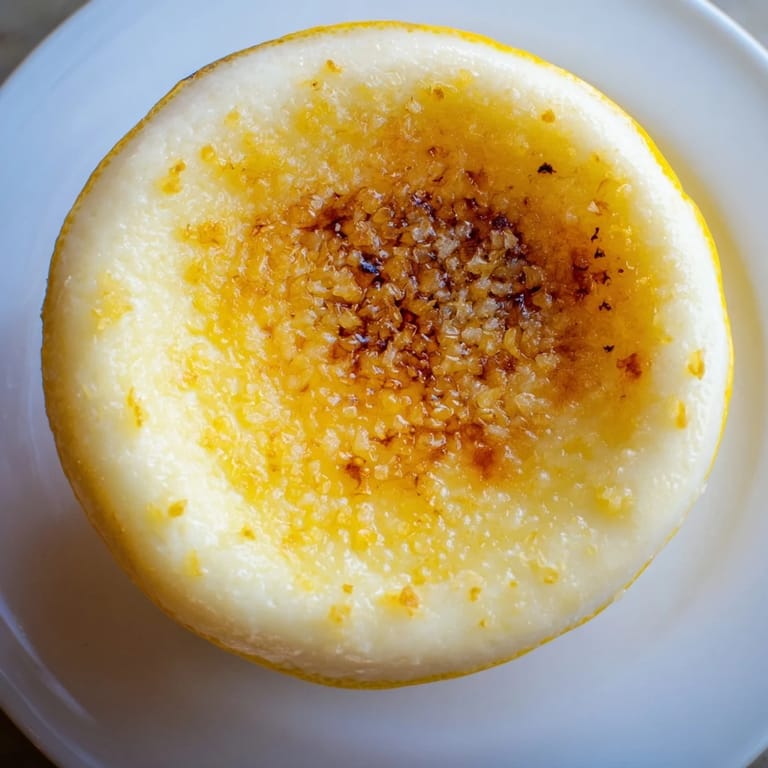
- Just before serving, sprinkle about a teaspoon of caster sugar over each posset and use a kitchen blowtorch to caramelize it until it's golden and crackling. Wait 2–3 minutes for the sugar to harden before your first bite.
 Pin it
 There's a moment right after you torch the sugar when it's still soft and warm, and you can tap it with your spoon and hear that satisfying crack. That's when this dessert stops being just food and becomes a small ceremony, something you slow down for.
Why This Works as a Show-Stopping Dessert
Posset is a centuries-old British dessert that's had a quiet resurgence because it solves a fundamental problem: how do you make something that tastes indulgent but doesn't require cream whipping, custard tempering, or careful baking? The cream and lemon juice do all the work for you, creating a set custard through simple chemistry. When you serve it in a lemon shell and add that brûlée top, you've transformed a humble mixture into theater on a plate.
Making It Your Own
While the lemon version is where my heart lies, posset is wonderfully flexible. I've added a sprig of thyme or basil to the cream while it simmers, which adds an herbal whisper that feels unexpected and elegant. Some people infuse the cream with vanilla or cardamom, or even a touch of Earl Grey tea. The brûlée top can be a canvas too—you could add a few grains of sea salt to the sugar before torching it, or press edible flowers into the caramel while it's still warm. The base recipe is so forgiving that you can bend it without breaking it.
Serving and Storage Tips
The posset itself keeps beautifully in the refrigerator for up to a day, so you can make it the morning of a dinner party and breathe easier. The brûlée topping, though, should always be done in the final moments before serving—it hardens as it cools, and there's no magic in eating hard, brittle sugar instead of that crisp-then-melting contrast. Serve it with crisp shortbread or almond biscuits alongside, which give you something to break through the sugar with and add a buttery counterpoint to the bright lemon.
- If you're making these ahead, keep the lemon shells covered loosely with plastic wrap so they don't dry out.
- Set out your serving spoons ahead of time—you'll want something small and sturdy to crack through that brûlée layer.
- Serve these well-chilled, straight from the fridge; they taste best when the posset is cold and the contrast with the warm sugar is sharpest.
 Pin it
 This is the kind of dessert that stays with people long after dinner ends, not just because it tastes remarkable, but because eating something this beautiful from a lemon shell makes everyone feel a little bit special. Make it when you want to show someone they matter.
Frequently Asked Questions
- → How do you prepare the lemon shells for serving?
Halve large lemons lengthwise, carefully scoop out the flesh keeping shells intact, trim a thin slice off the bottom to help them stand upright, then chill before filling.
- → What is the key to achieving a smooth lemon cream?
Simmer cream, sugar, and lemon zest gently without boiling over, stir in fresh lemon juice, cool and strain to remove zest for a silky texture.
- → How is the crisp caramelized top created?
Sprinkle caster sugar evenly over the chilled lemon cream and caramelize using a kitchen blowtorch or a very hot grill/broiler until golden and crisp.
- → Can herbs be used to enhance the flavor?
Yes, infusing cream with fresh thyme or basil during simmering adds subtle aromatic notes, removed before adding lemon juice to keep smoothness.
- → What are suitable accompaniments for this dessert?
Crisp shortbread or almond biscuits complement the silky lemon cream and contrast textures beautifully.