 Save
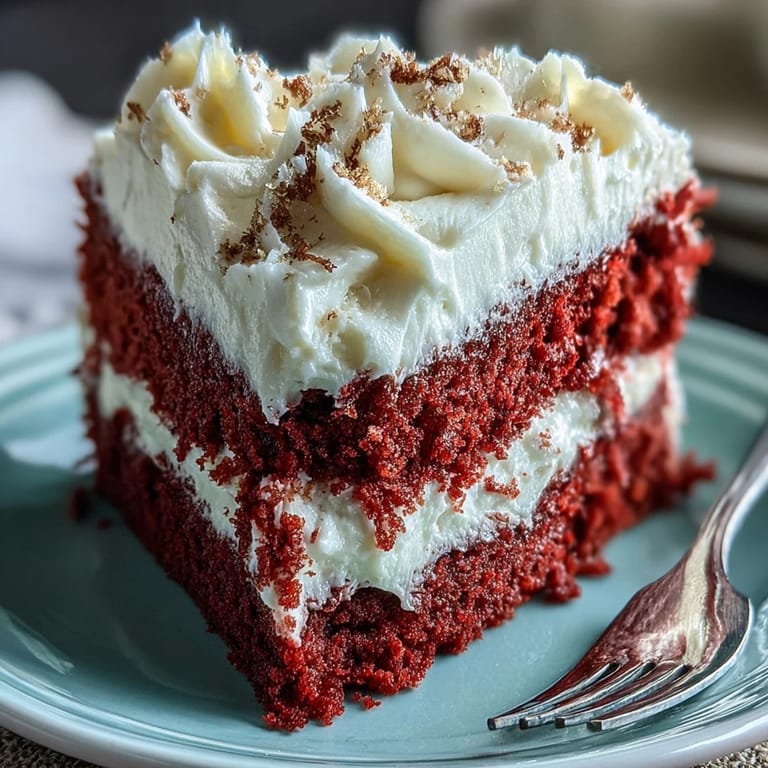
Save When I think about red velvet cake, I immediately recall the way the kitchen lights reflected off the deep red batter as it swirled in the bowl, contrasting beautifully with the white clouds of flour dusting the countertop. Preparing this cake for Juneteenth instantly fills the room with anticipation, even before the first bite. There's something genuinely joyful about the tang of buttermilk mingling with cocoa, a subtle scent that always makes me pause for a second. The cream cheese frosting, smooth and cool, gives the finished cake that luscious, celebratory finish. Each step feels like building a little moment of joy.
One busy afternoon not too long ago, I baked this cake for our Juneteenth gathering while tunes played on the radio and my neighbor's laughter drifted in from the backyard. Someone peeked in, lured by the smell of chocolate and something indefinably 'festive,' and volunteered to help sift the flour just to be closer to the magic. It turned making dessert into a low-key celebration long before we even sat down to eat.
Ingredients
- All-purpose flour: Go for regular unbleached flour—I always sift it for a softer crumb and to keep lumps away.
- Granulated sugar: This balances the cocoa, and I've learned that beating it thoroughly with wet ingredients prevents graininess.
- Baking soda: Don’t skip it, or the cake won't rise to its tender, fluffy glory.
- Salt: A small pinch sharpens flavors more than you’d expect.
- Cocoa powder: Just a spoonful—Dutch process or natural both work, but the deeper the color, the richer the look.
- Vegetable oil: It keeps the cake moist—don’t swap with butter or you'll lose that signature red velvet texture.
- Buttermilk (room temperature): If you forget to take it out early, gently warm it; trust me, it makes the crumb so much lighter.
- Large eggs (room temperature): If you drop one, just laugh! Two eggs, lightly beaten, blend the batter evenly.
- Red food coloring: For that bold, iconic hue—add a touch more if you want the cake to pop on the dessert table.
- Distilled white vinegar: It may sound odd, but it reacts with the baking soda for perfect tenderness.
- Vanilla extract: A tiny dash lifts the entire cake; never skip real vanilla if you can help it.
- Cream cheese (softened): Let it warm up for 30 minutes so the frosting turns silky smooth.
- Unsalted butter (softened): The cake’s richness comes from the butter’s sweetness and body in the frosting.
- Powdered sugar (sifted): Sifting prevents those stubborn lumps in your dreamy white frosting.
- Pinch of salt: Just enough to make the frosting sing; don’t overdo it.
Tired of Takeout? 🥡
Get 10 meals you can make faster than delivery arrives. Seriously.
One email. No spam. Unsubscribe anytime.
Instructions
- Prep your pans:
- Preheat to 350°F and give those cake pans a good brush with grease and a sprinkle of flour as if tucking in little velvet blankets.
- Mix dry ingredients:
- As you sift flour, sugar, baking soda, salt, and cocoa, let the snowy dust cloud settle and enjoy the anticipation building in the bowl.
- Combine wet ingredients:
- In another bowl, whisk together oil, buttermilk, eggs, food coloring, vinegar, and vanilla until that vibrant red shines through—don't be afraid to marvel at the color.
- Bring it all together:
- Fold the dry mixture into the wet in batches, watching the red deepen and resist the urge to over-stir—just until combined is perfect.
- Bake the cakes:
- Divide the batter evenly and pop them into their pans, sliding into the oven while the scent of cocoa and vanilla start to fill the air; check them at 28 minutes with a toothpick.
- Cool completely:
- Let the cakes rest in the pans before flipping them onto a rack, and don't rush—a warm cake is impossible to frost neatly.
- Make the frosting:
- Beat softened cream cheese and butter until fluffy, then sift in powdered sugar, vanilla, and salt; take time to admire the transformation into soft clouds.
- Assemble & frost:
- Layer and frost the cooled cakes, letting the frosting spill over the edges and swirling it casually for that homey, inviting look.
- Decorate:
- Sprinkle with cake crumbs or red and gold sprinkles if you want extra flair, or leave it pure white for a classic touch.
 Pin it
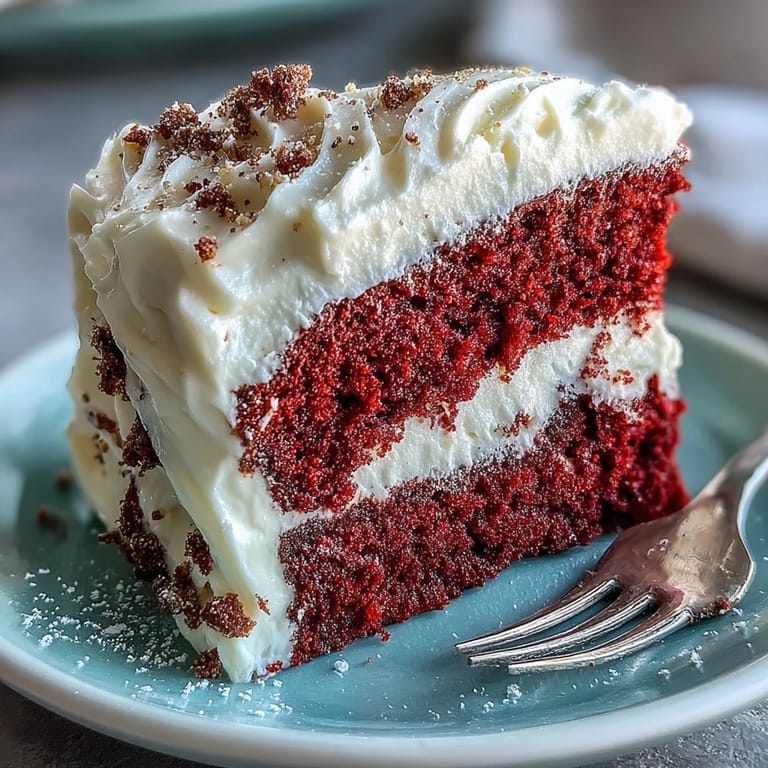
 The year my cousin brought her new baby to our Juneteenth gathering, I made this exact cake—her little one watched so curiously as we spread the frosting, and everyone sang a few notes louder that night.
Achieving That Legendary Red Color
The secret to getting a show-stopping red is mixing the food coloring with the wet ingredients before adding any dry. It seems simple, but it gives the cake that rich, uniform color instead of streaks or patches.
What Makes the Frosting a Standout
Having both cream cheese and butter at just the right degree of softness is key—enough so a finger pressed in leaves a gentle indent. Adding the powdered sugar slowly helps prevent a sugar storm, and beating frosting for a couple minutes longer than you think turns it airy and luscious.
When to Put Your Own Spin on It
One time I decided to add orange zest to the frosting, and the light citrus twist got everyone guessing what made the cake feel extra summery. You can also sprinkle a pinch of cinnamon for warmth, or even use cake crumbs from trimming as decoration for a zero-waste flourish.
- If you only have three bowls, just wash as you go; you really don't need a full set.
- Letting kids help with the food coloring is messy, but honestly worth it for the laughter alone.
- Remember: never rush the cooling if you want Instagram-worthy layers.
 Pin it
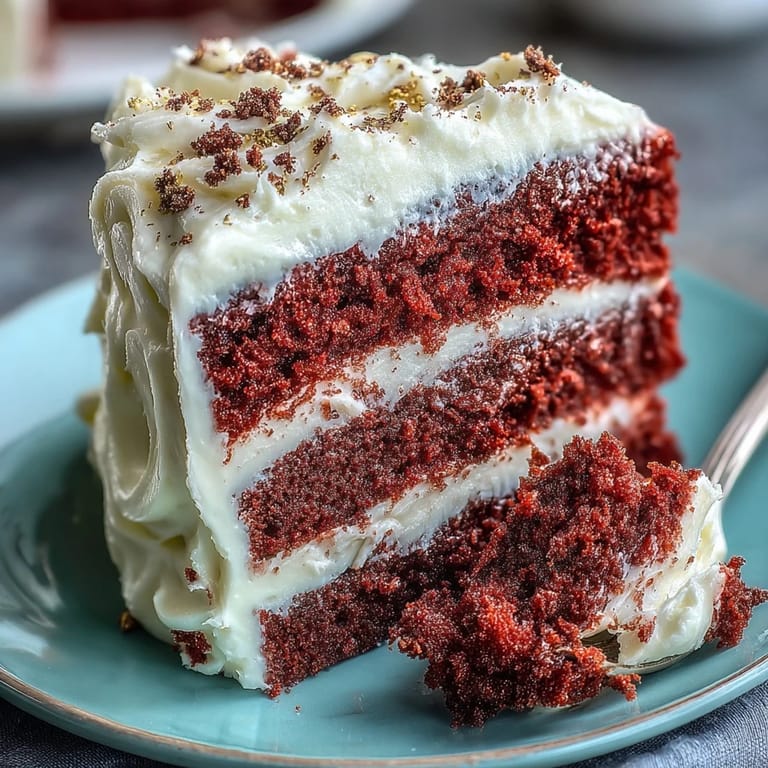
 I hope this cake brings a bright burst of color and a touch of Southern warmth to your Juneteenth or any celebration. Sometimes all it takes is a homemade dessert to make an ordinary day feel extra special.
Frequently Asked Questions
- → Can I make a buttermilk substitute?
Yes — mix 1 cup milk with 1 tablespoon white vinegar or lemon juice and let sit 5 minutes. It will mimic the tanginess and acidity of buttermilk for proper rise and texture.
- → How do I get a deep red color without too much food dye?
Use a combination of red gel color and an extra 1–2 teaspoons if needed; natural beet powder or reduced red wine can deepen hue but may alter flavor. Cocoa and vinegar interaction also enhances red tones.
- → What causes a dense crumb and how to avoid it?
Overmixing after adding flour or using too much liquid can tighten the crumb. Fold dry into wet until just combined and measure flour by spooning into the cup, leveling off for accuracy.
- → Best technique for smooth cream cheese frosting?
Beat softened cream cheese and butter until very smooth and light, then add sifted powdered sugar gradually. Keep speeds low once sugar is added to avoid a grainy texture and to control sweetness.
- → How should I store the finished cake?
Cover and refrigerate up to 24–48 hours due to the cream cheese frosting. Bring to room temperature 30–60 minutes before serving for best texture and flavor.
- → Can I add a citrus note to the frosting?
Yes — a teaspoon of orange zest folded into the frosting brightens the flavor without thinning it. Add gradually and taste to maintain balance with the tangy cream cheese.