 Save
Save Steam from the oven fogged my glasses as I pulled out the baking dish, the scent of butter and herbs swirling through the kitchen and making it feel like spring, even with rain tapping the windows. I hadn’t planned on dressing up breakfast that Sunday morning, but after spotting fresh chives poking through in a pot on the windowsill, I reached for ramekins instead of my usual skillet. There’s a calm focus that comes with making eggs en cocotte—cracking each egg gently and dotting the tops with butter, resisting the urge to rush, even if everyone else is already at the table. The anticipation feels special, and somehow, those barely set yolks always get the most cheerful reactions. For a dish that looks so fancy, it’s really just a quiet celebration of simple flavors done right.
One Easter, I recall squeezing everyone around the rickety dining table—at least two kids perched on cushions, giggling about how "fancy" the eggs were in their little dishes. Someone cracked a yolk too soon and it ran right onto the hot toast, which somehow made them laugh more. Sharing these eggs en cocotte made the morning feel more like an event than just a meal, reminding me how simple food can gather everyone together.
Ingredients
- Unsalted butter: Use soft butter to thoroughly grease the ramekins—nothing sticks and the buttery aroma is unbeatable.
- Heavy cream: The cream forms a delicate custard base, so don’t skimp on this; letting it warm slightly before pouring in helps it spread evenly.
- Grated parmesan cheese: Freshly grated parmesan melts better and gives lovely golden flecks on top when baking.
- Large eggs: Crack eggs into a small bowl first to keep yolks whole and shell-free—makes assembling less stressful.
- Chopped fresh chives: Chives add a bright, oniony bite, and I’ve found scattering some on top after baking keeps the color vivid.
- Chopped fresh parsley: It’s not just for garnish; parsley’s freshness brightens the whole dish, even on rainy days.
- Fresh thyme leaves: Just half a teaspoon gives a subtle herbal layer—make sure to pick the leaves off the stem, woody bits are a disappointment.
- Salt and freshly ground black pepper: Season before and after baking for flavor that isn’t one-dimensional.
- Optional extra chives or parsley for garnish: A last dusting makes the dish feel finished (and photogenic if you like sharing!).
Tired of Takeout? 🥡
Get 10 meals you can make faster than delivery arrives. Seriously.
One email. No spam. Unsubscribe anytime.
Instructions
- Preheat and Prepare:
- Turn your oven to 375°F (190°C). Get a kettle humming so you have boiling water ready for the bain-marie.
- Butter the Ramekins:
- Generously coat the inside of each ramekin with soft butter—let your fingers do the work here for thorough coverage.
- Add Cream and Herbs:
- Pour a couple of spoonfuls of heavy cream into each ramekin, then sprinkle in half the chopped herbs and a good pinch of parmesan. The combination smells heavenly right away.
- Crack in the Eggs:
- Break two eggs per ramekin, pouring slowly to keep their yolks sitting pretty on top.
- Season and Finish Toppings:
- Sprinkle on salt, pepper, and the rest of the herbs and parmesan. Drop a small dot of butter on each for an extra-rich finish.
- Create the Water Bath:
- Set all four ramekins inside a deep baking dish and carefully pour in the just-boiled water until it reaches halfway up the sides; you’ll hear a quiet sizzle.
- Bake to Perfection:
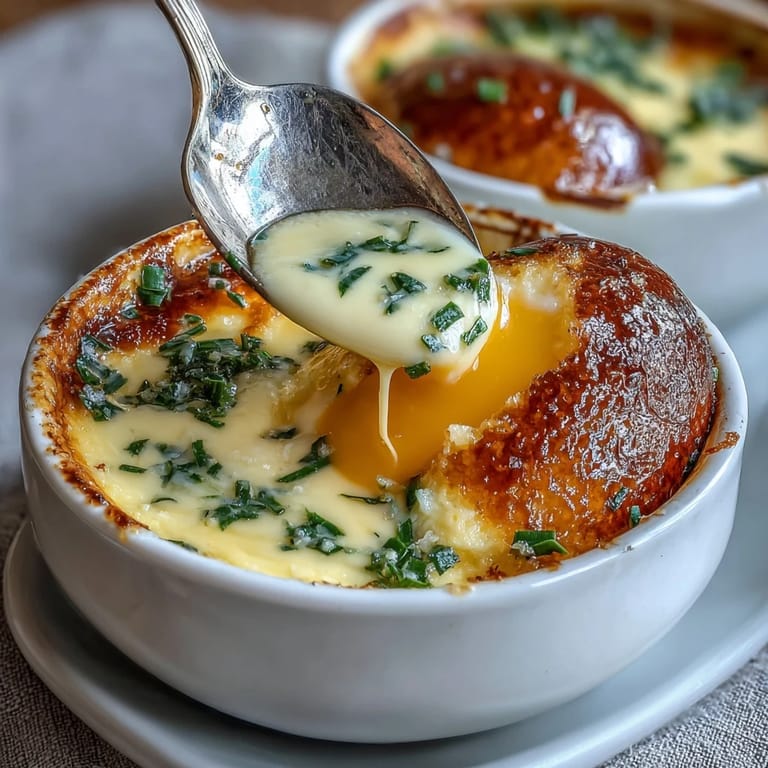
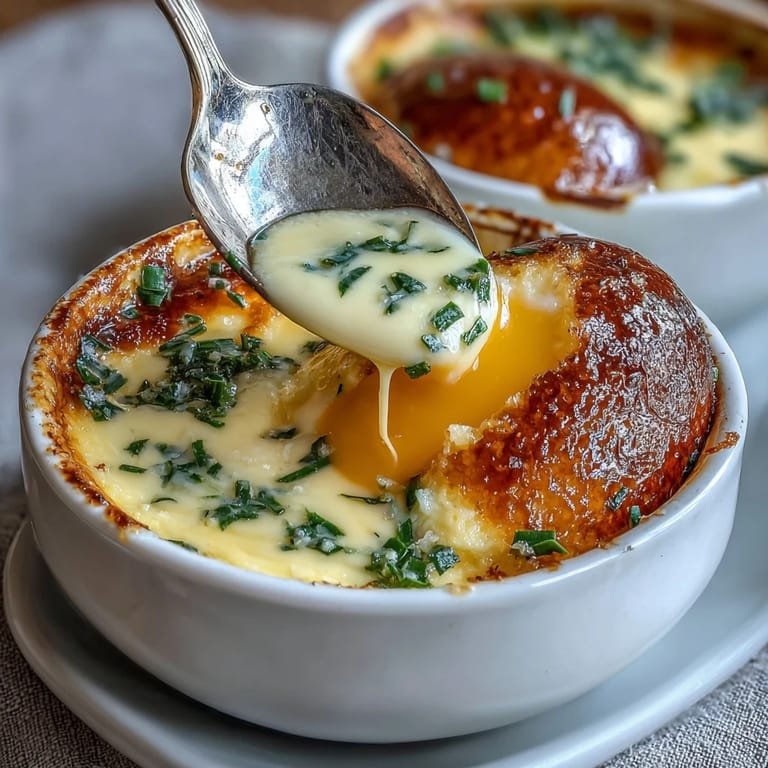
- Slide the dish in the oven and bake for 12–15 minutes, checking at twelve—whites should be set but tender, yolks still a little wobbly if you nudge the ramekin.
- Rest and Garnish:
- Use oven mitts to gently lift ramekins from the hot water—steady hands help here. Let them stand and finish setting for two minutes, then finish with extra herbs if you like.
 Pin it
  Pin it
 The first time a friend texted to say she was "still thinking about those creamy little eggs," I realized this dish lingers on more than just the palate. It gave us all an excuse to take seconds and linger around the table, talking about everything and nothing at all.
Bringing Bistro Vibes Home
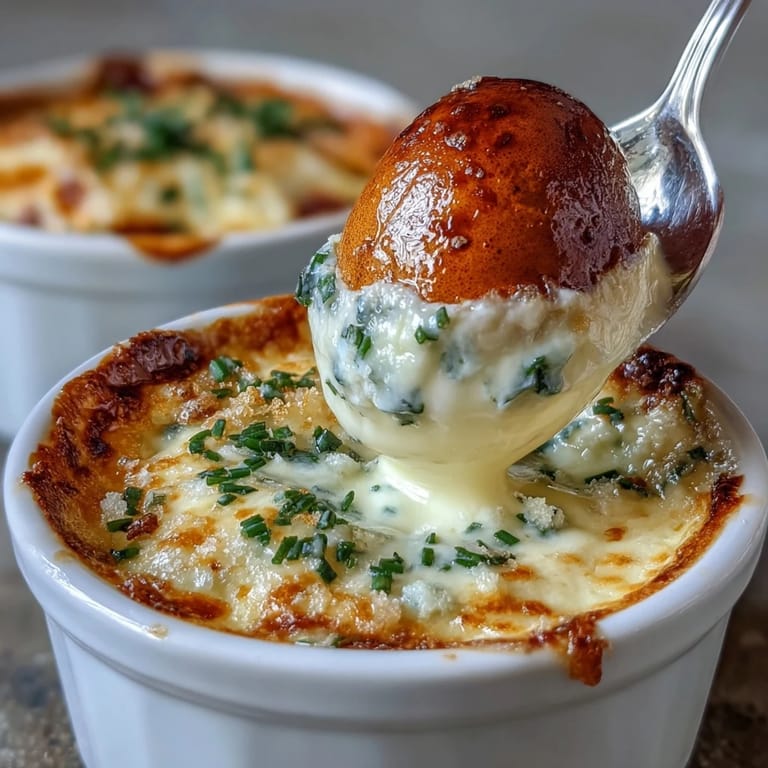
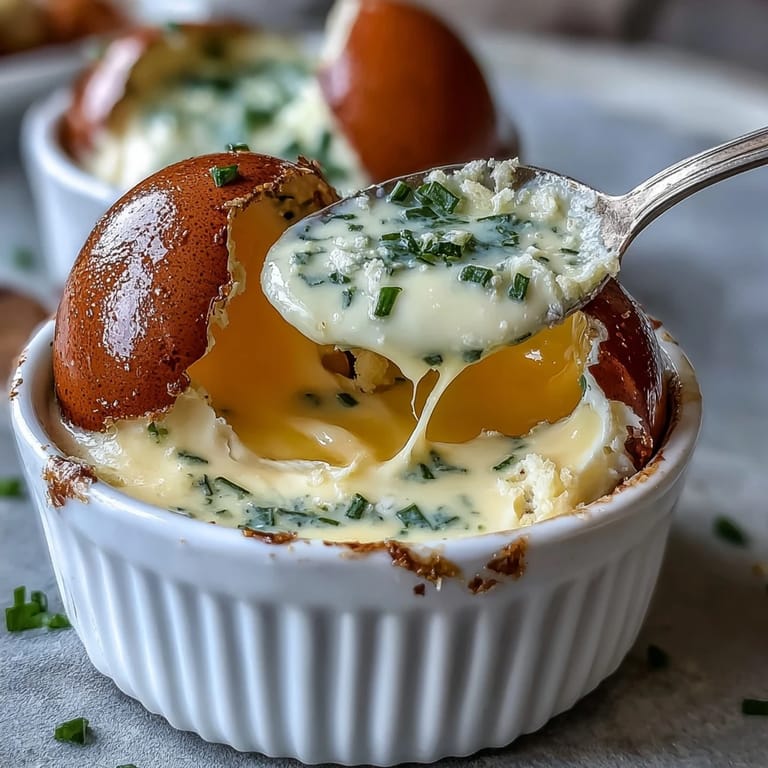
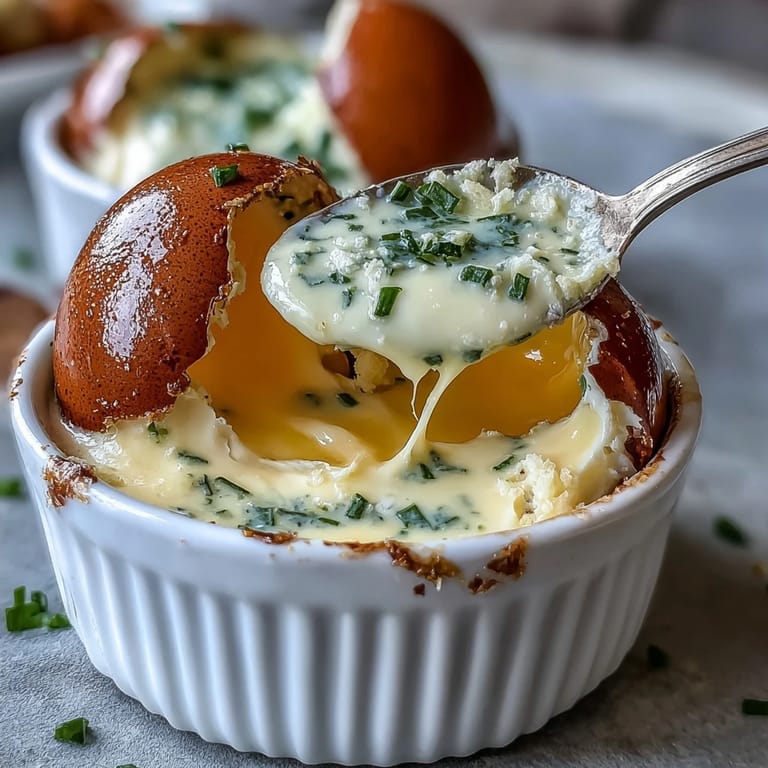
It’s a tiny luxury to eat eggs this way. There’s something about scooping into a petal-soft yolk with a spoon that makes you feel like you’re at a sunlit café, even if you’re just hiding from laundry day.
Working With What You Have
I’ve made these with spinach tucked underneath or a sprinkle of goat cheese when the parmesan was running low. The base recipe is forgiving, welcoming little odds and ends from the fridge, and still feels like a treat.
Serving Up Success
The best part is breaking into the eggs tableside and letting everyone reach for some crusty bread to mop up the sauce. Even people who claimed not to be “egg people” have been converted with this recipe.
- If you prep the ramekins the night before, all that’s left to do is bake in the morning.
- Make sure the water in the baking dish is already hot when you add the ramekins—it’s the trick to even cooking.
- Don’t skip the two-minute rest before serving—this gives perfect silky yolks and less risk of burnt fingers.
 Pin it
  Pin it
 Eggs en cocotte turn any breakfast into slow, joyful eating. I hope they bring a bit of that bistro magic to your table too.
Frequently Asked Questions
- → How long should I bake them for soft yolks?
Bake the ramekins in a water bath at 375°F for 12–15 minutes. Start checking at 12 minutes—whites should be set while yolks remain soft. Add 2–3 minutes for firmer yolks.
- → What size ramekins work best?
Use 6-ounce (175 ml) ramekins and crack two eggs into each. That size gives the right cream-to-egg ratio and fits well in a standard deep baking dish for the water bath.
- → Can I swap the cheese or herbs?
Yes. Try Gruyère or goat cheese for a different profile, and swap chives or parsley for tarragon, dill, or basil. Adjust salt accordingly if using stronger cheeses.
- → Can this be prepared ahead?
Assemble ramekins up to a day ahead, cover and refrigerate. Bring to room temperature before baking; baking time may increase by a few minutes when starting cold—monitor until whites set.
- → How do I prevent watery whites from a water bath?
Ensure ramekins are well sealed with butter on the rims and that water is hot but not boiling when poured into the pan. Avoid splashing water into the ramekins and place them on a rack or towel to steady them.
- → What are good accompaniments?
Serve with toasted brioche, crusty bread, or a light salad. For heartier plates, add smoked salmon, sautéed spinach, or roasted vegetables at the bottom of each ramekin before adding the eggs.