 Save
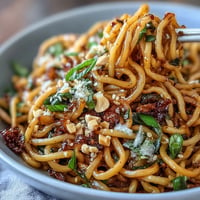
Save The skillet was too hot, the oil shimmering wildly, and I tossed in the cabbage anyway. It hit with a loud crackle, filling the kitchen with that sharp, sweet smell of vegetables hitting serious heat. I had a pack of ramen sitting on the counter and no plan beyond hunger. What came together in those fifteen minutes taught me that some of the best meals happen when you stop overthinking and just cook what you have.
I made this on a Tuesday night when my roommate wandered into the kitchen asking what smelled so good. She grabbed a fork and ate straight from the pan, standing at the stove. We ended up splitting it between two bowls, but honestly, we could have kept going. That was the night this became my go-to for when I need something fast, filling, and actually exciting to eat.
Ingredients
- Green cabbage: Choose a firm head with tight leaves, and slice it thin so it cooks quickly and gets those beautiful browned edges.
- Carrot: Julienned carrots add sweetness and a pop of color, plus they cook at the same rate as the cabbage.
- Scallions: Separate the whites and greens because the whites go in early for flavor and the greens stay fresh and bright as garnish.
- Garlic and ginger: Fresh is essential here, the aromatics are what make the whole dish come alive in the first minute of cooking.
- Instant ramen noodles: Toss the seasoning packets and use the noodles as a blank canvas for the sauce you will make.
- Soy sauce: The salty backbone of the sauce, use low sodium if you want more control over the saltiness.
- Oyster sauce: Adds a deep umami richness, swap it for mushroom sauce if you are keeping it vegan.
- Toasted sesame oil: A little goes a long way, this is what gives the dish that nutty, toasted aroma.
- Rice vinegar: Just a teaspoon brightens everything and cuts through the richness.
- Sugar: Balances the salty and sour notes, do not skip it even though it seems small.
- Chili flakes: Optional but highly recommended if you like a gentle kick of heat.
- Vegetable oil: Use something neutral with a high smoke point since you will be cooking over high heat.
Tired of Takeout? 🥡
Get 10 meals you can make faster than delivery arrives. Seriously.
One email. No spam. Unsubscribe anytime.
Instructions
- Boil the noodles:
- Bring a pot of water to a rolling boil and cook the ramen just until tender, usually about three minutes. Drain them well and set them aside so they do not get mushy.
- Mix the sauce:
- In a small bowl, whisk together the soy sauce, oyster or mushroom sauce, sesame oil, rice vinegar, sugar, and chili flakes until the sugar dissolves. This takes less than a minute and makes tossing everything together so much easier later.
- Start the aromatics:
- Heat the vegetable oil in a large skillet or wok over medium high heat until it shimmers. Add the garlic, ginger, and white parts of the scallions, stirring constantly for about a minute until the kitchen smells incredible.
- Fry the vegetables:
- Toss in the cabbage and carrot, spreading them out in the pan so they have room to brown. Stir fry for four to five minutes, letting them sit undisturbed for a few seconds at a time so they get crispy edges.
- Combine and toss:
- Add the cooked noodles and pour the sauce over everything. Toss it all together for two to three minutes, making sure every strand of noodle and shred of cabbage is coated and heated through.
- Garnish and serve:
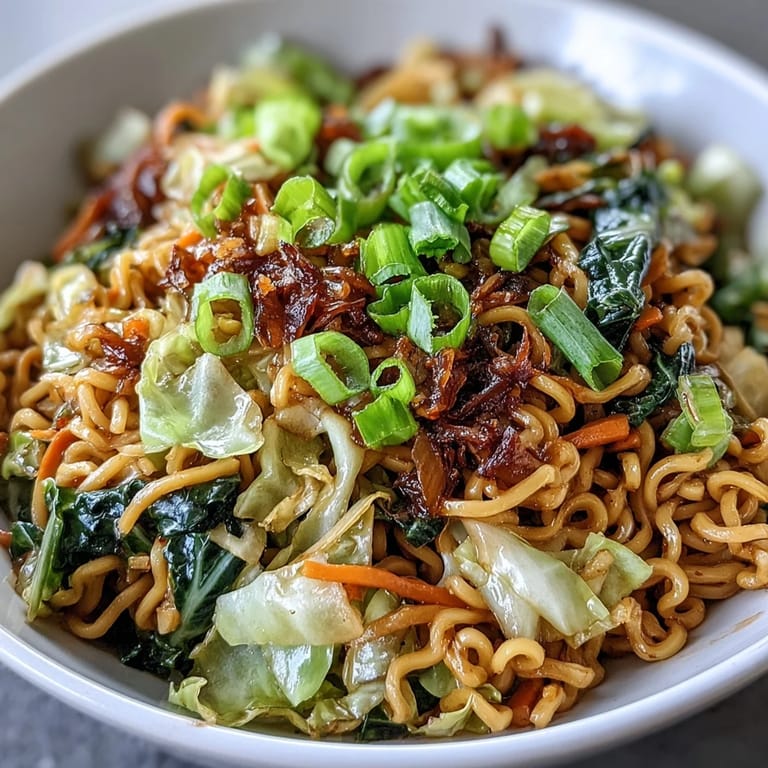
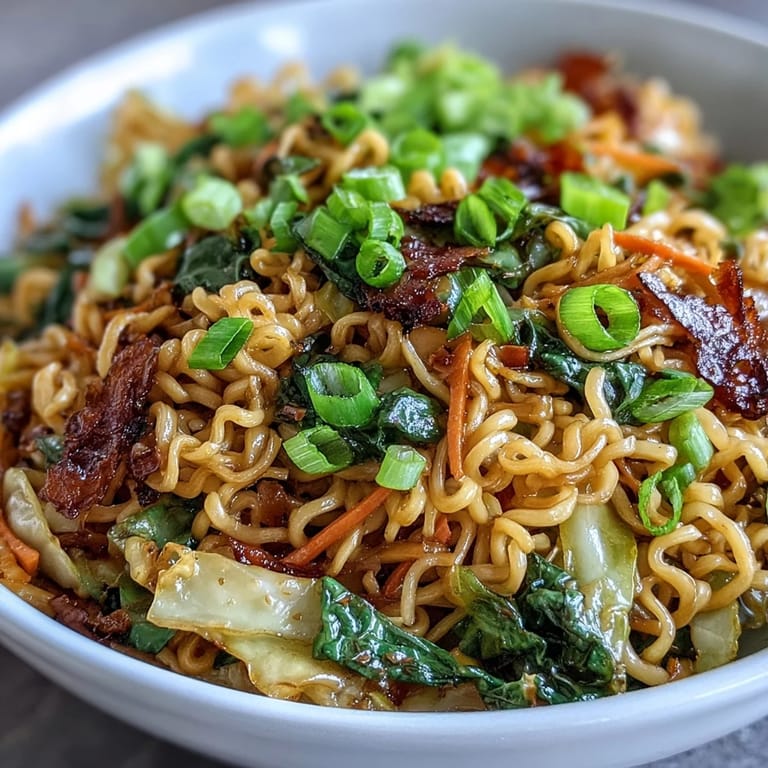
- Pull the skillet off the heat, scatter the green parts of the scallions on top, and serve immediately while everything is still hot and glossy.
 Pin it
 One night I added a fried egg on top, the yolk breaking and mixing into the noodles like a creamy sauce. My partner looked up from his bowl and said it tasted like comfort. That is exactly what this dish is, something simple that fills you up and makes you feel taken care of, even when you are the one doing the cooking.
Make It Your Own
This recipe is forgiving and loves company. I have thrown in sliced mushrooms, bell peppers, and snap peas when I had them around, and they all worked beautifully. If you want protein, a fried egg or some crispy tofu cubes on top turns this into a full meal. For a gluten free version, swap in tamari and use rice noodles instead of ramen, just adjust the cooking time.
Storage and Reheating
Leftovers keep in the fridge for up to two days in an airtight container, though the noodles will soften as they sit. When you reheat it, do it in a hot skillet with a splash of water or oil to bring back some of that texture. I have also eaten it cold straight from the fridge for lunch, and honestly, it still hits the spot.
Finishing Touches
The little extras make this dish feel special without any extra work. I love adding a handful of toasted sesame seeds for crunch or a drizzle of extra sesame oil if I am feeling indulgent. Crushed peanuts or cashews add richness and texture, and a squeeze of lime right before serving brightens everything up.
- Sprinkle toasted sesame seeds or crushed peanuts over the top for extra crunch.
- Drizzle a bit more sesame oil if you want a deeper toasted flavor.
- Add a squeeze of lime or a handful of fresh cilantro for brightness.
 Pin it
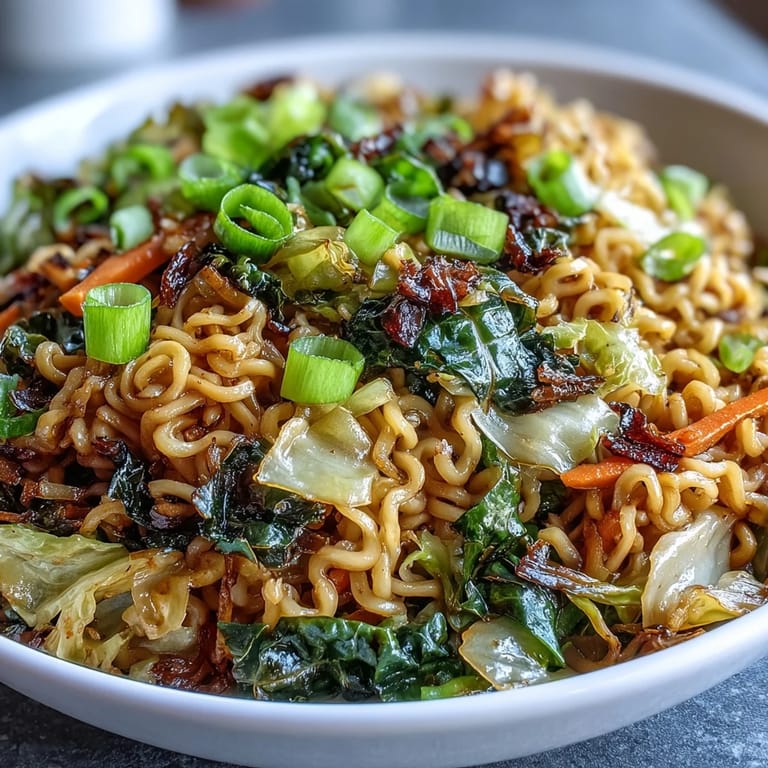
 This is the kind of recipe that becomes muscle memory after you make it once or twice. Keep the ingredients around and you will always have a satisfying meal within reach.
Frequently Asked Questions
- → Can I use a different type of noodles instead of ramen?
Yes, you can substitute with rice noodles, udon, or soba noodles. Adjust cooking times according to package instructions and ensure they're fully cooked before adding to the stir-fry.
- → How do I make this dish vegan?
Replace oyster sauce with mushroom sauce or additional soy sauce. Ensure your ramen noodles don't contain animal products. Skip the fried egg topping or use crispy tofu instead.
- → Can I prepare this dish ahead of time?
While best enjoyed fresh, you can prep ingredients in advance. Store sliced vegetables separately and cook just before serving. The dish can be refrigerated for up to 2 days but may lose some crunch when reheated.
- → What other vegetables work well in this stir-fry?
Bell peppers, snap peas, mushrooms, broccoli, and bok choy are excellent additions. Add them when you stir-fry the cabbage, adjusting cooking time based on the vegetable's density.
- → How can I make this dish spicier?
Increase the chili flakes, add fresh sliced chilies, or drizzle with sriracha or chili oil. You can also add a dash of white pepper or gochugaru for different heat profiles.
- → Why discard the ramen seasoning packets?
The seasoning packets are typically high in sodium and contain artificial flavors. Making your own sauce with fresh ingredients gives you better control over flavor and allows for healthier, more customizable results.