 Save
Save There's a moment in every kitchen that defines comfort, and for me it came on a rainy November evening when a friend showed up at my door with nothing but curiosity and an appetite. I had one thing on my mind: French onion soup, the kind that takes patience and time but rewards you with something so deeply satisfying it feels like a warm embrace in a bowl. What started as an experiment in caramelization became a ritual, one that I've since perfected through trial, error, and a few burnt batches along the way.
I'll never forget making this for my partner during our first winter together, when the kitchen filled with the smell of caramelizing onions and we both just stood there, mesmerized by how the humble ingredient turned golden and glossy. The cheese bubbled and browned in the oven while we set the table, and when we finally tasted it, there was this moment of quiet appreciation that said more than words could. That bowl became the reason I learned to do things slowly, to trust the process, and to understand that some of the best dishes aren't rushed.
Ingredients
- Yellow onions, thinly sliced: Six large ones might seem like too much, but they're the star here, so don't skimp or chop them unevenly since they'll cook at different rates and throw off your timing.
- Unsalted butter and olive oil: The butter gives richness while the olive oil prevents burning during that long, patient caramelization process that can't be rushed.
- Beef broth: Use homemade if you have it, but good quality store-bought works perfectly and gives you a flavorful foundation for everything else.
- Dry white wine: Optional but worth the investment because it adds a subtle brightness and depth that lifts the entire soup.
- Garlic, sugar, salt, and black pepper: These humble seasonings work together to balance the sweetness of the onions and keep the flavor from becoming one-dimensional.
- Fresh thyme and bay leaf: Don't substitute dried thyme here if you can help it because fresh herbs add a delicate note that matters in such a simple soup.
- Crusty French bread and Gruyère cheese: The bread needs real structure to hold up to hot soup and broiling, and Gruyère melts into creamy perfection with a nutty undertone.
Tired of Takeout? 🥡
Get 10 meals you can make faster than delivery arrives. Seriously.
One email. No spam. Unsubscribe anytime.
Instructions
- Melt your fat and soften the onions:
- In a large heavy-bottomed pot, let the butter and olive oil get warm and friendly over medium heat, then add your onions. Stir occasionally as they release their moisture and turn translucent, about 15 minutes of gentle cooking that sets the stage for everything to come.
- Coax the onions into caramelization:
- Here's where patience becomes your best friend: sprinkle the sugar and salt over the softened onions and cook, stirring frequently, for 30 to 40 minutes until they're deeply golden and sweet. You'll watch them transform from pale to amber to rich brown, and you'll know they're done when they smell incredible and coat the bottom of the pot with their caramelized essence.
- Build your flavor base:
- Add the minced garlic and let it bloom for just one minute, filling your kitchen with that unmistakable aromatic signal that you're on the right track. If you're using wine, pour it in now and scrape up every browned bit stuck to the bottom of the pot because that's pure flavor.
- Simmer and season:
- Add your beef broth along with the thyme and bay leaf, bringing everything to a boil before turning it down to a gentle simmer for 30 minutes uncovered. The soup will concentrate slightly, the flavors will marry together, and you'll remove the thyme sprigs and bay leaf before tasting and adjusting the seasoning.
- Toast your bread and prepare for the finish:
- While the soup simmers, preheat your broiler and toast the bread slices until they're lightly golden and sturdy enough to hold the weight of hot soup and melted cheese without falling apart.
- Assemble and broil:
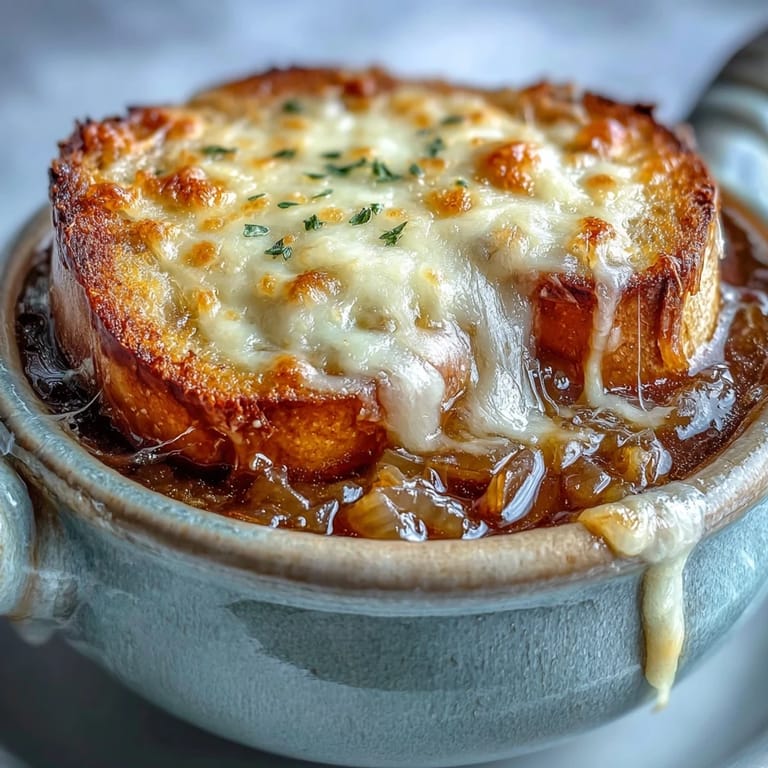
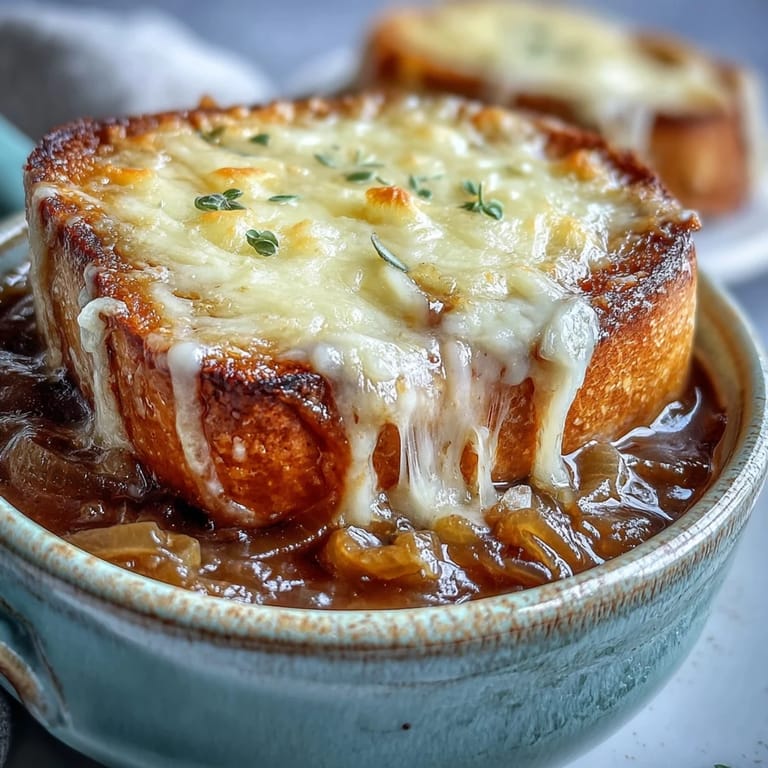
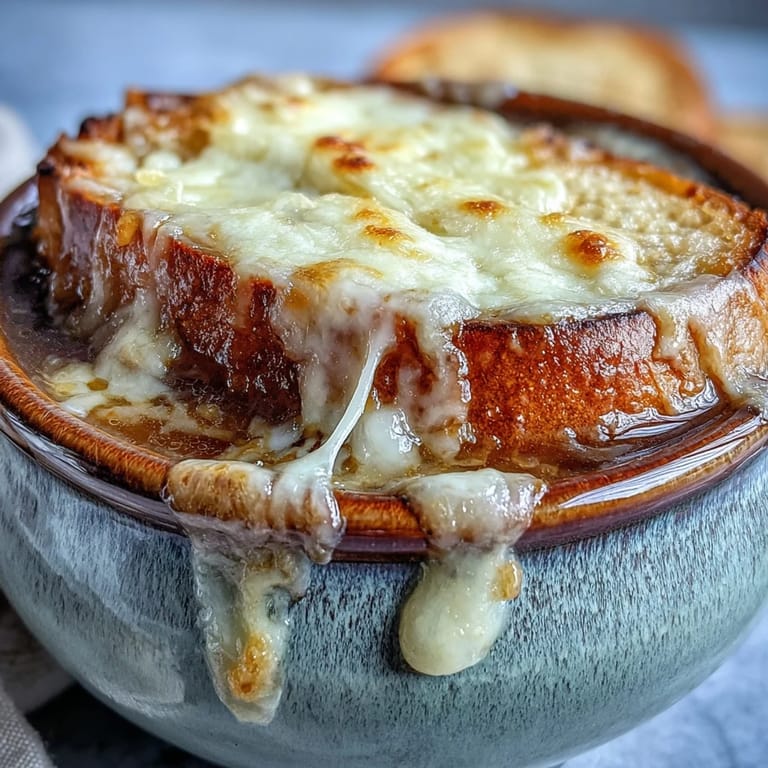
- Ladle the hot soup into oven-safe bowls, top each with a slice of toasted bread, then cover generously with grated Gruyère cheese. Place under the broiler for 2 to 3 minutes until the cheese melts into bubbling golden pools, then serve immediately while everything is still hot and the bread still has a slight textural contrast.
 Pin it
 Years later, I still make this soup whenever someone needs reminding that there's comfort in simplicity, in waiting for things to develop naturally, and in the generosity of sharing something warm with people you care about. It's become the soup I make when words aren't quite enough, when the weather turns cold, or when someone just needs to sit down and be fed something soul-satisfying.
The Art of Caramelization
Caramelization isn't actually cooking the onions at a higher temperature; it's about time and patience letting the natural sugars break down and develop those deep, complex flavors that make this soup sing. The key is stirring frequently enough that nothing sticks to the bottom and burns, but infrequently enough that the onions have contact with the hot pot to build those gorgeous brown bits. If you're tempted to rush this by cranking up the heat, resist that urge because low and slow is what separates an average onion soup from one that tastes like you spent hours in a professional kitchen.
Wine Pairing and Serving Suggestions
This soup pairs beautifully with a dry white wine, and if you're adding wine to the soup itself, choose something you'd actually drink because those flavors concentrate as the soup simmers. A crisp Sauvignon Blanc or unoaked Chardonnay works wonderfully, and if you prefer red wine, a light Pinot Noir won't overpower the subtle sweetness of the caramelized onions. Serve this soup on its own for lunch or as the opening course to a simple roasted chicken dinner, and watch how it transforms the entire meal into something that feels intentional and special.
Storage, Reheating, and Smart Timing
The beauty of this soup is that it actually tastes better the next day after the flavors have had time to meld together, so make it ahead and refrigerate the broth separately from the bread and cheese topping. Reheat gently on the stovetop without boiling, then assemble the bowls with fresh toasted bread and cheese right before broiling so everything stays crispy and perfectly melted. One last thing to remember: if you're making this for a crowd, toast all your bread beforehand and have the cheese grated and ready, so you can simply ladle and broil without any scrambling in the final moments.
- Refrigerate the soup base for up to four days, or freeze it for up to three months without the bread and cheese topping.
- Always broil the cheese topping fresh rather than trying to make assembled bowls ahead, since the bread will get soggy.
- A clove of garlic rubbed across the toasted bread before adding soup and cheese adds a subtle depth that elevates the entire experience.
 Pin it
 Every time I make French onion soup, I'm reminded that the most memorable meals rarely come from complexity, but from honoring simple ingredients and giving them the time and attention they deserve. This is the soup that taught me that patience in the kitchen isn't a limitation, it's a gift.
Frequently Asked Questions
- → Why does caramelizing onions take so long?
Caramelization is a slow process that breaks down the onions' natural sugars, creating deep flavor and rich color. Rushing this step means missing out on the sweet, complex taste that makes this dish special. Patience here is the secret to restaurant-quality results.
- → Can I make this ahead of time?
Absolutely. This soup actually tastes better the next day as flavors continue to develop. Prepare through step 5, refrigerate for up to 3 days, then reheat gently before adding the bread and cheese topping.
- → What's the best cheese for topping?
Gruyère is traditional for its excellent melting properties and nutty flavor. Emmental or Swiss cheese work beautifully as alternatives. Avoid pre-shredded cheese—the anti-caking coating prevents proper melting.
- → How do I get the cheese properly melted and bubbly?
Use oven-safe bowls and place them on a baking sheet for stability. Broil on the upper rack, watching closely—cheese can go from perfectly melted to burnt in seconds. The ideal result is golden brown with those delicious crispy edges.
- → What wine works best in this soup?
A dry white wine like Sauvignon Blanc or Pinot Grigio adds subtle acidity that balances the sweet onions. If you prefer not to cook with wine, simply substitute with additional broth—the soup will still be delicious.