 Save
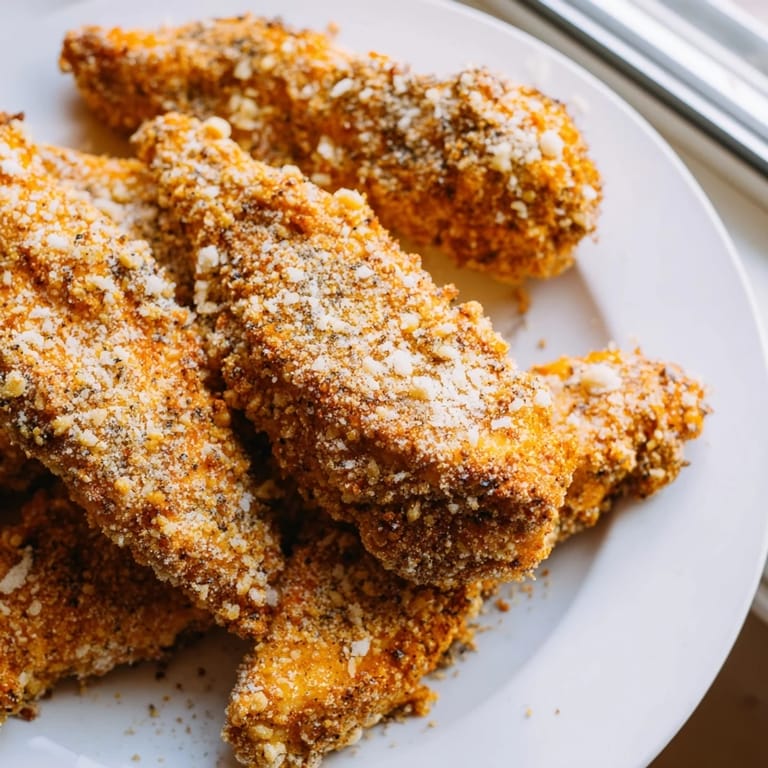
Save The first time I air-fried chicken tenders, I was skeptical—how could something that sounded so modern match the crispy-golden goodness I remembered from childhood? But three minutes into that first batch, the smell hit me: buttery, paprika-dusted, unmistakably crunchy. My kitchen suddenly felt like a casual diner, and I realized that sometimes the best dishes are the ones that sneak up on you with familiarity wrapped in a healthier disguise.
I made these for my nephew last summer, and he ate four pieces before asking if they were homemade or takeout—the pause before I answered felt like a small victory. His mom shot me a grateful look over his shoulder, and suddenly I wasn't just making lunch, I was giving her permission to relax for fifteen minutes while something good was happening in the kitchen.
Ingredients
- Chicken tenders (500g or 1.1 lbs): Use boneless, skinless chicken breasts if tenders aren't available—just slice them yourself into even strips so they cook at the same rate.
- Whole-wheat breadcrumbs (75g or 3/4 cup): The whole-wheat version adds subtle nuttiness and texture that regular breadcrumbs can't match, though panko works if crunch is your priority.
- Parmesan cheese (30g or 1/4 cup): Grated fresh is sharper and clingier to the breadcrumbs than pre-grated, which contains anti-caking agents that interfere with adhesion.
- Smoked paprika (1 tsp): This is where half the flavor lives—don't skip it or swap it for regular paprika, which tastes flat by comparison.
- Garlic powder, onion powder, dried oregano (1/2 tsp each): These three together create a savory base that feels complex without being complicated.
- Salt and pepper (1/2 tsp and 1/4 tsp): Taste the breadcrumb mixture before coating—you might want a pinch more depending on your palate.
- Eggs and low-fat milk (2 large + 2 tbsp): The milk thins the egg slightly, making it easier to coat evenly without excess drips that cause soggy spots.
- Olive oil spray: Two light spritzes per side makes the difference between crispy and chewy—it's not optional.
Tired of Takeout? 🥡
Get 10 meals you can make faster than delivery arrives. Seriously.
One email. No spam. Unsubscribe anytime.
Instructions
- Prep and preheat:
- Give your air fryer a full 5 minutes at 200°C (400°F) before cooking—a cold basket is the enemy of even crisping. Pat your chicken completely dry with paper towels; any moisture steams instead of fries.
- Build your coating station:
- Line up three bowls: egg mixture in the first, breadcrumb blend in the second, and a clean plate for the finished tenders. This assembly-line approach keeps hands cleaner and prevents breadcrumb clumps.
- Dip and coat with intention:
- Drag each strip through the egg first, let the excess drip off for two seconds, then press it into the breadcrumb mixture like you're giving it a gentle massage—the pressure helps the coating stick. If a bare spot appears, pinch some crumbs onto it immediately.
- Arrange for air circulation:
- Lay tenders in a single layer without touching; they need room to breathe. If your basket is crowded, cook in batches rather than stacking—overcrowding guarantees soft spots.
- The spray moment:
- Light, quick spritzes of olive oil on both sides activate the heat and golden the coating. Heavy spraying creates greasy puddles instead of crunch.
- Cook and turn:
- Halfway through the 10–12 minute cook time, flip each tender with tongs to ensure even browning. The internal temperature should hit 75°C (165°F) for food safety; a meat thermometer takes the guesswork out.
- Rest before serving:
- Give them two minutes on a clean plate before dipping—this lets the coating set and keeps it from sliding around.
 Pin it
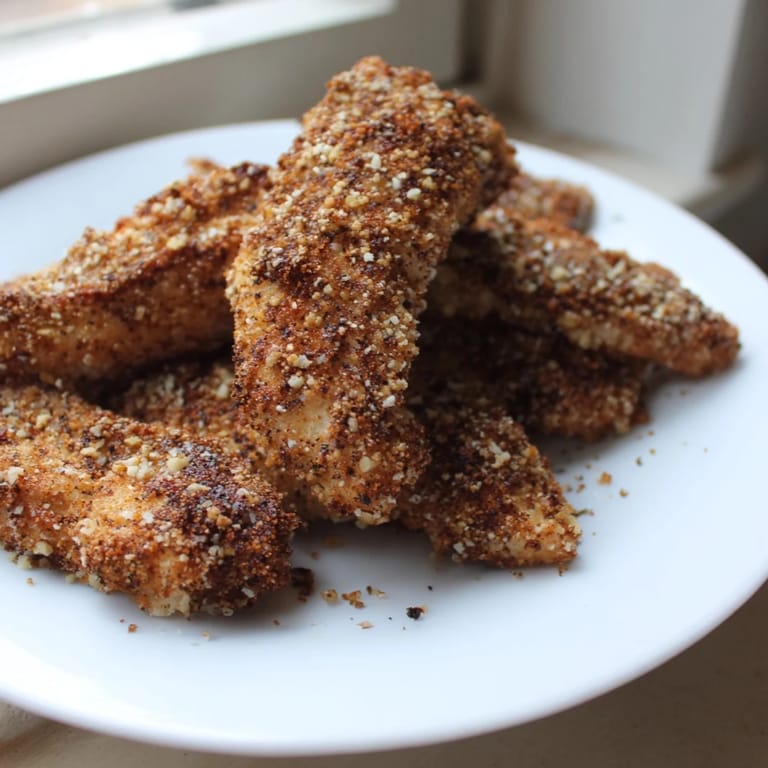
 There's a moment about halfway through cooking when the aroma shifts from raw-egg-and-flour to something approaching restaurant-quality, and that's when I know dinner is going to feel a little special. It's a small sensory cue that turns a Tuesday night into something worth remembering.
Why Air Fryer Chicken Matters
Air-frying isn't just a trendy kitchen gadget—it's the closest thing to deep-frying without the oil cleanup and calorie guilt. The dry heat circulates at speed, crisping the outside while keeping the inside juicy, and the whole process takes less time than traditional baking. I stopped feeling like I was choosing between convenience and nutrition; suddenly, both were on the same plate.
Dipping Sauces That Transform Dinner
Plain chicken tenders are solid, but a good dipping sauce turns them into an experience. Greek yogurt mixed with ranch seasoning, or honey mustard thinned with a touch of hot sauce, or even just ketchup spiked with sriracha—these little pairings let everyone at the table customize their bite without you having to cook five different meals. My family votes with their dips, and somehow that makes the whole thing feel more collaborative and less like I'm just feeding them.
Timing, Storage, and Make-Ahead Magic
Coated tenders keep in the fridge for up to 24 hours before cooking, which means you can prep them in the morning and air-fry them fresh at dinner with zero stress. Leftovers (if there are any) stay crispy in an airtight container for two days, and you can reheat them for two minutes at the same temperature to restore the crunch. I've also frozen pre-coated tenders for up to a month and fried them straight from frozen, adding just a minute or two to the cook time—future-you will be grateful for this option on nights when cooking feels impossible.
- Pat dry before storage so condensation doesn't soften the breading overnight.
- Reheat in the air fryer instead of the microwave to keep them crispy and delicious.
- If freezing, lay coated tenders on a baking sheet for an hour before bagging to prevent them from clumping together.
 Pin it
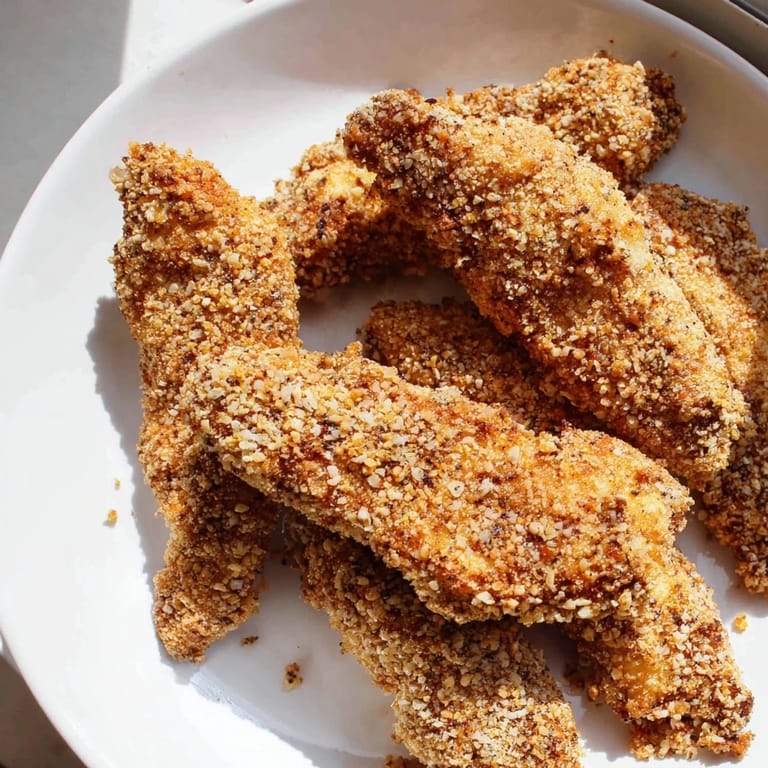
 These tenders have become my go-to when I want to feel like I've cooked something impressive without the stress—crispy, fast, and honestly better than most takeout versions I've tried. They're proof that eating well doesn't have to feel like a chore.
Frequently Asked Questions
- → What temperature should the air fryer be set to?
Preheat the air fryer to 200°C (400°F) before cooking for best results.
- → Can I use chicken breasts instead of tenders?
Yes, slicing boneless, skinless chicken breasts into strips works well for this method.
- → What can I use instead of Parmesan cheese?
Nutritional yeast makes a great dairy-free alternative to Parmesan in the breading mix.
- → How can I make the coating extra crunchy?
Using panko breadcrumbs instead of regular whole-wheat crumbs will add extra crunch.
- → Is there an alternative if I don’t have an air fryer?
You can bake the chicken strips in a convection oven at 220°C (425°F) for 15–18 minutes, flipping halfway.
- → Are these chicken tenders suitable for gluten-free diets?
Use certified gluten-free breadcrumbs to adapt this dish for gluten-free needs.