 Save
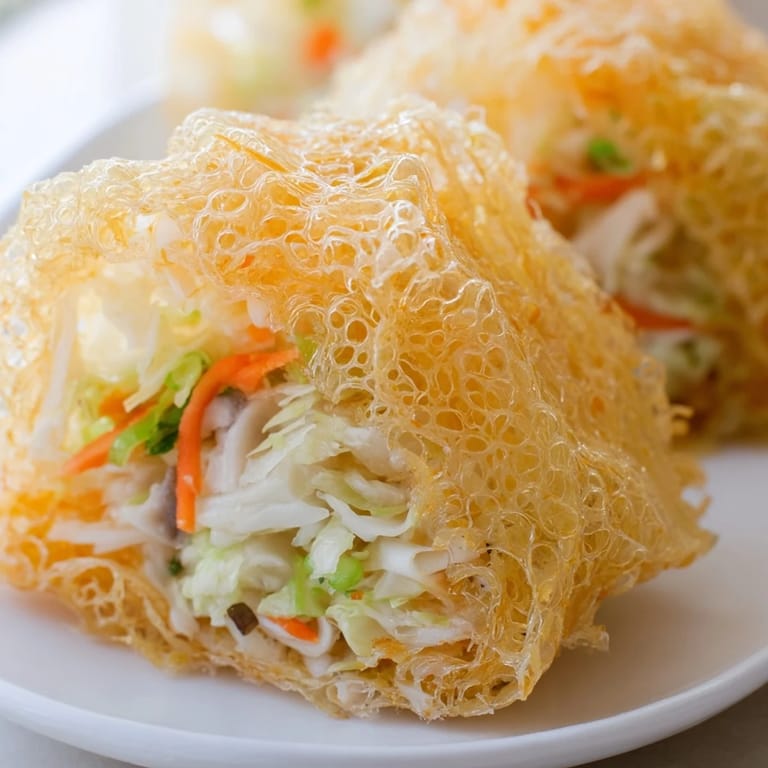
Save The first time I made crispy rice paper dumplings, I was experimenting with ingredients at the bottom of my fridge on a lazy Sunday afternoon. A bag of rice paper caught my eye, and I wondered if I could fry them instead of steaming. The result was pure magic: golden, crackling shells that shattered when you bit into them, revealing a warm, savory veggie filling. That one batch turned into a weekend staple, and now I can't imagine my kitchen without them.
I'll never forget when my friend Marco tasted these at a dinner party and kept reaching for another without asking what was in them. When I told him they were vegan and gluten-free, he looked genuinely shocked, as if I'd pulled off some kind of kitchen trick. That moment crystallized why I love making these so much, they're the kind of food that surprises people in the best way.
Ingredients
- Shredded green cabbage (1 cup): The backbone of the filling, it stays firm when cooked and adds a subtle sweetness. I learned to squeeze out excess moisture so the dumplings stay crispy.
- Grated carrot (1 medium): Brings natural sweetness and a delicate texture that softens just enough without turning mushy.
- Shiitake mushrooms, finely chopped (1/2 cup): These hold their shape better than button mushrooms and add an umami depth that makes you crave just one more dumpling.
- Thinly sliced green onions (2): A bright, fresh note that cuts through the richness and wakes up your palate with every bite.
- Minced garlic (2 cloves): Adds savory punch without overwhelming the other flavors when combined with the sesame oil.
- Soy sauce or tamari (1 tbsp): The seasoning anchor that ties everything together, use tamari if you need it gluten-free.
- Sesame oil (1 tsp): Just a small amount goes a long way, giving the filling a toasted, aromatic quality that feels almost luxurious.
- Grated fresh ginger (1/2 tsp): Adds a warm, subtle heat that lingers pleasantly without dominating.
- Rice paper sheets (12 sheets, 22 cm round): The magical wrapper that transforms into golden crackling when fried, treat them gently.
- Neutral oil for frying (2 tbsp): Avocado or canola work beautifully, keep the temperature medium to avoid burning.
- Soy sauce for dipping (2 tbsp): The foundation of your sauce, use tamari if needed.
- Rice vinegar (1 tbsp): Brings a gentle tang that balances the richness of the fried dumplings.
- Maple syrup or honey (1 tsp): A whisper of sweetness that rounds out the dipping sauce and makes it taste more complex than it is.
- Chili flakes (1/2 tsp, optional): For those moments when you want a little heat to wake things up.
Tired of Takeout? 🥡
Get 10 meals you can make faster than delivery arrives. Seriously.
One email. No spam. Unsubscribe anytime.
Instructions
- Mix Your Filling:
- In a large bowl, combine cabbage, carrot, mushrooms, green onions, garlic, soy sauce, sesame oil, and ginger, stirring until everything is evenly coated. The mixture should look like a vibrant, fragrant slaw.
- Lightly Cook the Veggies:
- Heat a nonstick skillet over medium heat and add the filling, sautéing for 3 to 4 minutes until the vegetables just soften but still have a little bite. This step helps release flavors while keeping things from getting watery inside the dumpling.
- Prepare Your Rice Paper:
- Fill a shallow dish with warm water and work quickly, because rice paper softens fast. Dip one sheet into the water for 5 to 10 seconds, just until it's pliable but still has a little resistance, then lay it on a damp kitchen towel.
- Wrap Like a Burrito:
- Place 2 tablespoons of filling in the center of the softened rice paper, fold in the two sides, then roll up tightly away from you, tucking as you go. The key is keeping tension so everything stays snug and nothing unravels in the pan.
- Repeat the Rolling:
- Work through all 12 sheets, keeping finished dumplings on a plate and covering them lightly with a damp towel so they don't dry out.
- Get Your Pan Ready:
- Heat 2 tablespoons of neutral oil in a large nonstick skillet over medium heat until it shimmers slightly, then carefully place the dumplings seam side down with a little space between each one. You'll hear them start to sizzle almost immediately, which is a beautiful sound.
- Fry Until Golden:
- Cook for 2 to 3 minutes on the first side without moving them, then carefully flip and cook the other side for another 2 to 3 minutes until both sides are deep golden and the rice paper crackles when touched. Use a gentle touch so the delicate wrappers don't tear.
- Make Your Dipping Sauce:
- While the last batch cooks, whisk together soy sauce, rice vinegar, maple syrup, and chili flakes in a small bowl, tasting and adjusting heat or sweetness to your preference.
- Serve Immediately:
- Transfer hot dumplings to a plate and serve them right away with the dipping sauce on the side, because the magic is in that contrast between crispy exterior and warm filling.
 Pin it
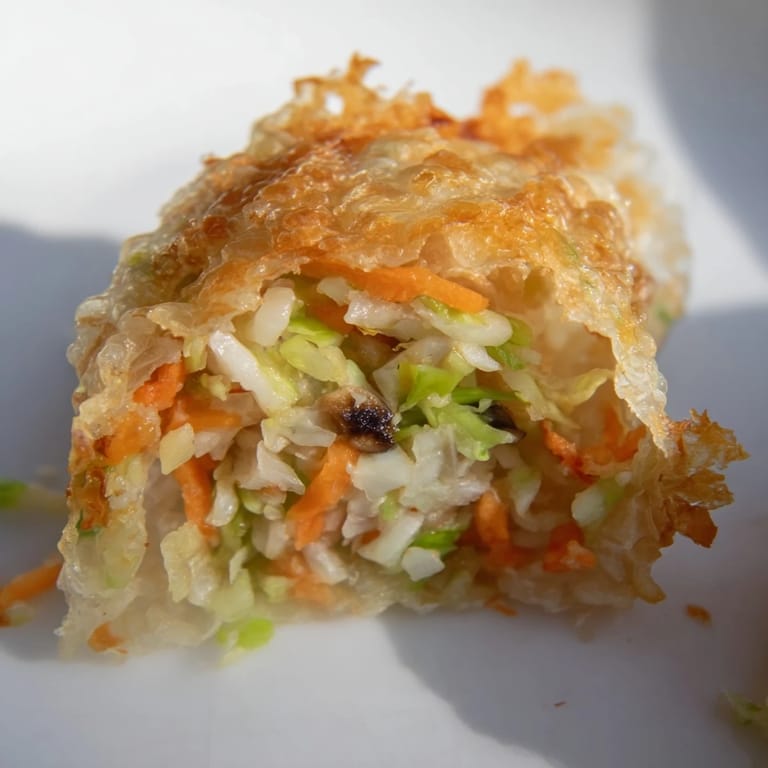
 There's something almost meditative about the rhythm of dipping, laying out, filling, and rolling these dumplings, your hands finding a groove as the pile of finished ones grows. By the time I've filled the last sheet, the kitchen smells like sesame and ginger, and I'm already thinking about which person I want to surprise with a batch.
The Secret to Maximum Crispiness
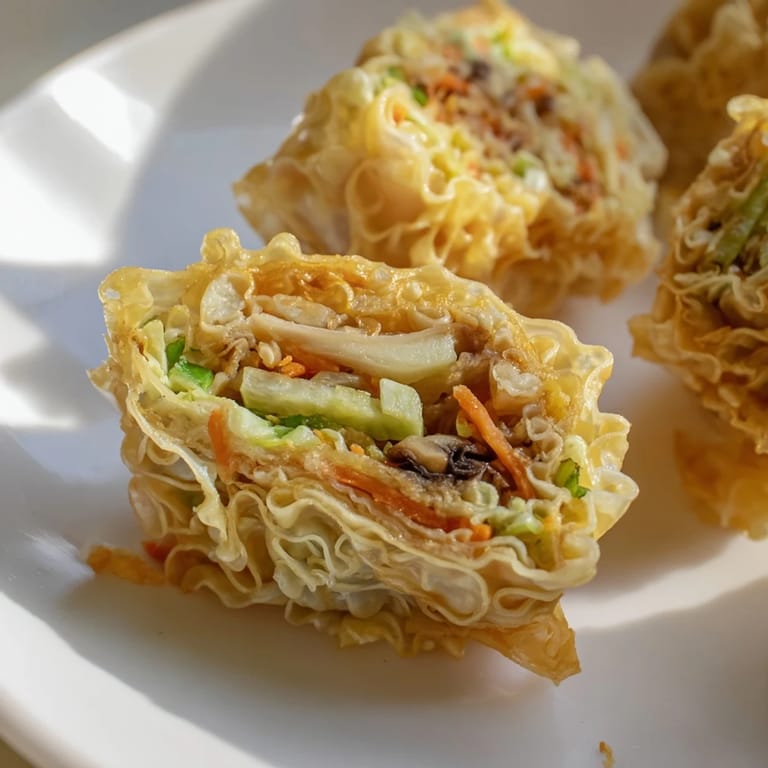
The difference between dumplings that shatter when you bite them and ones that go a little soft is partly about temperature, but mostly about not overfilling them. I used to stuff them generously, thinking more filling was better, until I realized that excess moisture from the vegetables creates steam, which softens the outside. Now I measure out exactly 2 tablespoons, and the improvement is noticeable every single time.
Customizing Your Filling
While the veggie version is my go-to, I've experimented with adding finely chopped tofu for extra protein on days when I want something more substantial. I've also learned that cooked, shredded chicken or even crispy tofu pieces turn these into a heartier appetizer without changing the essential technique. The beauty of the rice paper is that it adapts to whatever you want to wrap inside it, as long as you respect the moisture balance.
Flavor Variations and Pairings
Once you master the basic formula, you can play with the filling in fun ways. I've made a version with cilantro and lime instead of ginger, another with finely minced shiitake and a touch of soy sauce that's almost creamy. The dipping sauce is equally flexible, swap the rice vinegar for lime juice, or add a drizzle of chili oil for those who like heat. Serve these warm with tea, cold with a light salad, or even tucked into a lettuce wrap situation for something different.
- Try doubling up the rice paper for extra crunch if you're feeling adventurous.
- Make the dipping sauce a few hours ahead so the flavors meld and deepen.
- If your rice paper tears while rolling, just patch it with a wet scrap and keep going.
 Pin it
 These dumplings remind me that sometimes the simplest foods, made with care and a little curiosity, become the ones people remember. There's real joy in watching someone bite into that crackling shell for the first time.
Frequently Asked Questions
- → How do I keep rice paper from tearing when filling?
Dip the rice paper just until pliable, avoiding over-soaking. Handle gently when folding and rolling to prevent tears.
- → Can I add protein to the filling?
Yes, finely chopped tofu or cooked chicken can be added to increase protein while maintaining flavor and texture.
- → What oil is best for frying the dumplings?
Neutral oils with high smoke points like canola or avocado oil work well for achieving a crispy exterior without overpowering flavors.
- → How do I make the dumplings extra crispy?
Double wrap each dumpling with a second sheet of rice paper before frying for an added layer of crunch.
- → What is a good dipping sauce for these dumplings?
A simple mix of soy sauce or tamari, rice vinegar, maple syrup or honey, and optional chili flakes complements the flavors nicely.