 Save
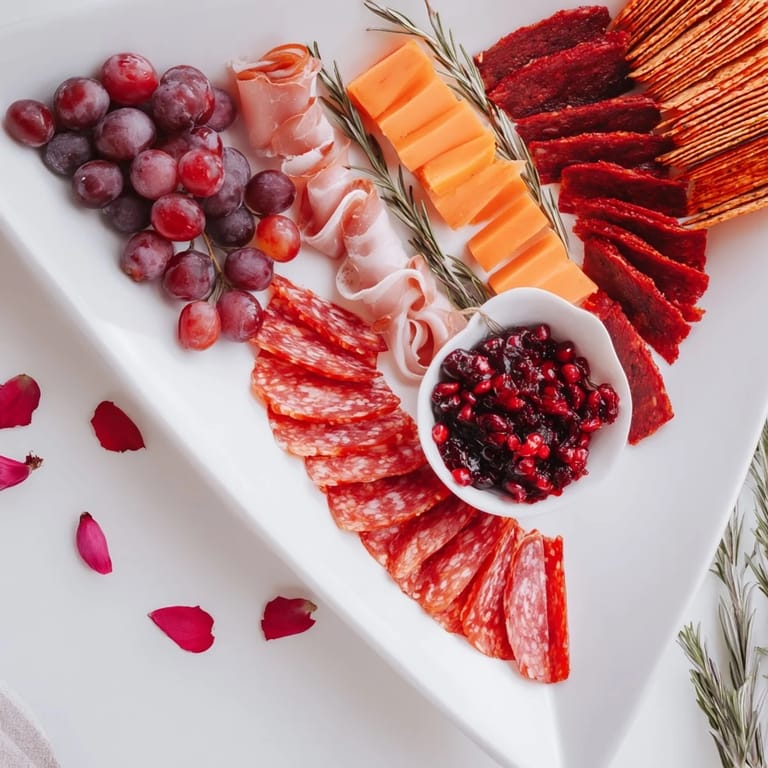
Save There's something about a charcuterie board that stops conversation mid-sentence. I discovered The Crimson Crest late one autumn when a friend arrived with wine-soaked cheeses I'd never encountered before, and suddenly our ordinary Tuesday became an impromptu tasting event. The deep reds and burgundy tones made the whole spread feel like edible velvet, and I realized that day that a good board isn't about having the fanciest ingredients—it's about creating a moment where people slow down and actually taste things. Now when I arrange these meats and cheeses, I'm not just preparing appetizers; I'm orchestrating a little ceremony of flavors and textures that somehow always feels special.
I remember serving this at a small dinner party where everyone was supposed to stay an hour, but nobody left until the board was empty and we'd moved on to a second bottle of wine. There's something about charcuterie that invites lingering—no one rushes through bites, and conversations naturally drift between the food and whatever's on people's minds. That night taught me that sometimes the best entertaining isn't about complexity; it's about creating space for connection, and having something beautiful to pass around helps with that.
Ingredients
- Prosciutto: This delicate, translucent meat curls beautifully when folded—slice it fresh if possible, as pre-packaged tends to stick together in frustrating clumps.
- Bresaola: Its subtle pepper-forward flavor grounds the board with a quieter sophistication that lets other ingredients shine.
- Spicy chorizo: This is your flavor anchor, the one that makes people reach for more without quite knowing why.
- Smoked beef salami: A textural bridge between the tender cured meats and the cheeses—don't skip it.
- Drunken Goat cheese: If you can only splurge on one ingredient, make it this; the wine-soaked coating transforms simple goat cheese into something mysterious.
- Red Wine Cheddar: This brings familiar comfort with an unexpected twist—aged enough to have real flavor but approachable enough that everyone eats it.
- Merlot BellaVitano: A wild card that adds a slightly sweet note and gorgeous color; it's often what lingers in people's memory after the meal.
- Red grapes: Their sweetness offers relief between the salt and intensity of the meats and cheeses.
- Pomegranate seeds: These burst with tartness and add visual drama that photographs capture beautifully.
- Red onion jam: A small jar goes a long way—it's the secret ingredient that makes people ask for the recipe.
- Roasted red peppers: Slightly sweet and impossibly tender, they create color continuity throughout the board.
- Dried cranberries: These catch light and add pops of color while providing a chewy, slightly tart moment.
- Baguette: Slice it just before serving so it stays crisp and warm; stale bread will derail the whole experience.
- Red beet crackers: They're naturally beautiful and add earthiness without overwhelming the delicate meats and cheeses.
- Fresh rosemary sprigs: Break off small pieces as you eat to release their oils; the aroma matters as much as the taste.
Tired of Takeout? 🥡
Get 10 meals you can make faster than delivery arrives. Seriously.
One email. No spam. Unsubscribe anytime.
Instructions
- Fold and arrange the meats:
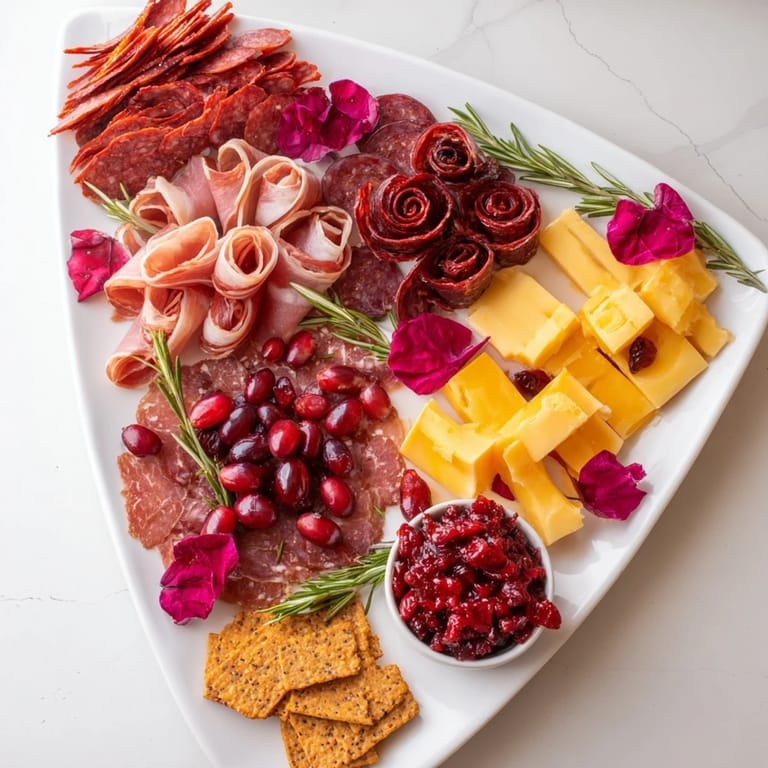
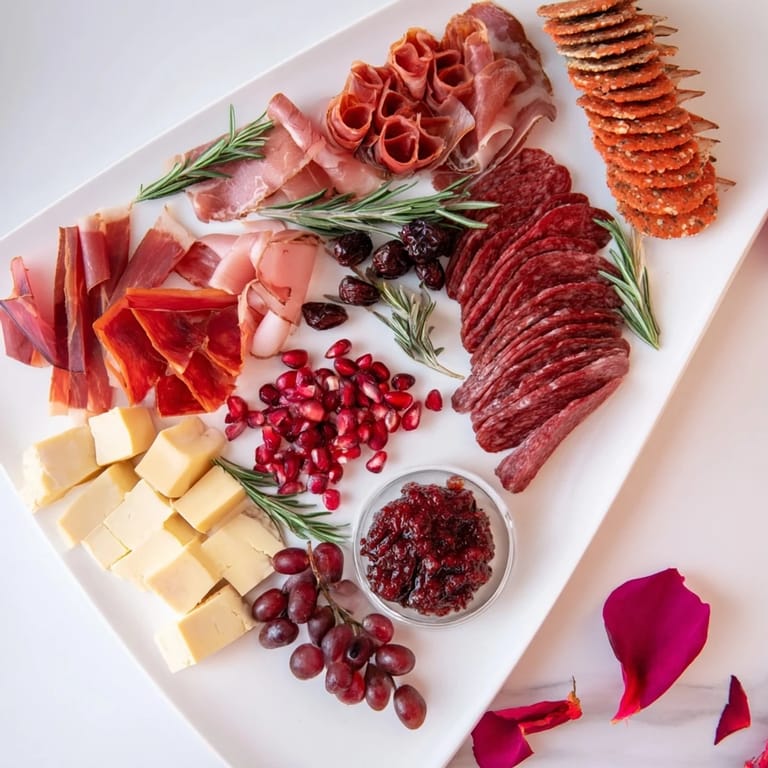
- Take your time with the prosciutto—it tears easily, so work gently and let each fold fall naturally. Group similar textures together so the board tells a visual story; your eye should move smoothly from one section to the next without jarring color shifts.
- Slice and fan the cheeses:
- Cut thick enough that bites feel substantial, thin enough that the flavors register immediately. Watch how the wine-soaked cheeses glisten under light—that's your sign you've got something special.
- Scatter fruits and bright elements:
- Don't worry about perfect symmetry; the slightly random placement of pomegranate seeds and cranberries is what makes it feel abundant and inviting. These jewel tones are what draw people's hands first.
- Fill and balance:
- Use the baguette slices and crackers to bridge gaps and create texture variety. This step determines how approachable the whole board feels—leave enough space that people can navigate without feeling overwhelmed.
- Garnish for aroma and color:
- Tuck rosemary sprigs into corners and scatter edible rose petals if you're feeling it. The rosemary especially should be positioned so people naturally brush against it as they reach for cheese.
- Serve at room temperature:
- Set it out about thirty minutes before guests arrive so everything reaches that perfect warm-but-not-hot sweetness where flavors truly open up. Cold cheeses taste muted; room temperature feels generous.
 Pin it
 The real magic of a charcuterie board is watching it disappear piece by piece, knowing that your simple act of arranging good ingredients created something people wanted to gather around. There's vulnerability in that—you're saying 'this matters enough to present beautifully'—and somehow that always lands.
The Art of Board Building
Building a charcuterie board is less about following rules and more about understanding balance. You're working with color, texture, flavor intensity, and visual weight all at once—kind of like conducting an orchestra where every instrument should be heard but nothing should drown anything else out. I learned this through trial and error, mostly error, watching boards I'd assembled with perfect symmetry sit untouched while chaotic, imperfect ones disappeared in minutes. The difference wasn't the ingredients; it was that the messy ones invited exploration while the neat ones felt too precious to disturb.
Pairing Wine with Your Board
A bold red wine—Cabernet Sauvignon, Malbec, even a Côtes du Rhône—transforms the experience entirely. The tannins in these wines grab hold of the salty meats and punch through the richness of the cheeses, and suddenly each bite tastes bigger than it is. I've watched people who claim not to like wine sit with a glass for two hours, moving between wine and cheese and meat in this meditative rhythm that honestly feels better than dessert. The wine also cools your palate between bites, so you taste each component fresh rather than as an accumulated jumble.
Timing and Temperature Secrets
Room temperature is non-negotiable, and I mean actually room temperature, not 'pulled from the fridge five minutes ago.' Cold cheese tastes almost nothing like itself—the fat is locked down, the subtle flavors are muted. I learned this the embarrassing way, serving a board I'd frantically assembled straight from the refrigerator to arriving guests, watching them pick politely while I internally screamed knowing the full potential was sitting there dormant. Now I set everything out early and treat those thirty minutes as part of the recipe.
- Meats release more flavor when they're not ice-cold, so they'll actually taste like something rather than just salt.
- The crackers and bread stay crispest if you add them last, or keep them slightly separate if you need to assemble early.
- Keep the jam in a small bowl rather than spreading it on the board—it prevents sogginess and looks more intentional.
 Pin it
 The Crimson Crest exists because good food is an excuse to gather, and sometimes the best entertaining is the simplest. Keep this one in your back pocket for moments when you want to feel generous without exhaustion.
Frequently Asked Questions
- → What types of meats are included?
The board includes prosciutto, bresaola, spicy chorizo, and smoked beef salami, each offering distinctive textures and flavors.
- → Which cheeses complement the meats?
Red wine-soaked cheeses such as Drunken Goat, Red Wine Cheddar, and Merlot BellaVitano provide rich, tangy notes that enhance the savory meats.
- → What accompaniments are recommended?
Fresh red grapes, pomegranate seeds, roasted red peppers, red onion jam, dried cranberries, baguette slices, and beet crackers add sweetness, acidity, and crunch.
- → How should the board be presented?
Arrange meats and cheeses in clusters, place the fruits and spreads around them, and fill gaps with bread and crackers. Garnish with rosemary sprigs and edible rose petals for aroma and color.
- → Are there suggestions for pairing beverages?
A bold red wine such as Cabernet Sauvignon or Malbec pairs beautifully, complementing the rich flavors and textures of the board.
- → Can this board be adapted for dietary restrictions?
Yes, gluten-free crackers can replace traditional ones, and alternative cheeses can be selected to accommodate allergies.