 Save
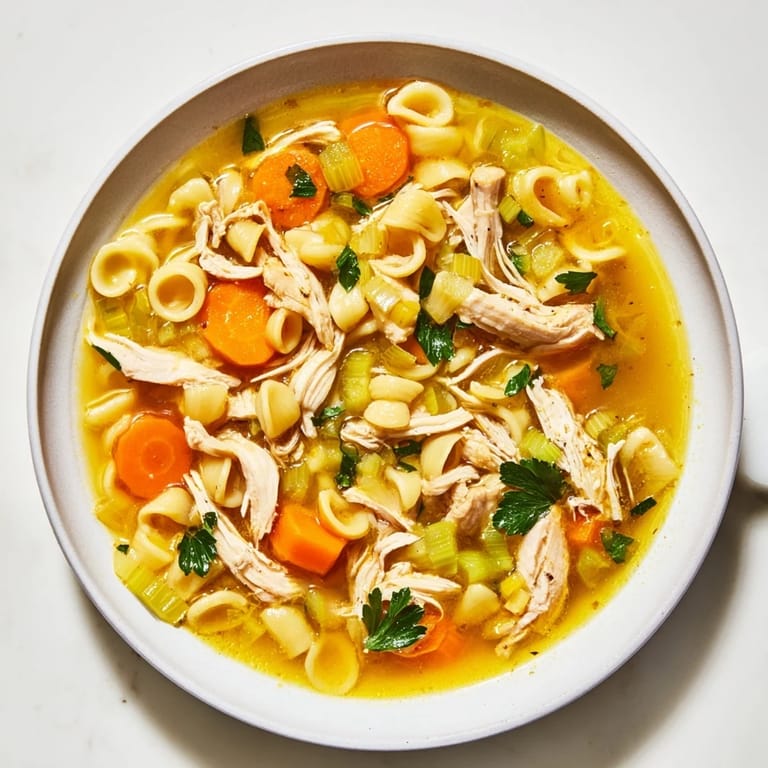
Save My cousin called me on a Tuesday, her voice hoarse from coughing, and I knew exactly what she needed. There's something about a steaming bowl of chicken soup that feels like a hug when you're feeling run down, and this version with its warm golden turmeric and bright ginger became my go-to remedy. The first time I made it for her, the kitchen filled with this unexpected spiced aroma that somehow felt both comforting and medicinal in the best way. She texted me later saying she'd already made it twice more herself.
I'll never forget watching my neighbor Tom slurp down three bowls at a dinner party where half the guests were sniffling. He kept saying it tasted like medicine that actually wanted to be eaten, which somehow became the best compliment I've ever received for a soup. The way the ditalini absorbs all those flavors makes it feel substantial enough to be a real meal, not just something you eat when you're desperate.
Ingredients
- Boneless, skinless chicken breasts (2, about 400 g): Buy them fresh if you can and pat them dry before searing, which gives you that golden crust that makes everything taste better.
- Olive oil (1 tablespoon): Don't cheap out here, that initial sear of the chicken matters more than you'd think.
- Medium onion (1, diced): This is your flavor foundation, so take thirty seconds to dice it properly instead of hacking at it randomly.
- Large carrots (2, peeled and sliced): Peeling matters because the skin can taste bitter if you're not careful, and you want this soup to feel refined.
- Celery stalks (2, sliced): This is the holy trinity partner, the one everyone forgets to celebrate but absolutely needs to be there.
- Garlic cloves (4, minced): Fresh garlic makes such a difference here, and honestly those pre-minced jars just don't compare.
- Fresh ginger (1 tablespoon, grated): Use a microplane or the smallest holes on your box grater, and measure after grating because it compacts.
- Fresh or ground turmeric (1 teaspoon fresh, grated or 1/2 teaspoon ground): If you can find fresh turmeric at an Asian market, grab it, but ground works perfectly fine when you're in a pinch.
- Low-sodium chicken broth (8 cups): This is where I learned to read labels obsessively, because sodium levels vary wildly and it changes everything.
- Ditalini pasta (3/4 cup): These tiny tubes catch all the broth, which is exactly why they're perfect for soup and why bigger pasta shapes disappoint.
- Bay leaf (1): It adds an herbal whisper that you don't taste directly but absolutely notice when it's missing.
- Salt (1 teaspoon, more to taste): Taste as you go because low-sodium broth means you're in control of the seasoning.
- Black pepper (1/2 teaspoon): Crack it fresh if you have a mill, the difference is real.
- Fresh parsley (2 tablespoons, chopped): This goes in at the very end and brightens everything up like opening a window on a stuffy day.
- Lemon juice (from 1/2 lemon): Acid is your secret weapon, it makes all the other flavors pop into focus.
Tired of Takeout? 🥡
Get 10 meals you can make faster than delivery arrives. Seriously.
One email. No spam. Unsubscribe anytime.
Instructions
- Sear your chicken until it's golden:
- Heat the olive oil in a large pot over medium heat and let it shimmer before adding the chicken breasts. Let them sit for a full 2 to 3 minutes on each side without moving them around, which gives you that gorgeous golden crust that means flavor.
- Build your flavor base:
- In that same pot with all the browned bits stuck to the bottom, toss in your onion, carrots, and celery and let them soften for about 5 minutes, stirring occasionally. You're waking up all those vegetables and letting them talk to each other.
- Wake up the spices:
- Add the garlic, ginger, and turmeric and cook for just 1 minute until your whole kitchen smells like something healing and delicious. Don't skip this step or let it go longer or the garlic will turn bitter.
- Build the broth base:
- Return the chicken to the pot and pour in the broth along with the bay leaf, then bring everything to a boil before turning it down to a gentle simmer. Cover it and let it bubble softly for 20 minutes while the chicken cooks through completely.
- Shred and return:
- Pull out the chicken breasts and shred them with two forks right on a cutting board or a plate, then stir them back into the pot where they'll absorb all those gorgeous flavors. It's oddly satisfying work.
- Cook the pasta:
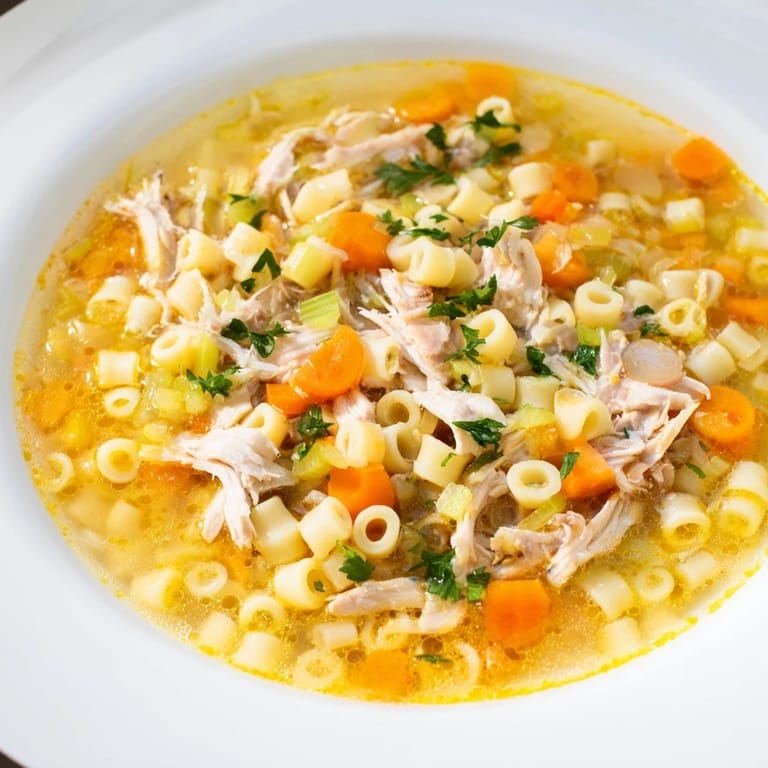
- Add the ditalini pasta along with salt and pepper, and let it cook uncovered for 8 to 10 minutes until it's tender but still has a tiny bit of resistance. Taste the broth at minute 8 to see how you're doing.
- Finish with brightness:
- Stir in the fresh parsley and lemon juice, which add a fresh note that makes everyone take another spoonful, then fish out that bay leaf. Taste and adjust seasoning because this is your moment to make it exactly right.
 Pin it
 There was a moment when my partner came home exhausted from a long shift, took one spoonful, and just sat quietly with the bowl for ten minutes. No words, just the quiet comfort of something that tastes like it actually cares about you. That's when I realized this soup had become more than just a recipe, it was a small act of love that lives in my kitchen.
Why This Soup Actually Works
The genius of this soup is that it doesn't try to be fancy, it just builds flavor methodically. The turmeric and ginger aren't there to make you feel virtuous, they're there because they genuinely taste beautiful together when they're simmered into a warm broth. I've made this dozens of times now, and the consistency of how it makes people feel better is almost spooky.
Pasta Matters More Than You Think
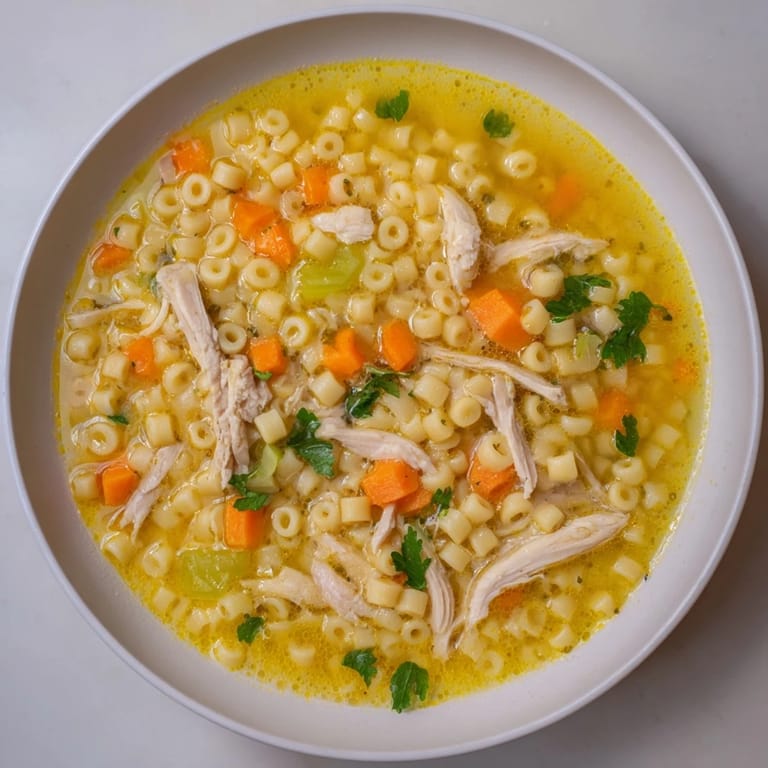
The first time I made this with regular spaghetti broken up, it was a mess. Ditalini pasta is tiny for a reason, those little tubes catch broth and hold onto the flavors instead of getting lost. If you can't find ditalini, orzo works beautifully and so do small shells, but honestly once you find ditalini you'll understand why it's worth seeking out for soups.
Customization and Storage
This soup is forgiving, which is why it's become my go-to when I want to feed people without a lot of stress. I've added spinach when I had it on hand, thrown in a pinch of cayenne when someone wanted extra heat, and once I added a splash of white wine because it was sitting on the counter. The base is strong enough to handle your creativity without falling apart.
- If you're making this for someone with dietary restrictions, check your pasta and broth labels because wheat and other allergens hide in surprising places.
- This freezes like a dream for up to three months, and honestly tastes even better the second time around after the flavors get to know each other.
- Reheat it gently on the stove with a splash of water if it thickens up, because the pasta continues to absorb broth even after you've put it away.
 Pin it
 This soup has become my answer to so many questions, the one I make when I want to say I'm thinking of you without saying it out loud. There's real magic in something this simple tasting this good.
Frequently Asked Questions
- → What is the best way to prepare the chicken for this soup?
Sear the chicken breasts in olive oil until lightly golden to lock in flavor before simmering them in the broth.
- → Can I substitute ditalini with other pasta?
Yes, small pasta shapes like orzo or small shells work well as alternatives to ditalini.
- → How do the ginger and turmeric affect the flavor?
Fresh ginger adds a warm, slightly spicy note, while turmeric offers a mild earthiness and vibrant color.
- → When should I add the parsley and lemon juice?
Stir in fresh parsley and lemon juice at the end of cooking to preserve their bright, fresh flavors.
- → Can I make this soup dairy-free?
Yes, this soup is naturally dairy-free and relies on fresh ingredients and spices for flavor.
- → Is it possible to add extra greens to the soup?
Absolutely, adding chopped spinach or kale near the end enhances nutrition and color without overpowering the dish.