 Save
Save There's something about standing in front of a simmering pot of ribollita that makes you feel like you're standing in someone's Tuscan kitchen, even if you're nowhere near Italy. My first real encounter with this soup happened on a rainy October afternoon when a friend brought over a container of her grandmother's version, and I was immediately struck by how something so humble—beans, vegetables, bread—could taste so impossibly satisfying. That day, I realized ribollita isn't just soup; it's edible patience, the kind of dish that asks you to slow down and trust the process.
I made this for a small dinner party once, and watching four people go absolutely quiet the moment they took their first spoonful told me everything I needed to know about whether the recipe worked. One guest even asked for the bowl to be refilled, something that had never happened before at my table, and I've been making it ever since.
Ingredients
- Extra-virgin olive oil: This is where Tuscan cooking reveals its secret—good olive oil tastes like green olives and fresh-cut grass, and it's the backbone of flavor here.
- Yellow onion, carrots, celery: This holy trio (soffritto) is Italian cooking's foundation; sauté them low and slow so they meld into golden sweetness.
- Garlic cloves: Add them after the soffritto is soft to avoid bitterness—timing matters more than you'd think.
- Fennel bulb: Optional but worth seeking out; it adds an anise whisper that makes people wonder what that lovely something is.
- Zucchini and Yukon gold potato: The potato thickens everything naturally while zucchini adds brightness; neither needs peeling perfection.
- Tuscan kale (cavolo nero): This variety is sturdier and less bitter than curly kale, and it softens into silky ribbons during cooking.
- Diced tomatoes: Canned is perfectly fine here—in fact, it's more reliable than fresh tomatoes out of season.
- Cannellini beans: These creamy white beans are essential; canned and rinsed works beautifully and saves you hours.
- Vegetable broth: Use something you'd actually drink; the broth becomes half your soup.
- Bay leaf, thyme, oregano: These dried herbs work together to create an earthy, Mediterranean backbone without tasting medicinal.
- Day-old sourdough bread: Stale bread is exactly what you want; fresh bread just absorbs the oil and gets heavy.
Tired of Takeout? 🥡
Get 10 meals you can make faster than delivery arrives. Seriously.
One email. No spam. Unsubscribe anytime.
Instructions
- Build your flavor base:
- Heat the olive oil in your Dutch oven, then add the onion, carrot, celery, and fennel. You're looking for the vegetables to turn golden and soft, which takes about 8–10 minutes; the kitchen will smell like the beginning of something delicious. Don't rush this step because this is where half your soup's personality gets built.
- Wake up the garlic:
- Once the soffritto is ready, add the minced garlic and let it bloom for just one minute until fragrant. This brief window prevents the garlic from turning bitter, which would haunt every spoonful.
- Add texture and color:
- Stir in the zucchini, potato, and kale, cooking for another 3–4 minutes so they start to soften slightly and release their flavors. The kale will look like it takes up the entire pot, but it wilts down beautifully.
- Build the broth and season:
- Pour in the diced tomatoes with their juices, the rinsed cannellini beans, and the vegetable broth. Add the bay leaf, thyme, oregano, and red pepper flakes if you like heat. Season generously with salt and pepper—this is important because beans need salt to taste like themselves.
- Simmer and mash:
- Bring everything to a boil, then reduce the heat to low and simmer, uncovered, for 35–40 minutes, stirring occasionally. About halfway through, use the back of a spoon to partially mash some beans and vegetables against the side of the pot; this thickens the broth naturally and creates a rustic texture that feels intentional.
- Toast your croutons:
- While the soup simmers, preheat the oven to 400°F and toss your sourdough cubes with olive oil on a baking sheet. Bake for 10–12 minutes, turning halfway through, until they're golden and crispy on the outside but still slightly chewy inside. The moment they come out, rub them with the cut side of a garlic clove while they're still warm so the garlic oils sink in.
- Taste and adjust:
- Remove the bay leaf, taste the soup, and adjust the salt and pepper if needed. Sometimes it needs just a pinch more, sometimes it's already perfect.
- Serve with intention:
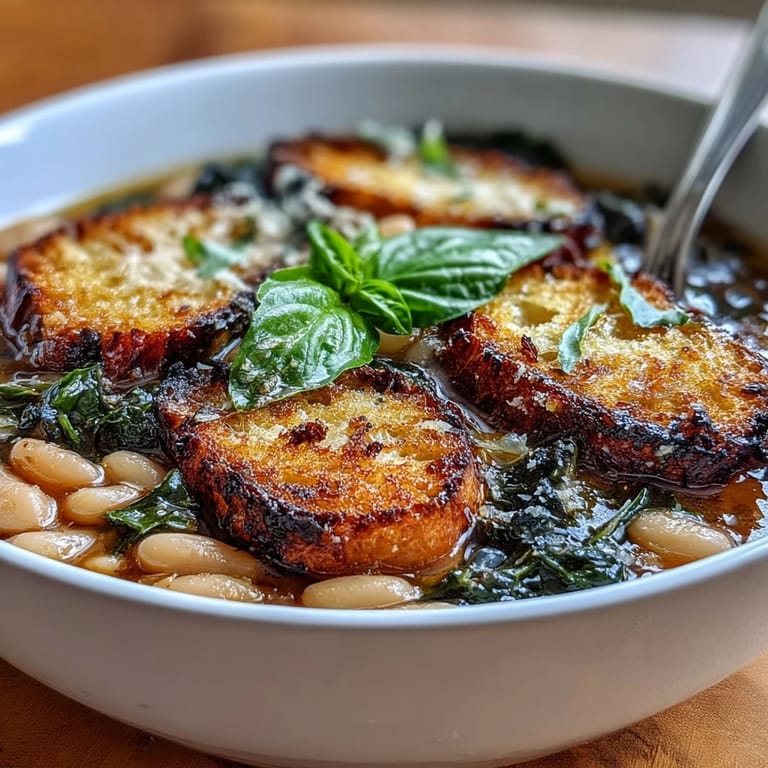
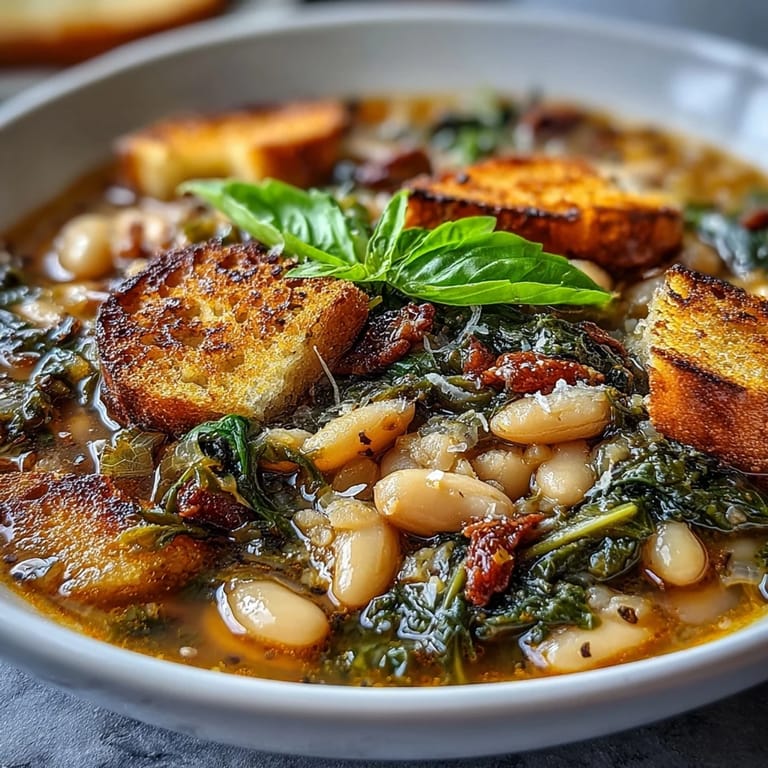
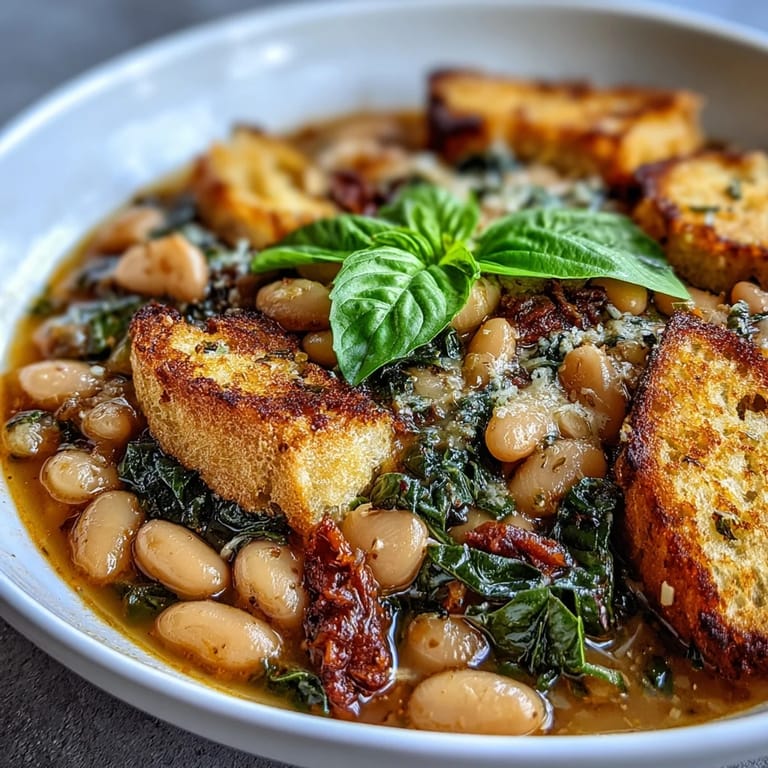
- Ladle the soup into bowls and crown each one with a generous handful of warm croutons, a drizzle of good olive oil, and a scatter of Parmigiano-Reggiano if you're using it. Watch how the croutons float on top like little islands of joy.
 Pin it
 This is the soup I make when someone I care about is going through something difficult, because somehow a bowl of ribollita says things that words sometimes can't—it says I'm thinking of you, I want you to be warm, I'm taking time to feed you properly. It never fails.
The Secret to Tuscan Depth
If you really want to elevate this soup into something that tastes like it's been simmering in a Tuscan kitchen for hours, add a whole Parmigiano-Reggiano rind to the broth as it simmers and remove it before serving. The rind dissolves its umami magic into the broth without any bitterness, and suddenly the soup tastes richer and more complex than its simple ingredients suggest. I learned this trick from an Italian cookbook that sat on my shelf for years before I actually tried it, which means I missed out on years of better ribollita.
Flexibility and Substitutions
Ribollita is forgiving in the way that real rustic food is—it's designed to use what's available and what's seasonal. If kale isn't speaking to you, Swiss chard or spinach work beautifully and cook down even faster. If fennel feels too adventurous, skip it entirely and let the other vegetables shine. For a vegan version, simply leave off the cheese and use a good vegetable broth; the soup's richness comes from the beans and the slow cooking, not from the dairy.
Timing and Make-Ahead Magic
This soup genuinely tastes better the next day after the flavors have had time to get to know each other in the fridge, which is wonderful news for your schedule. You can make the entire pot up to two days ahead and reheat it gently on the stovetop, adding the fresh croutons right before serving so they stay crisp. The only thing I'd suggest making fresh is the croutons themselves—they're best within a few hours of toasting, and that warm garlic-rubbed flavor is what makes the whole dish sing.
- Make the soup a day or two ahead and reheat gently before serving for even deeper flavor.
- Store leftover croutons in an airtight container and re-crisp them in a 300°F oven for five minutes if they soften.
- This soup freezes beautifully for up to three months, so batch-making is absolutely worth considering.
 Pin it
 Ribollita teaches you that the best food often comes from constraints—using what you have, respecting seasonal vegetables, and trusting that simplicity, when done with intention, becomes elegance. Make this soup when you want to feel grounded and warm.
Frequently Asked Questions
- → What makes this Tuscan soup hearty?
The combination of tender white beans, starchy potatoes, and nutrient-rich kale adds both texture and sustenance, making the soup filling and satisfying.
- → How are the sourdough croutons prepared?
Cubed day-old sourdough is tossed in olive oil, baked until golden, then rubbed with garlic for a crisp, flavorful topping.
- → Can I substitute the kale with other greens?
Yes, Swiss chard or spinach work well as alternatives, providing similar texture and nutrients.
- → Is it possible to make this dish vegan?
Omit the Parmigiano-Reggiano cheese or replace it with a vegan alternative to keep it plant-based.
- → What herbs enhance the flavor of this soup?
Dried thyme, oregano, and optional crushed red pepper flakes bring aromatic depth and subtle heat to the dish.
- → How can I thicken the soup’s texture?
Partially mashing some beans and vegetables while simmering naturally thickens the broth for a comforting consistency.