 Save
Save I'll never forget the first time I walked into a contemporary art gallery and stood mesmerized before a Pointillist canvas—those thousands of tiny dots somehow creating something wholly alive and cohesive. Years later, while cooking for a friend who's an artist, I wondered what it would look like to translate that technique onto a plate. That afternoon, I spent an hour carefully piping dots of vibrant vegetable purees, layering in contrasting sauces, and suddenly understood that cooking and painting share the same magic: individual elements coming together to create something that moves people.
I made this the night I was celebrating a promotion, wanting something that felt as special as the moment. My partner walked into the kitchen and just stopped—staring at the plate like it belonged in a museum. We barely talked while eating, just smiled between bites, each one tasting like bright colors and textures I'd arranged with my own hands. That's when I knew this dish was about more than impressing people; it was about making them feel something.
Ingredients
- Beetroot puree (80 g): Cooked beets create that deep, earthy jewel tone that anchors the whole composition—don't skip roasting or boiling them until they're fully tender, or your puree will have a grainy texture that refuses to pipe smoothly
- Carrot puree (80 g): The warm orange that bridges sweet and savory, and I've learned that raw carrots simply won't blend into the silky consistency you need, so always cook them first
- Green pea puree (80 g): This gives you that bright, hopeful green and tastes like spring—frozen peas work beautifully and are honestly easier than shelling fresh ones
- Yellow bell pepper puree (80 g): Roasting brings out a subtle sweetness and makes it the most velvety of all the purees, worth the extra step
- Greek yogurt (60 g): The creamy anchor that lets you taste the vegetables rather than covering them—quality matters here
- Crème fraîche (40 g): Slightly tangy and richer than yogurt, it creates beautiful visual contrast and a taste surprise when your spoon catches it
- Basil pesto (1 tbsp): Bright and herbaceous, a tiny moment of Mediterranean warmth on the plate
- Red pepper coulis (1 tbsp): Sweet and glossy, this silky sauce becomes one of your most beautiful accents
- Balsamic reduction (1 tbsp): Dark, concentrated, and slightly tangy—the deepest note in your flavor composition
- Pickled red onions (20 g, finely diced): These add unexpected sharpness and a jewel-like color; I pickle them ahead because the flavor is worth the small effort
- Microgreens: The final touch of delicate texture and a whisper of freshness
- Toasted black sesame seeds (1 tbsp): Nutty and toasted, they add earthiness and visual drama
- Pomegranate seeds: Jewel-like bursts of tartness that surprise the palate
- Edible flower petals (optional): If you have them, a few pansies or violas complete the art installation feeling
- Sea salt flakes and freshly ground black pepper: The final brushstrokes that season each region of the plate according to what you discover
Tired of Takeout? 🥡
Get 10 meals you can make faster than delivery arrives. Seriously.
One email. No spam. Unsubscribe anytime.
Instructions
- Prepare your palette of purees:
- Blend each vegetable separately with just a pinch of salt and a whisper of olive oil until each one becomes completely smooth—this is where patience pays off. If it's too thick to pipe, add oil one drop at a time. Transfer each puree into its own piping bag or squeeze bottle, and arrange them in front of you like an artist's palette.
- Ready your sauces and creams:
- Place the yogurt and crème fraîche in separate piping bags. Pour the pesto, red pepper coulis, and balsamic reduction into their own squeeze bottles. Now you have all your colors ready, and the sensory pleasure of seeing them lined up will make you excited to begin.
- Create your pointillist composition:
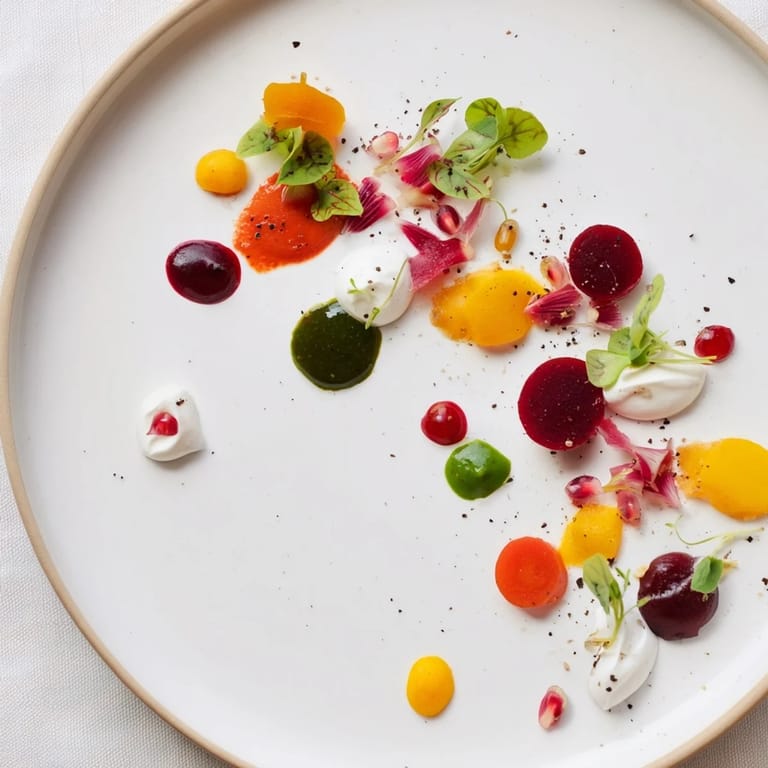
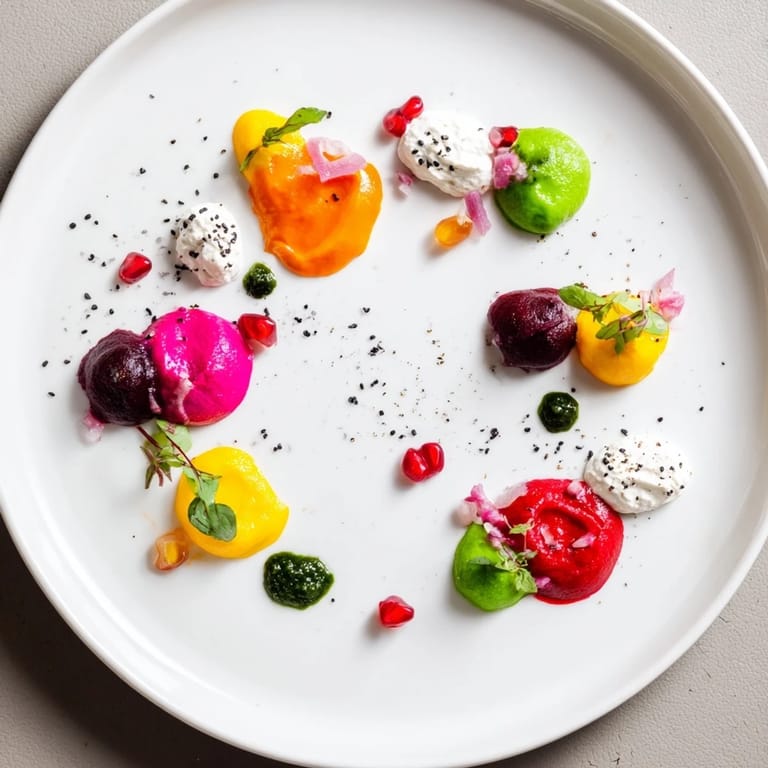
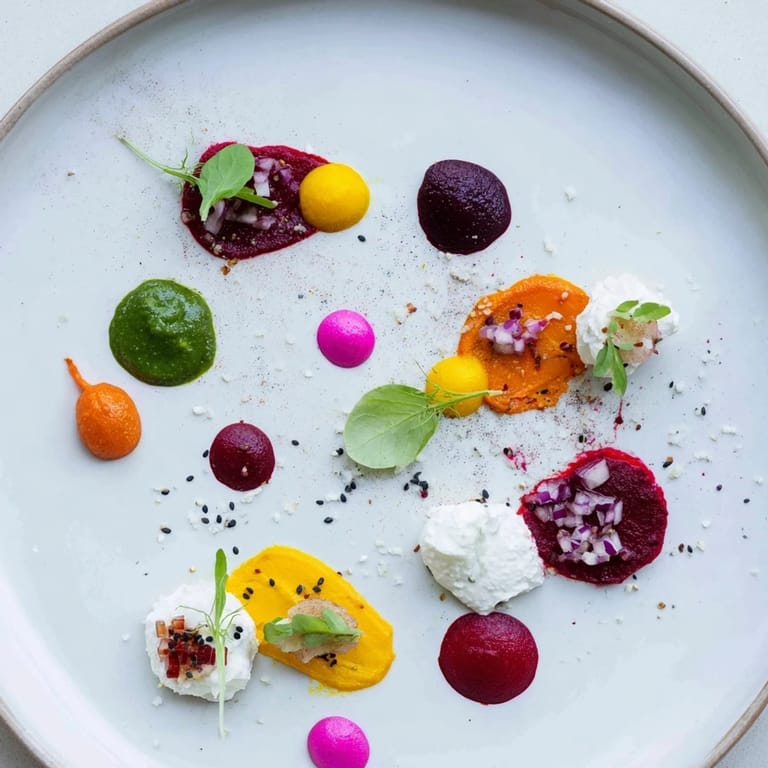
- Start with a clean white plate—you're about to become an artist. Begin piping dots and tiny mounds of each puree and sauce across the surface in a scattered, almost random pattern, letting them not quite touch. Vary the sizes: some dots tiny as grains of salt, others the size of a small coin. Think about color balance as you work, never letting too much of one shade dominate.
- Layer with texture and surprise:
- Now comes the part that feels like genuine play. Scatter your pickled red onions over and around the dots, letting their ruby color catch the light. Add pinches of microgreens, sesame seeds, and pomegranate seeds in places that feel right to you—there's no wrong answer here.
- Season and serve immediately:
- Finish with flakes of sea salt and cracks of black pepper, tasting as you go so that each region of the plate feels balanced. Serve right away, while the purees are still plump and the microgreens haven't begun to wilt, so that the visual impact hits exactly as you intended.
 Pin it
 A few weeks after I mastered this dish, my mother visited and I made it for her birthday dinner. She put down her fork and just looked at me, eyes a little watery, and said something about how food that beautiful must taste like love. In that moment, I understood that the Pointillism Dot Matrix isn't really about artistry or technique—it's about caring enough to slow down and make something gorgeous for people you cherish.
The Story Behind the Dots
Modern plating often feels cold and distant, like art behind glass that you can't touch. But this dish is different—it's interactive from the moment it arrives. You're not following a path the chef set; you're discovering your own combinations. Every spoonful is a choice you make, which means you're not just eating, you're collaborating with the cook. That collaborative feeling is what transforms a beautiful plate into something memorable.
Adapting Your Composition
The magic of this dish is that it invites experimentation without ever losing its elegance. Purple sweet potato creates a regal violet note. Roasted purple cabbage offers something earthier. Avocado, while it doesn't pipe as cleanly, can be dolloped in small mounds. Green herb purees made from spinach or cilantro shift the flavor profile entirely. I've found that the only real rule is: if the color sings and the flavor brings joy, it belongs on your plate.
Serving and Sharing
This recipe is built for sharing, whether you're plating for four intimate guests or creating a stunning first course that sets the tone for a dinner party. The beauty is that it can be assembled in stages—purees and sauces ready hours ahead, final plating done in those magical minutes before service when anticipation builds in the kitchen.
- Pair it with a crisp Sauvignon Blanc or a delicate sparkling wine that won't overpower the subtle vegetable flavors
- Serve with warm sourdough or crisp crackers on the side so guests can create little flavor vehicles if they'd like
- Remember that this dish is a moment—serve it immediately after plating so the visual impact hits at full force
 Pin it
 Every time I make this dish, I remember why I cook: to create moments where art and nourishment become one thing. The Pointillism Dot Matrix is proof that the most spectacular meals don't require fancy techniques, just intention and a willingness to make something beautiful.
Frequently Asked Questions
- → How do I prepare the vegetable purees?
Cook each vegetable until tender, then blend separately with a pinch of salt and olive oil until smooth before transferring to piping bags.
- → What is the technique used for plating?
Arrange colorful dots and small mounds of each puree, sauce, and cream in a scattered, non-touching pattern for an artistic, pointillist effect.
- → Can this dish be made vegan?
Yes, use plant-based yogurt and omit crème fraîche to adapt the dish for vegan preferences.
- → Which garnishes enhance the flavors best?
Pickled red onions, microgreens, toasted black sesame seeds, pomegranate seeds, and edible flower petals add texture, color, and flavor contrast.
- → What tools are recommended for plating?
Use piping bags or squeeze bottles for purees and sauces, tweezers for delicate garnishes, and a small offset spatula or spoon to arrange elements precisely.
- → What beverage pairs well with this dish?
A crisp Sauvignon Blanc complements the fresh and vibrant flavors, enhancing the overall tasting experience.