 Save
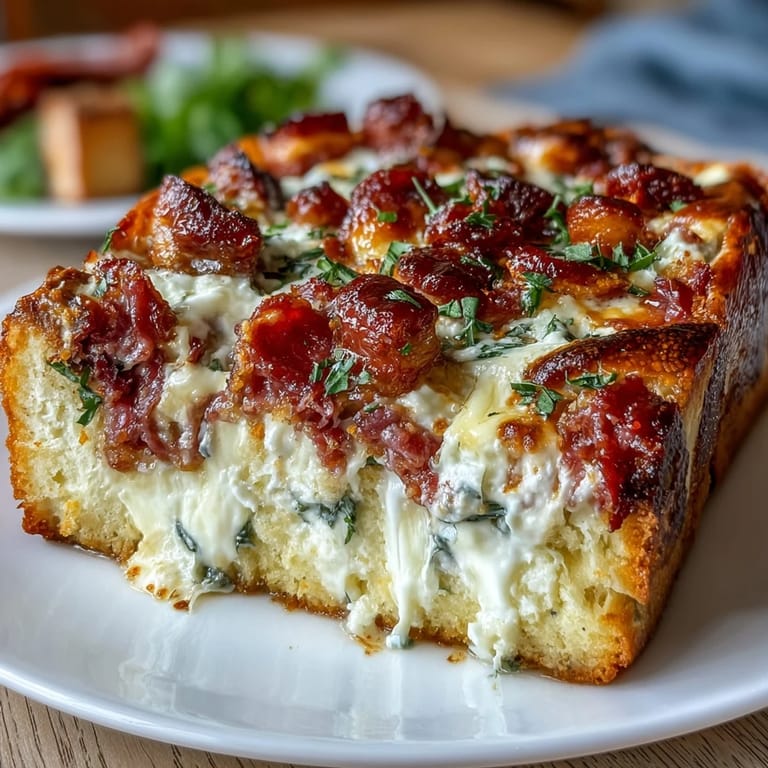
Save My grandmother pulled this pie from her oven every Easter Sunday, and the kitchen would fill with a smell so savory and rich that my cousins would abandon their games just to hover near the cooling rack. She never wrote down the recipe, of course, so I spent years trying to recreate that magic, learning through trial and error that the secret wasn't complexity but the quality of each ingredient and a patience I didn't naturally possess. This Italian Easter pie became my way of honoring her, transforming simple pantry staples into something that tastes like tradition itself.
I made this pie for the first time on my own kitchen counter on a quiet Tuesday afternoon, nervous and excited in equal measure, and when my partner came home to that aroma, they didn't even take off their jacket before asking when dinner would be ready. That moment taught me that some dishes carry more weight than their ingredients suggest, becoming small acts of care when shared with someone you love.
Ingredients
- All-purpose flour: The foundation of your crust, and using the right amount matters more than you'd think, so measure by weight if you can for consistency.
- Cold unsalted butter: This is your secret to a tender, flaky pastry, so keep it genuinely cold and don't rush the cutting-in process.
- Salt: A humble seasoning that brings all the flavors into focus, especially important in both the pastry and filling.
- Eggs: They bind the pastry and enrich the filling, so use large eggs at room temperature for best results.
- Cold water: Just enough to bring the dough together without making it tough, so add it slowly and stop when the dough barely holds together.
- Whole-milk ricotta cheese: Drain it well ahead of time or your filling will be watery, and this step is worth the extra five minutes.
- Heavy cream: It adds luxurious richness and helps the filling set properly in the oven.
- Parmigiano-Reggiano cheese: Real aged Parmigiano makes a difference you can taste, bringing a sharp depth that lifts the entire pie.
- Italian salami: Dice it into small pieces so the flavor distributes evenly throughout the filling instead of clumping.
- Mozzarella cheese: This adds a gentle creaminess that balances the sharper Parmigiano without overwhelming it.
- Fresh parsley: A small gesture of brightness that keeps the filling from feeling too heavy.
- Nutmeg: Just a whisper of it, as it has a way of sneaking up on you, so measure carefully.
- Beaten egg: For the wash that gives your lattice that gorgeous golden sheen.
Tired of Takeout? 🥡
Get 10 meals you can make faster than delivery arrives. Seriously.
One email. No spam. Unsubscribe anytime.
Instructions
- Set your stage:
- Preheat your oven to 375°F and grease your springform pan generously, getting into the corners where pastry likes to stick. This small act of preparation means the difference between a pie that releases smoothly and one that tears.
- Build your pastry:
- Combine flour and salt, then work in the cold butter with your fingertips until it looks like breadcrumbs with pea-sized pieces still visible. Add eggs and just enough water to bring everything together into a soft dough, being careful not to overwork it or your crust will toughen.
- Let it rest:
- Wrap your dough in plastic and refrigerate for 20 minutes while you prepare the filling, knowing that this rest period is when gluten relaxes and your crust becomes more tender. Don't skip this even if you're impatient.
- Line the pan:
- Roll out two-thirds of the dough and press it gently into the pan, letting the edges overhang so you have something to work with later. This overhang is your insurance policy against edges that shrink during baking.
- Mix the filling:
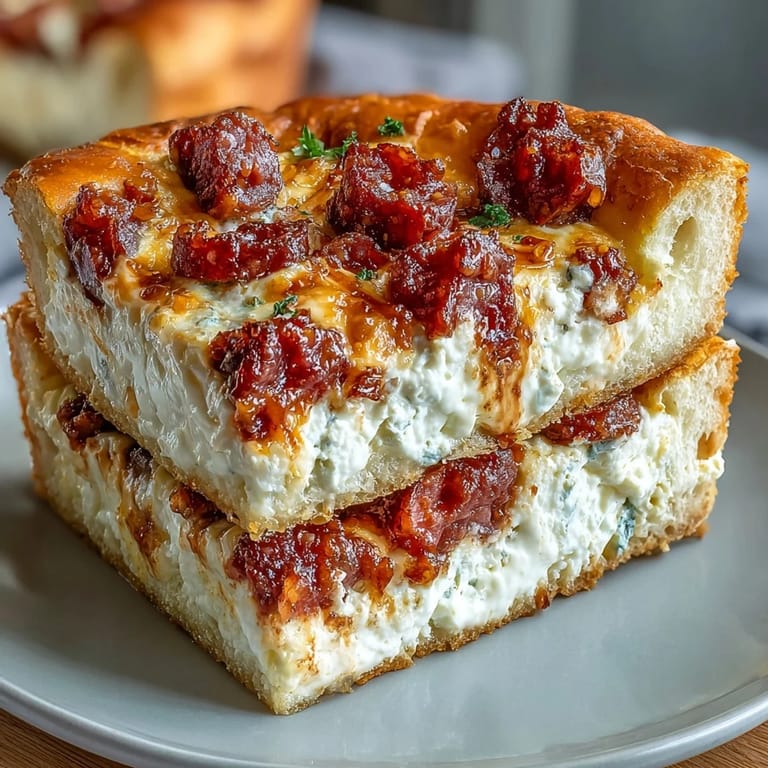
- In a large bowl, combine the drained ricotta with eggs and cream, then fold in both cheeses, the parsley, and seasonings with a gentle hand. Stir in the diced salami last so it distributes evenly without getting crushed, and take a moment to taste and adjust the seasoning if it feels right.
- Fill and finish:
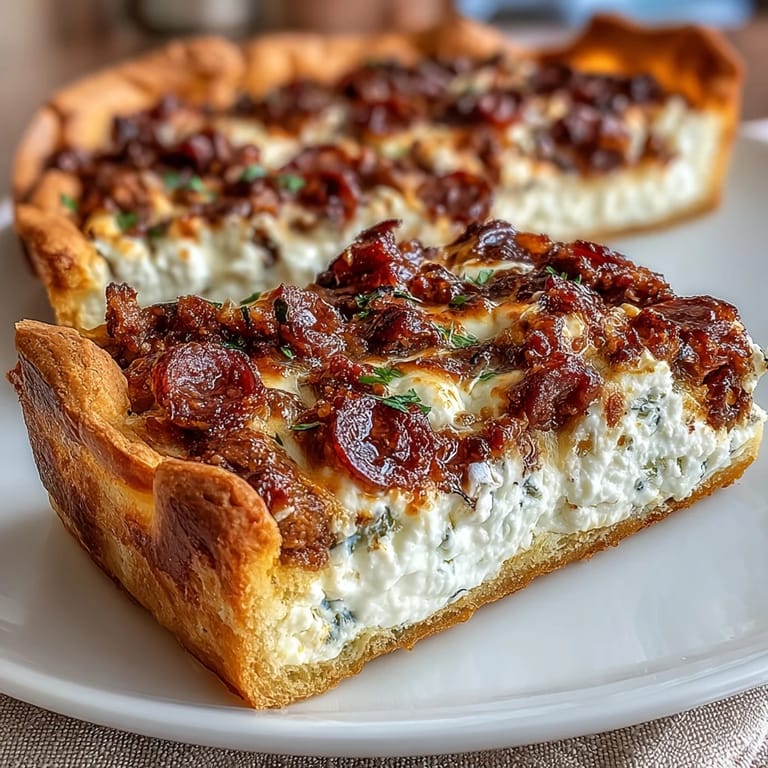
- Pour the filling into your pastry shell and smooth the top with a spatula, then roll out the remaining dough and cut it into strips for your lattice. Arrange them in a pattern that pleases you, trim the edges, and crimp them to seal the top crust to the bottom, creating a barrier that keeps the filling inside where it belongs.
- Golden finish:
- Brush your lattice and crimped edges with beaten egg, which will give them a gorgeous shimmer as they bake. If you notice the edges browning too quickly once in the oven, cover them loosely with foil to protect them while the center continues cooking.
- Bake until set:
- Bake for 55 to 60 minutes until the top is golden and the filling has set but still jiggles slightly when you gently shake the pan. A knife inserted into the filling should come out clean with no runny egg, but remember that it will continue to set as it cools.
- Cool with patience:
- Let the pie cool for at least 30 minutes before slicing, which allows the filling to firm up and makes serving much neater. Serve it warm or at room temperature, and don't be discouraged if the first slice is a little messy, the second one will be perfect.
 Pin it
 There was a moment during my second attempt at this pie when my sister stood in my kitchen watching the lattice come together, and she quietly said it was the most beautiful thing she'd seen me make. I realized then that cooking isn't really about following instructions perfectly, it's about showing someone they're worth the effort and the mess and the occasional moment of doubt.
Why Pastry Matters More Than You Think
The pastry is where most home cooks stumble, either making it too tough by overworking it or too crumbly by not adding enough water, and I've done both more times than I care to admit. The key is treating it with respect but not reverence, mixing just enough to bring it together and then stepping back to let it rest, trusting that those 20 minutes in the refrigerator will transform a shaggy mass into something supple and cooperative.
The Art of the Lattice
Your lattice doesn't need to be perfect to be beautiful, and honestly, slight irregularities make it look more homemade and charming than a too-precise grid ever could. I learned this from watching my grandmother work, seeing how she moved quickly and confidently even when her strips weren't exactly the same width, understanding that imperfection is what makes food feel alive.
Serving and Storage Wisdom
This pie is forgiving about when you eat it, tasting wonderful warm from the oven, pleasant at room temperature, and still excellent cold from the refrigerator the next day, making it perfect for Easter gatherings where timing is unpredictable. Leftovers keep well for three days refrigerated, and you can even freeze the unbaked pie for up to two weeks, baking it directly from frozen with just an extra 15 minutes in the oven.
- Reheat leftover slices in a 300°F oven for 10 minutes to restore the pastry's crispness without drying out the filling.
- If you're making this ahead for a gathering, prepare the dough and filling the day before and assemble just a few hours before baking.
- Serve with a simple green salad dressed in vinaigrette to cut through the richness and make the meal feel complete.
 Pin it
 This pie has become my Easter tradition now, the one thing I make when I want to feel connected to my grandmother and at the same time create something that's entirely my own. Every time someone takes a bite and their eyes light up, I understand a little more what she was trying to tell me all those years ago.
Frequently Asked Questions
- → What type of cheese is used in the filling?
The filling combines whole-milk ricotta, grated Parmigiano-Reggiano, and shredded mozzarella for a creamy, flavorful texture.
- → Can salami be substituted in this dish?
Yes, prosciutto or cooked ham can replace salami for a different yet complementary flavor profile.
- → How is the pastry made tender and flaky?
Cold unsalted butter is cut into the flour, and the dough is chilled before rolling to create a tender, flaky pastry crust.
- → What is the purpose of the lattice crust on top?
The lattice crust provides a decorative finish, allowing steam to escape and giving the pie an appealing golden appearance.
- → How should this pie be served for best taste?
It can be enjoyed warm or at room temperature, making it versatile for brunch or festive occasions.
- → Are there vegetarian alternatives for the filling?
Omitting salami and adding sautéed spinach or artichokes offers a delicious vegetarian variation.