 Save
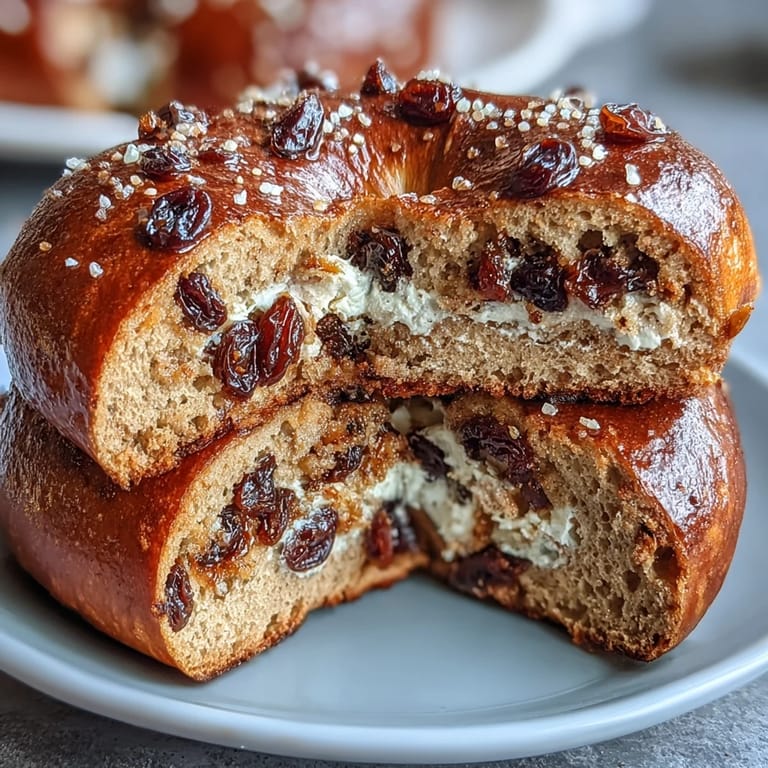
Save My kitchen smelled like a cinnamon-dusted dream the first time I decided protein powder didn't have to mean chalky shakes and sad gym food. Greek yogurt slipped into the dough almost by accident—I was trying to solve a texture problem and ended up with bagels so tender they practically melted on my tongue. The raisins came later, bursting with sweetness in every bite, and suddenly breakfast felt like self-care instead of obligation.
I made these for my cousin's baby shower brunch, and watching people's faces light up when they bit into one was worth every sticky finger in my kitchen. She kept asking how I made them so soft, and I realized then that protein-packed food didn't have to announce itself—it just had to be delicious.
Ingredients
- Bread flour (3 cups): The gluten structure is what gives bagels their signature chew, so don't skip this for all-purpose flour.
- Vanilla or plain whey protein powder (1 cup): This is your secret—it adds serious staying power without making the dough taste medicinal, so pick a quality brand you'd actually drink.
- Ground cinnamon (2 tsp): Bloom this with the dry ingredients so the flavor weaves through every layer, not just scattered on top.
- Granulated sugar (2 tbsp): Feeds the yeast and gives it just enough sweetness to balance the protein's neutral notes.
- Instant dry yeast (2 1/4 tsp): Make sure it's fresh—old yeast means dense, sad bagels that won't rise properly.
- Salt (1 tsp): Don't underestimate it; salt strengthens the dough and makes everything taste more like itself.
- Plain Greek yogurt (1 cup): Use full-fat or at least 2 percent, because non-fat will make the bagels crumbly and dry.
- Warm water (1/2 cup): Lukewarm, not hot—too hot and you'll kill the yeast before it even starts.
- Raisins (3/4 cup): Plump them in warm water for five minutes before kneading if you want them extra juicy, or add them dry for a chewier texture.
- Water for boiling (2 quarts): This bath is what makes bagels bagels—it sets the crust and creates that signature density.
- Honey or barley malt syrup (1 tbsp optional): Adds a subtle shine and helps them brown beautifully, but isn't essential if you don't have it.
- Egg wash (1 beaten egg optional): Creates that glossy, bakery-style finish, though water works in a pinch.
- Cinnamon sugar for topping (optional): A little sprinkle before baking drives home that warming spice.
Tired of Takeout? 🥡
Get 10 meals you can make faster than delivery arrives. Seriously.
One email. No spam. Unsubscribe anytime.
Instructions
- Gather and mix your dry base:
- Combine the bread flour, protein powder, cinnamon, sugar, yeast, and salt in a large bowl, stirring with a fork or your fingers until everything is evenly distributed and there are no clumps of protein powder hiding in the corners.
- Bring the wet and dry together:
- Add the Greek yogurt and warm water, then mix with a wooden spoon until a shaggy, rough dough forms—it'll look like it needs help, and that's exactly right.
- Knead until smooth and alive:
- By hand or with a mixer's dough hook, knead for 8 to 10 minutes until the dough transforms into something smooth and elastic that bounces back when you poke it. Your hands or the mixer will do the work; just pay attention to the feel rather than the clock.
- Fold in the raisins gently:
- Scatter the raisins over the dough and knead briefly just until they're evenly tucked throughout—this takes maybe a minute, so don't overwork it.
- Let it rise with patience:
- Place the dough in a lightly greased bowl, cover it with a damp kitchen towel, and leave it in a warm spot for about an hour until it's roughly doubled in size. A warm windowsill, oven with the light on, or even a corner of your kitchen away from drafts works perfectly.
- Shape your future bagels:
- Punch down the dough with satisfaction, divide it into 8 equal pieces (a scale helps if you're feeling precise), and roll each piece into a ball. Then poke your thumb through the center and gently stretch to form a ring about 3 inches across—don't worry if they're wonky; they'll puff up beautifully.
- Give them a quick rest:
- Lay the shaped bagels on a parchment-lined baking sheet, cover loosely, and let them sit for 15 minutes while you preheat your oven.
- Heat your water bath:
- Bring 2 quarts of water to a gentle boil and stir in honey or barley malt syrup if you're using it, which gives that subtle shine.
- The transformative boil:
- Working in batches of 2 or 3, carefully drop bagels into the boiling water and let them sit for exactly 1 minute per side—this is what creates that chewy, dense bagel texture, so don't skip it or extend it. Use a slotted spoon to flip and remove them.
- Finish with shine and sparkle:
- Return boiled bagels to the baking sheet, brush with beaten egg if you have it, and sprinkle with cinnamon sugar for that bakery-counter touch.
- Bake until golden and cooked through:
- At 425°F, bake for 20 to 25 minutes until they're deep golden brown and sound hollow when you tap the bottom. They should feel firm but not hard.
- Cool before cutting:
- Let them rest on a wire rack for at least 10 minutes so the inside sets properly—I know it's torture, but this step matters.
 Pin it
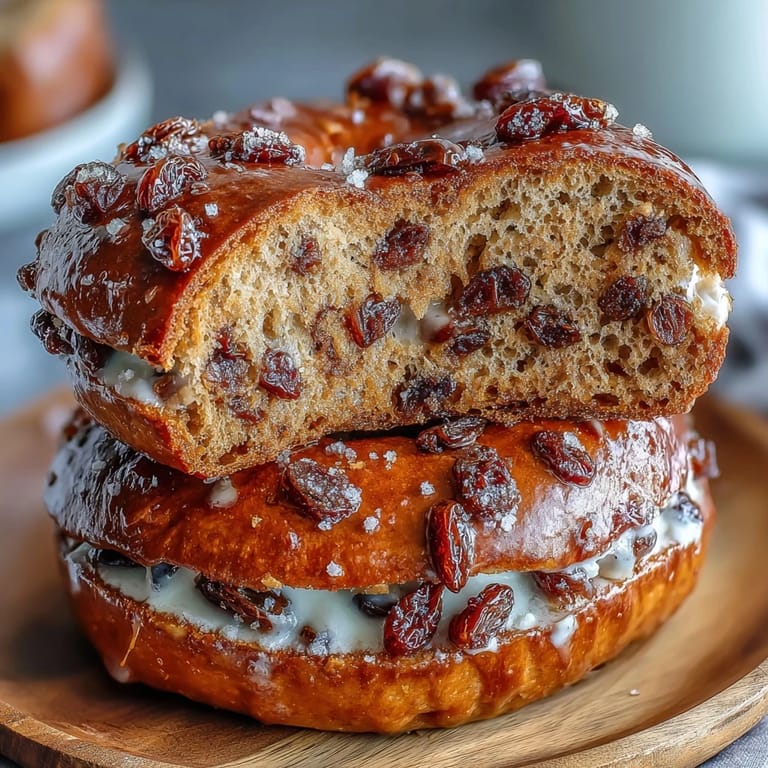
 These bagels became my go-to for mornings when I needed to feel like I was actually taking care of myself but didn't want to spend an hour cooking. They reminded me that nutrition doesn't have to feel like punishment when you put a little thought into the process.
Why Protein Powder Works Better Than You'd Think
Protein powder used to feel like something I'd hide in smoothies, but adding it to dough taught me it actually strengthens the gluten network while keeping the crumb tender. The vanilla powder I use disappears into the background, letting the cinnamon and raisins shine while the protein just quietly does its job of keeping you satisfied longer.
The Greek Yogurt Game-Changer
Greek yogurt isn't just a trendy substitute here—it's doing actual work by adding moisture and richness without making the dough greasy or weak. The acid in the yogurt also interacts with the dough in subtle ways that create that perfect tender crumb, which is why full-fat matters so much more than you'd expect.
Customization and Variations That Actually Work
Once you nail the base recipe, this dough becomes a canvas for whatever you're craving. I've added orange zest for a citrus twist, swapped cranberries for raisins, and even stirred in chocolate chips because some mornings call for that.
- Add a tiny pinch of nutmeg or cardamom to deepen the warm spice profile without overwhelming the other flavors.
- Try swapping the raisins for dried cranberries, chopped dates, or even chocolate chips depending on your mood.
- A tablespoon of whole wheat flour deepens the nutrition and adds a subtle earthiness if you want more complexity.
 Pin it
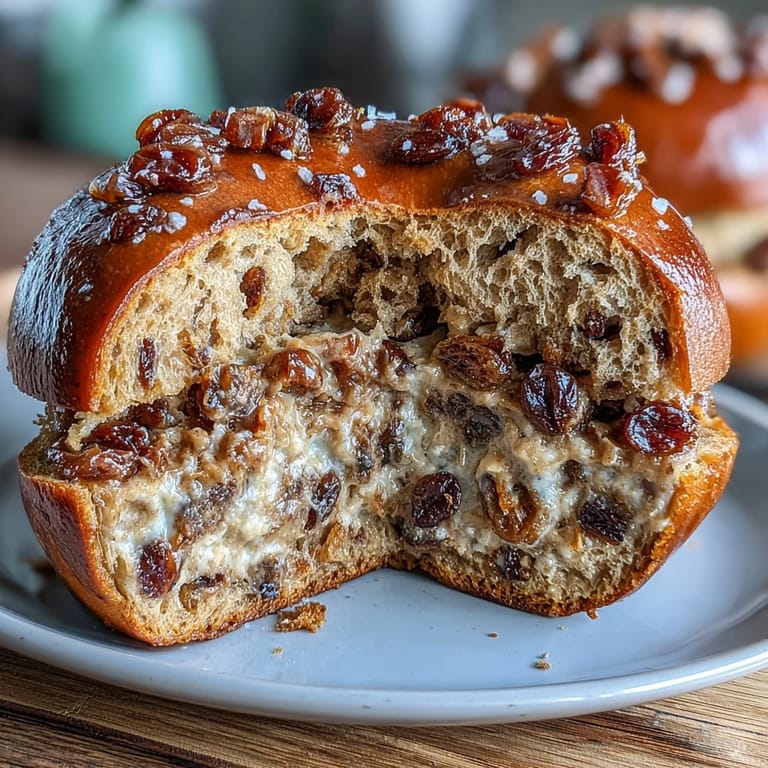
 These bagels proved to me that the best recipes are the ones that fit your actual life while still tasting like you made something special. Toast them, top them, or just eat them plain with your coffee—either way, you're starting strong.
Frequently Asked Questions
- → What makes these bagels chewy?
The combination of bread flour and whey protein powder creates a strong gluten network, while boiling before baking ensures a signature chewy crust.
- → Can I substitute the raisins?
Yes, dried cranberries or chopped dates work well as alternatives to raisins, providing a similar sweetness and texture.
- → How does Greek yogurt affect the dough?
Greek yogurt adds moisture and tenderness, resulting in a softer crumb while boosting protein content.
- → Is the cinnamon flavor strong in these bagels?
The ground cinnamon is balanced to provide a warm aroma and subtle spice without overpowering the other flavors.
- → Can I make whole wheat version of these bagels?
Yes, replacing bread flour with whole wheat flour will add a denser texture and nuttier flavor, adjusting hydration may be needed.
- → Why boil the bagels before baking?
Boiling sets the crust quickly, creating a shiny, chewy exterior that's characteristic of traditional bagels.