 Save
Save I first encountered this dish at a gallery opening in Brooklyn, where a chef had arranged colorful vegetables and cheese into geometric patterns on white plates. I was struck by how the visual composition made me taste each ingredient more intentionally, as if art was guiding my palate. That night, I went home and tried to recreate that moment in my own kitchen, and what emerged was this playful meditation on how we eat with our eyes first.
I made this for a dinner party where I wasn't sure what I was doing, honestly. I was nervous about plating something so deliberately artistic, worried it might look pretentious. But when my guests saw it, their faces lit up like they were seeing something unexpected and delightful. Someone asked to take a photo before eating, and that's when I knew the dish had worked its magic.
Ingredients
- Cucumber: Choose one with thin, unblemished skin since it's barely processed. The cool, crisp water content acts as a clean palate cleanser between richer bites.
- Golden beet: The earthiness plays beautifully against the brightness of other elements. Cook it ahead of time so you can focus on the artistry during assembly.
- Watermelon radish: This ingredient is the star of the show visually, with its natural pink and white pattern. It brings a peppery snap that surprises the mouth.
- Ripe avocado: Choose one that yields gently to pressure. Its buttery richness provides a grounding note among the vegetables.
- Feta cheese block: Don't use pre-crumbled; a solid block cuts into clean geometric shapes that actually hold together when arranged.
- Ripe mango: The sweetness creates unexpected harmony with the savory elements. Select one that's fragrant at the stem.
- Extra virgin olive oil: This is a condiment here, not just cooking fat. Use something you'd taste on its own, as it will be noticed.
- Lemon juice: Fresh squeezed makes an enormous difference in brightness and helps prevent the avocado from browning.
- Flaky sea salt and black pepper: These finishing touches matter more than you'd think when ingredients are so minimal and exposed.
- Microgreens or fresh herbs: A final flourish that adds dimension and reminds guests this is a living, vibrant thing.
Tired of Takeout? 🥡
Get 10 meals you can make faster than delivery arrives. Seriously.
One email. No spam. Unsubscribe anytime.
Instructions
- Gather your tools and ingredients:
- Arrange everything on a clean workspace. This is a meditative process, so take your time and let your creative instincts guide you. You'll want a very sharp knife because dull blades will bruise delicate vegetables and ruin the clean aesthetic you're aiming for.
- Cut geometric shapes:
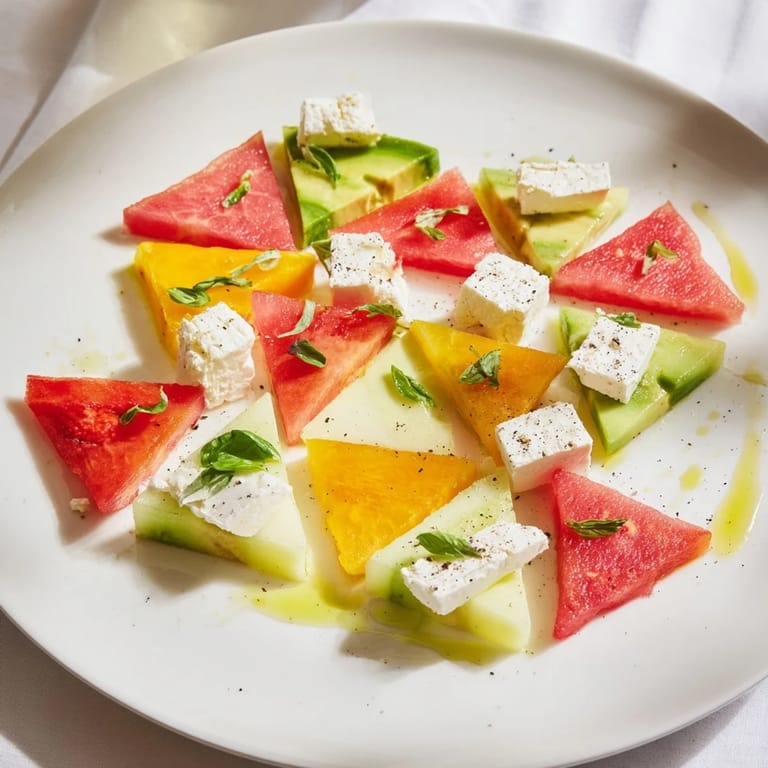
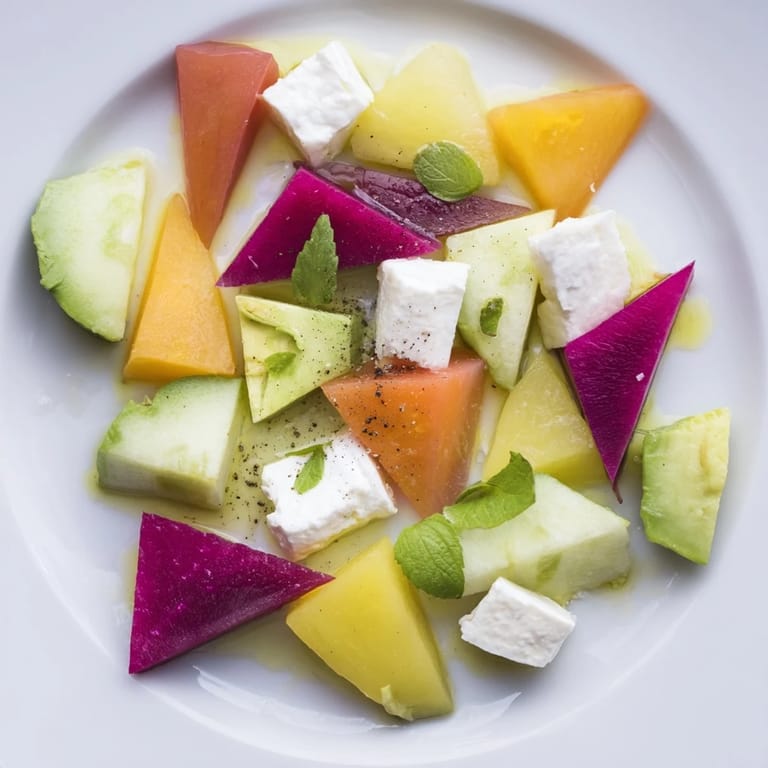
- Slice cucumbers, beets, radishes, and mangoes into triangles, parallelograms, hexagons, and irregular polygons, each roughly one centimeter thick. This is where the personality of the dish emerges. Don't aim for perfect geometry; slight irregularity actually feels more intentional and artistic. If you have small cookie cutters, they can help, but a sharp knife and a playful spirit work just as well.
- Prepare the cheese:
- Cut your feta block into cubes or small prisms that echo the geometric theme. The cheese should feel like it belongs in the composition, not like an afterthought sprinkled on top.
- Arrange your composition:
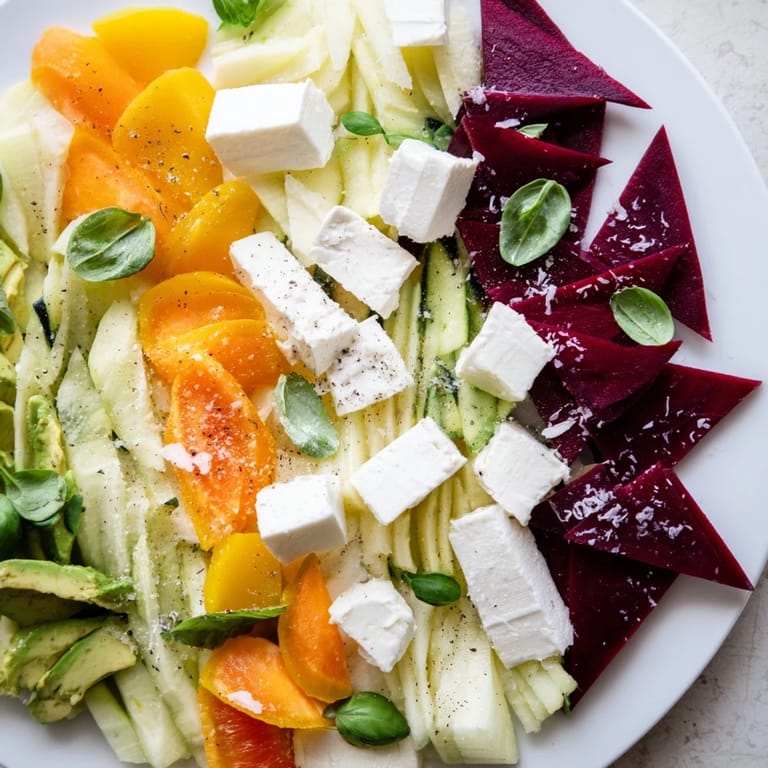
- This is the moment where your dish becomes art. On a large, flat platter, begin placing your pieces close together without overlapping. Think of it like arranging a mosaic where colors and shapes dialogue with each other. Step back occasionally to assess the visual rhythm. Does it feel balanced? Do your eyes travel across the platter in an engaging way? Trust your instincts here.
- Dress with oil and citrus:
- Gently drizzle olive oil and lemon juice across the arrangement. Watch how the oil catches the light and makes the colors glow. This step binds all the elements together not just in flavor, but visually.
- Season and garnish:
- Scatter flaky sea salt and freshly cracked pepper across the piece. Finish with a delicate scatter of microgreens or herb leaves. This final touch adds freshness and makes the dish feel alive rather than static.
- Serve immediately:
- The clean lines and vibrant colors are most stunning right now. The longer it sits, the more the lemon juice will wilt the delicate elements, so bring it to the table while everything is at its peak.
 Pin it
 A few weeks after that dinner party, a guest sent me a photo she'd taken that night. Looking at it months later, I realized the dish had become a small marker in our friendship, something we referenced and laughed about. It reminded me that food is rarely just about flavor or nutrition. Sometimes it's about creating a moment worth remembering.
The Art of Edible Geometry
I've learned that the most interesting dishes are often the ones that invite participation from the diner. When you serve something geometric and deliberately composed, people can't help but slow down and think about what they're eating. They become active participants in the experience rather than passive consumers. This dish orchestrates that feeling without requiring any skill in the kitchen.
Choosing Your Ingredients with Intention
The colors are doing half the work here. A golden beet, a pink watermelon radish, a golden mango, pale avocado, bright green cucumber, and white feta create a palette that feels intentional and sophisticated. When you're shopping, let color guide your selections. If something looks dull, keep looking. The vibrancy of your ingredients will directly translate to the vibrancy of your final presentation. This is one of the few times where you truly eat with your eyes first and your mouth second.
Variations and Personal Expression
There's something liberating about a recipe that invites you to make it your own. Purple carrots, yellow bell peppers, green tomatoes, or even roasted beets in different colors can all find a home here. For vegan diners, firm tofu cuts into stunning geometric shapes and absorbs the dressing beautifully. The formula stays the same, but your personal interpretation makes it feel fresh and unique.
- Try pairing this with a crisp Sauvignon Blanc to complement the acidity and brightness of the dish
- Serve with cocktail picks so guests can sample individual pieces without needing a plate
- Prepare all your cuts ahead of time except the avocado, which should be cut just before plating to prevent browning
 Pin it
 Every time I make this dish, I remember why I fell in love with cooking in the first place. It's not about technique or complexity; it's about transforming simple things into something that makes people smile. That's the real magic.
Frequently Asked Questions
- → What vegetables work best for geometric cutting?
Firm vegetables like cucumber, golden beet, and watermelon radish hold shape well and provide vibrant colors for a striking presentation.
- → Can I substitute feta cheese for a vegan option?
Yes, firm tofu can replace feta to maintain texture while keeping the dish plant-based and dairy-free.
- → How do I achieve precise geometric shapes?
Use a sharp knife or small cookie cutters to cut vegetables and fruits into shapes like triangles, parallelograms, and hexagons approximately 1 cm thick.
- → What garnishes complement the dish?
Microgreens or fresh herbs such as basil or cilantro add freshness and enhance the visual appeal.
- → How should the dish be served for best results?
Arrange all pieces close but not overlapping on a large flat platter, drizzle with olive oil and lemon juice, and serve immediately to preserve the clean lines.