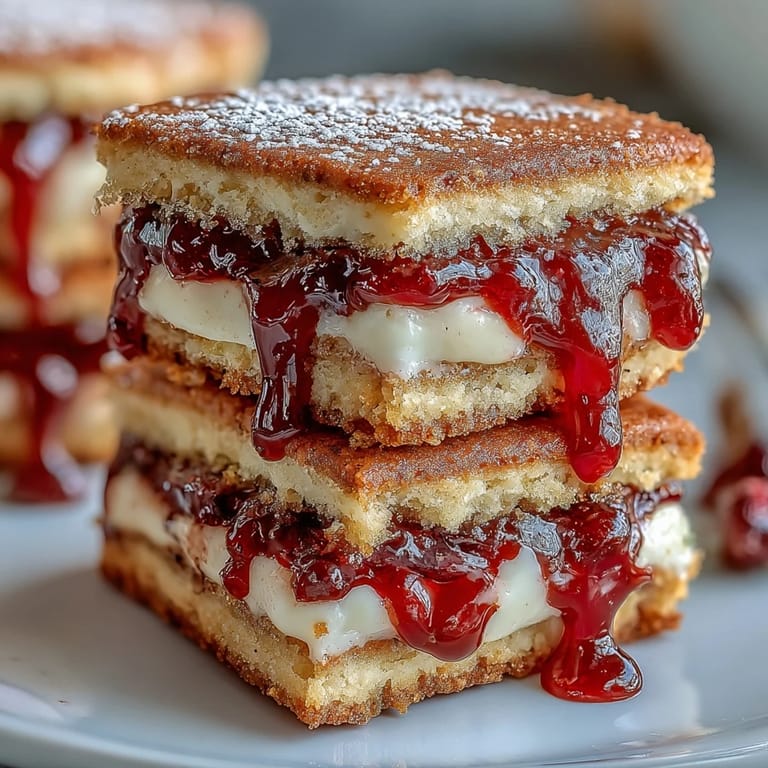
 Save
Save There's something about clotted cream that stops me mid-conversation—it's so impossibly thick and rich that it demands respect. One afternoon, while watching my neighbor arrange tea things on her garden table, I noticed she'd tucked a small jar of clotted cream among the teapots and noticed how she spread it with the same care you'd apply gold leaf. That's when it clicked: clotted cream belongs in shortbread, not just alongside it. These cookies became my answer to that perfect moment, buttery and tender, layered with a bright raspberry filling that cuts through all that luxurious cream.
I made these for my daughter's book club last spring, and watching eight women go quiet the moment they bit into one was its own kind of magic. Someone asked if I'd bought them from a fancy bakery, and I still remember the satisfaction of saying I hadn't—that these had come from my own oven just hours before. They paired them with tea and conversation stretched into the evening, which felt like the whole point.
Ingredients
- Unsalted butter, 200 g: Use room-temperature butter so it creams smoothly without becoming greasy; cold butter leads to dense, tough cookies.
- Clotted cream, 75 g: This is the secret ingredient that gives these cookies their distinctive tender crumb and subtle richness that butter alone cannot achieve.
- Granulated sugar, 100 g: The balance of sugar is crucial—too much makes them spread, too little and they become dry and crumbly.
- Vanilla extract, 1 tsp: Use real vanilla; the flavor compounds add depth without overpowering the buttery shortbread base.
- All-purpose flour, 325 g: Measure by spooning flour into your cup and leveling it off, or weigh it; packed flour creates tough cookies.
- Fine sea salt, 1/4 tsp: Salt enhances the butter flavor and balances sweetness, making each bite taste more complex and intentional.
- Fresh raspberries, 150 g: Choose firm, dry berries if possible; frozen raspberries work beautifully too and sometimes have deeper flavor from the freezing process.
- Powdered sugar, 60 g: Sift it before measuring to remove lumps that could create grainy filling texture.
- Lemon juice, 1 tbsp: Fresh lemon juice brightens the raspberry flavor and cuts through the richness of the clotted cream filling.
- Unsalted butter for filling, 50 g: Softened butter creates a smooth, spreadable filling that won't separate when piped.
- Clotted cream for filling, 50 g: The filling uses clotted cream again, creating a luxurious, almost mousse-like consistency that holds its shape.
Tired of Takeout? 🥡
Get 10 meals you can make faster than delivery arrives. Seriously.
One email. No spam. Unsubscribe anytime.
Instructions
- Cream the base:
- In a large bowl, beat together the softened butter, clotted cream, and sugar until the mixture looks pale and fluffy, about 3 minutes. It should feel light when you lift the beaters—this incorporates air that keeps the cookies tender. Beat in the vanilla extract until combined.
- Build the dough gently:
- Sift the flour and salt directly into the creamed mixture, then mix on low speed or fold by hand until just combined. The moment the dough comes together, stop mixing; overworked dough becomes tough and dense, losing that delicate shortbread texture.
- Rest and chill:
- Divide the dough in half and flatten each half into a disc about 1 inch thick, then wrap tightly in plastic wrap. Refrigerate for at least 30 minutes; this resting time relaxes the gluten and makes the dough easier to roll.
- Heat and prepare:
- Preheat your oven to 170°C (340°F) and line two baking sheets with parchment paper. Cold baking sheets ensure even cooking without the bottoms browning too quickly.
- Roll and cut:
- On a lightly floured surface, roll one disc of dough to 5 mm thickness—use a bench scraper to help you, and if the dough gets warm and sticky, return it to the refrigerator for 10 minutes. Cut out rounds with a 5 cm cookie cutter and place them on prepared baking sheets, leaving about 2 cm between each one.
- Bake to golden:
- Bake for 16 to 18 minutes, watching carefully after the 15-minute mark; you want the edges just turning pale golden while the centers stay pale and soft. The cookies will firm up as they cool, so remove them when they still feel slightly underbaked in the middle.
- Cool with patience:
- Let the cookies rest on the baking sheet for 5 minutes to set slightly, then transfer them to a wire rack to cool completely. This prevents them from breaking and allows the structure to set properly.
- Make the filling:
- Mash the fresh raspberries with lemon juice to break them down, then push the mixture through a fine sieve using the back of a spoon to remove all the seeds. You'll be left with a seedless, silky raspberry purée.
- Create the spread:
- Beat the softened butter and clotted cream together until smooth and light, then gradually add the sifted powdered sugar and beat until fluffy. Slowly add the raspberry purée while beating, stopping when the filling reaches a spreadable consistency.
- Assemble the sandwiches:
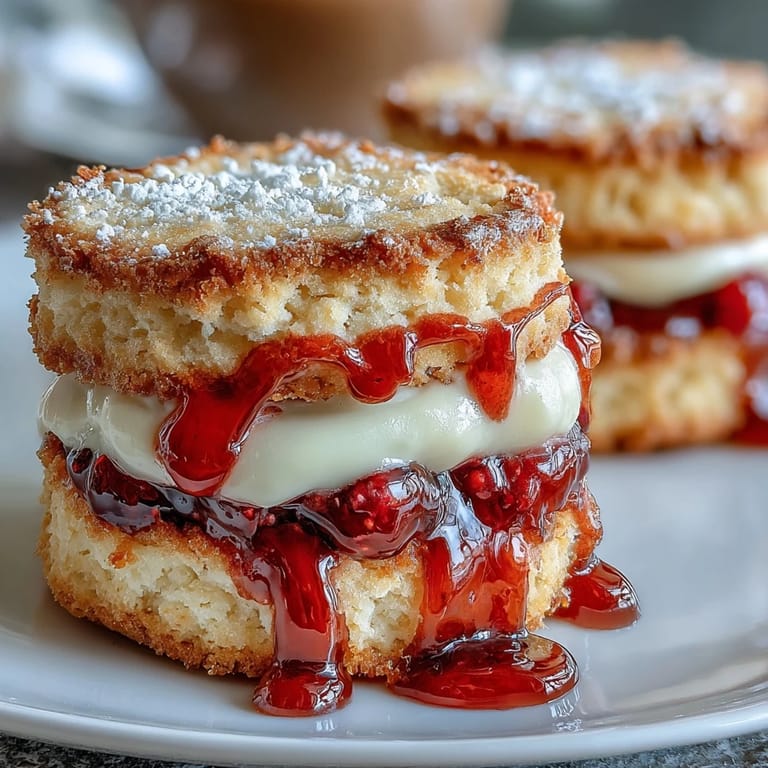
- Spread or pipe a generous layer of filling onto the flat underside of half the cookies, then press a second cookie on top with the flat sides facing inward. If you're using a piping bag, it creates a more elegant look and ensures even distribution.
- Final set:
- Chill the assembled cookies for at least 20 minutes so the filling firms up and the cookies hold together beautifully when you bite into them.
 Pin it
 My mother used to say that the measure of a good tea biscuit was whether you could eat three without feeling guilty, and these somehow manage that trick. There's elegance in their simplicity, but comfort in their richness—they're the kind of cookies that make ordinary afternoons feel like special occasions.
The Magic of Clotted Cream in Baking
Clotted cream changes everything because it's not liquid like regular cream and not solid like butter—it sits somewhere between, bringing both moisture and fat to the dough without making it greasy or wet. The milk solids in clotted cream contribute a subtle sweetness and almost caramelized flavor that regular butter can't replicate. I discovered this by accident when I used clotted cream in a shortbread recipe meant for regular cream, and the resulting cookies had a tender crumb that made me wonder why more bakers don't use it. The key is treating it like butter during creaming—it beats smooth and pale, incorporating air that lifts the final texture.
Handling Raspberries for Seedless Filling
Raspberry seeds are beautiful on the surface of jam but terrible in a smooth filling, so sieving is non-negotiable. Fresh raspberries break down quickly and release their juice readily, making this step effortless if you use a fine-mesh sieve and patience. I learned the hard way that pushing too hard bruises the remaining fruit and oxidizes the purée, turning it from bright red to dull burgundy—gentle pressure with the back of a spoon gives you the smoothest result. Frozen raspberries work just as well and sometimes produce a deeper color since the freezing process breaks down the cell walls, releasing more juice and pigment.
Tea Pairing and Serving Suggestions
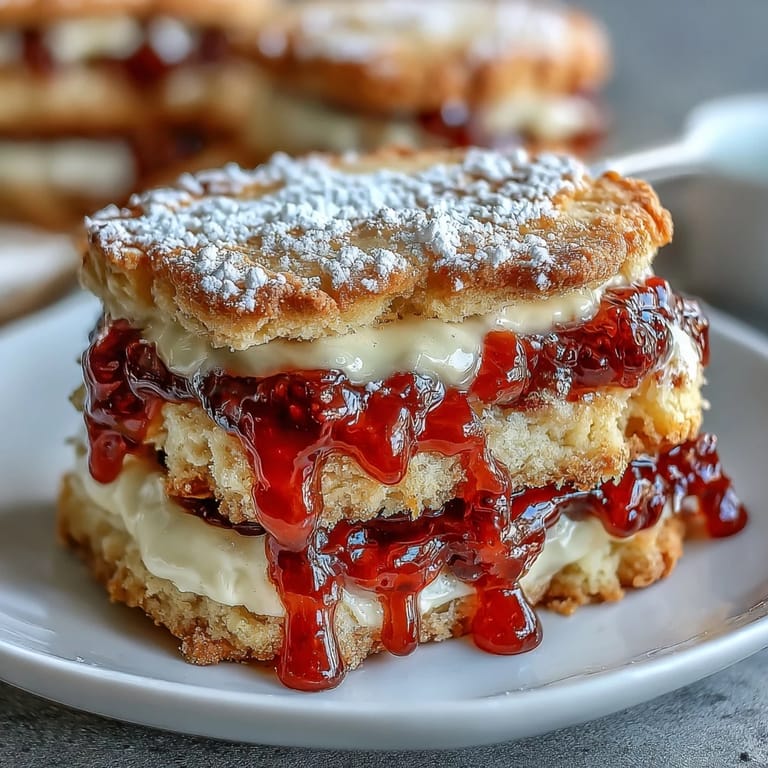
These cookies exist in the space between dessert and afternoon tea, and their flavor profile suits strong, slightly astringent teas better than delicate ones. Black teas like Assam or Irish Breakfast cut through the richness beautifully, while Earl Grey's bergamot plays against the raspberry filling in unexpected ways. You can dust the tops with powdered sugar before serving for extra elegance, or leave them plain to show off the golden shortbread underneath.
- Serve them within an hour of assembly so the filling is still cool and firm against the warm butter flavor of the shortbread.
- If you're making these ahead, store the baked cookies and filling separately, then assemble them the morning you plan to serve.
- For a special touch, try a blackberry or strawberry filling using the same technique—each berry brings its own character to these versatile cookies.
 Pin it
 These cookies have become my go-to when someone deserves something special but I want to give it with my own hands. They're a reminder that fancy doesn't require fancy ingredients—just butter, cream, and the time to do things properly.
Frequently Asked Questions
- → What gives the shortbread its rich texture?
The addition of clotted cream along with butter enriches the dough, creating a tender and buttery texture.
- → Can I use frozen raspberries for the filling?
Yes, frozen raspberries can be thawed and sieved to create a smooth, flavorful filling.
- → How thick should the cookie dough be rolled?
Roll the dough out to about 5 mm (1/4 inch) thickness for an ideal balance of crispness and tenderness.
- → Is chilling the dough necessary?
Chilling helps the dough firm up, making it easier to cut and improving the final texture after baking.
- → Can other berries be substituted for raspberries?
Strawberries or blackberries work well as alternatives and provide a similar sweet-tart flavor.
- → How should the raspberry filling be prepared for smoothness?
Mash the berries and press them through a fine sieve to remove seeds, then blend with butter and clotted cream until smooth.