 Save
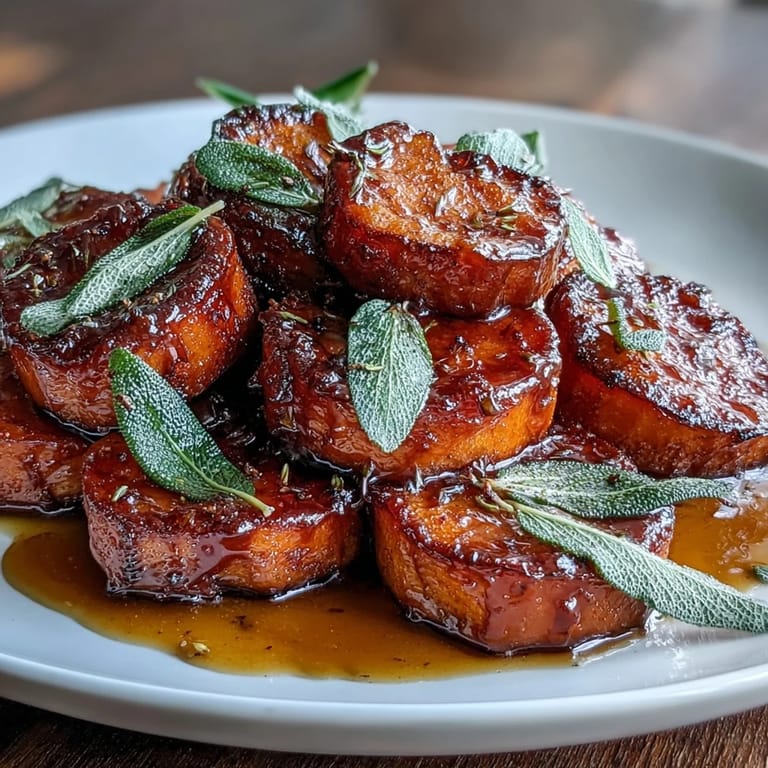
Save My aunt's kitchen always smelled like burnt sugar and sage the week before Thanksgiving, and I finally understood why when she handed me a forkful of her candied yams one November afternoon. The traditional marshmallow-topped version felt tired by comparison, so I started experimenting with brown butter and fresh sage—ingredients that seemed to whisper rather than shout. That first batch taught me that sometimes the best holiday dishes aren't about following tradition; they're about knowing when to trust your instincts and add a little nuttiness to the mix.
I made this for a potluck where everyone assumed I'd brought the same tired casserole from last year, and watching their faces when they tasted the sage-infused glaze felt like the small victory it was. My coworker Marcus actually set down his plate and asked me to write the recipe on a napkin right then and there, which is how I knew I'd stumbled onto something worth keeping.
Ingredients
- Yams (sweet potatoes): Three pounds of firm, medium-sized ones work best—they cook evenly and hold their shape without turning mushy or grainy.
- Unsalted butter: The full stick is essential here because you're browning it, and that nutty flavor becomes the backbone of everything else.
- Fresh sage leaves: Don't substitute dried sage unless you're in a true bind, because the fresh herb's brightness is what keeps this from becoming another sugar-heavy side dish.
- Packed light brown sugar: The molasses content gives the glaze body and a subtle caramel note that plays beautifully with the maple syrup.
- Pure maple syrup: The real stuff matters here; the imitation version will make the glaze taste flat and one-dimensional.
- Orange juice: Fresh is worth the squeeze because the acidity cuts through the richness and adds a subtle citrus brightness you'll taste in every bite.
- Spices (cinnamon, nutmeg, salt): These quantities are balanced to enhance rather than overpower, so resist the urge to double them.
Tired of Takeout? 🥡
Get 10 meals you can make faster than delivery arrives. Seriously.
One email. No spam. Unsubscribe anytime.
Instructions
- Set your oven and prep the stage:
- Preheat to 375°F and grease your baking dish so the yams won't stick or brown unevenly on the edges. Arranging them in a single layer matters more than you'd think—it ensures even cooking and lets the glaze coat every round properly.
- Slice your yams to the perfect thickness:
- Cut them into 1-inch rounds so they cook through in 45 minutes without falling apart or staying firm in the center. A sharp knife and a steady hand make this part feel less like a chore and more like meditative kitchen work.
- Brown your butter until it smells like nutty dreams:
- This is the moment everything changes—watch the butter in the pan, swirling it constantly for 3 to 4 minutes until it shifts from pale yellow to golden brown and releases that unmistakable toasted aroma. Don't walk away because butter can tip from perfect to burnt in seconds, and you'll know the exact moment it's right by the smell.
- Add the sage and let it bloom:
- Drop in your chopped sage immediately after the butter reaches that golden stage, cooking it just long enough to release its oils—about 30 seconds is all you need. This brief bloom makes the sage flavor integrated rather than sharp or grassy.
- Whisk in the glaze ingredients with intention:
- Remove the pan from heat, then add brown sugar, maple syrup, orange juice, cinnamon, nutmeg, salt, and vanilla all at once, whisking until the mixture is completely smooth with no sugar granules visible. The residual heat from the butter helps dissolve everything without creating hot spots or lumps.
- Coat the yams evenly and cover:
- Pour the glaze over the arranged yams and toss them gently so every round gets coated, then cover the dish tightly with foil to trap steam during the first half of baking. Tight foil coverage keeps the yams from drying out and ensures they'll be tender by the time you uncover them.
- Bake covered for 30 minutes, then finish uncovered:
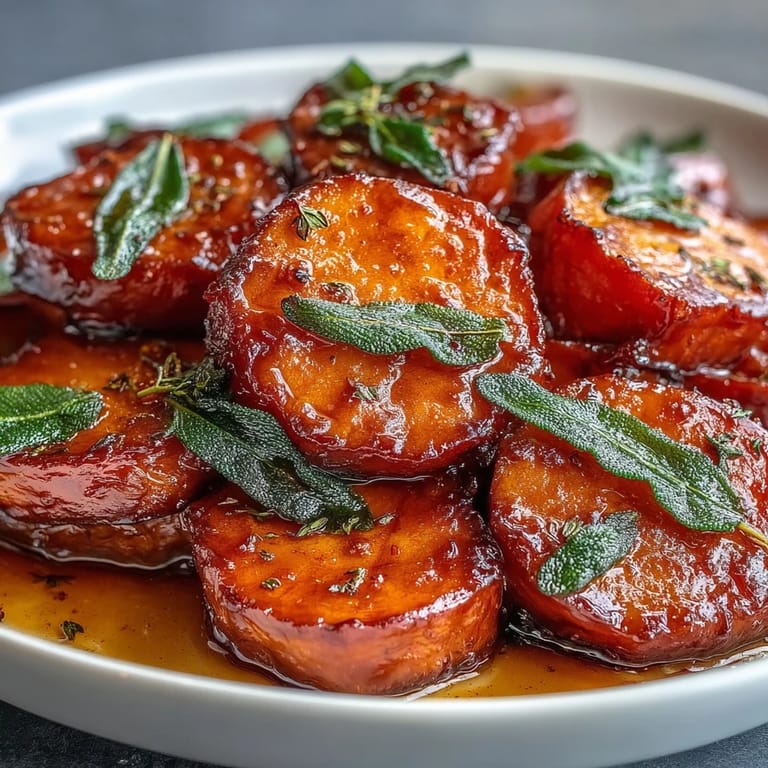
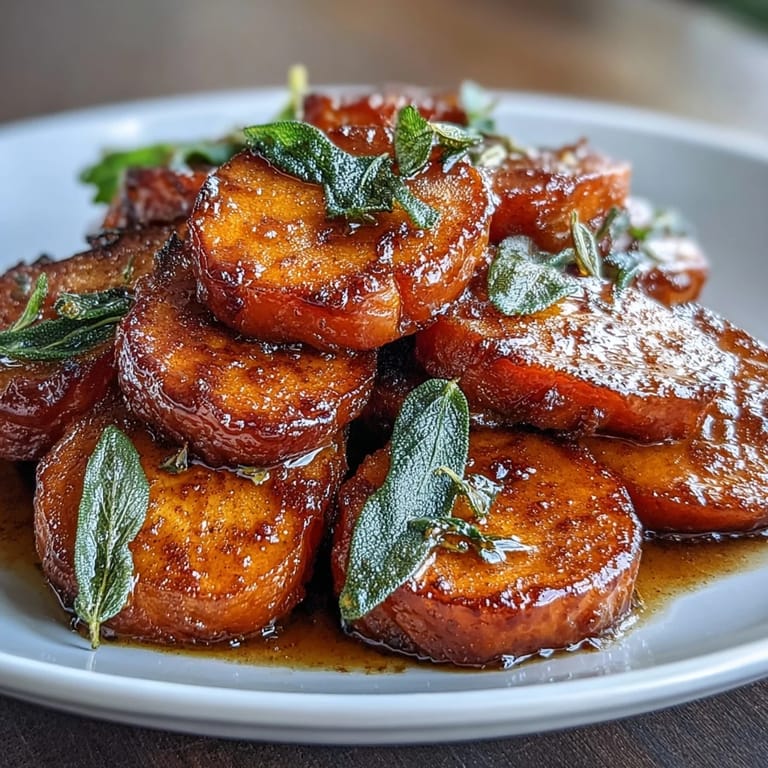
- After the first half-hour, remove the foil and baste the yams with the pan juices using a spoon or basting brush to redistribute the glaze. Return them uncovered for the final 15 minutes so the edges caramelize slightly and the glaze thickens to a glossy consistency.
- Rest before serving to let the flavors settle:
- A 5-minute rest might seem unnecessary, but it lets the yams firm up slightly and allows the glaze to set just enough that it clings to each round instead of pooling at the bottom of the dish.
 Pin it
 I served this at a small Thanksgiving where someone's teenage son actually asked for seconds of a vegetable dish, which broke the internet in our family group chat for weeks afterward. That moment reminded me that the right combination of flavors can transform how people think about the dishes they think they don't like.
The Magic of Brown Butter
Brown butter feels like a small technique, but it's genuinely one of those kitchen skills that opens doors once you understand it. The first time I nailed it, I realized I'd been cooking for years without accessing this flavor—that nutty, toasted depth that makes people's eyes light up and ask what you did differently. Once you master browning butter, you'll start adding it to everything from vegetables to desserts, and honestly, your cooking will never feel the same.
Why Fresh Sage Belongs in Savory Sides
Sage is one of those herbs that most home cooks reserve for poultry stuffing, but it deserves way more real estate in your kitchen. The slightly peppery, almost minty undertone of fresh sage creates this beautiful tension with brown sugar and maple syrup, preventing the dish from sliding into candy territory. I started experimenting with sage in unexpected places after this recipe, and it's become one of my secret weapons for balancing sweetness.
Timing, Tweaks, and When to Trust Your Instincts
The beauty of this recipe is that it's forgiving enough to adapt to your oven's personality and the size of your yams. Smaller yams might finish cooking in 40 minutes, while jumbo ones might need the full time, so start checking for tenderness around the 35-minute uncovered mark by piercing one with a fork. If your oven runs hot or cold, adjust the temperature accordingly and don't stress—the glaze will still thicken and the yams will still be delicious.
- Toasted pecans sprinkled on top add crunch and a subtle richness that makes this feel less like a side dish and more like a dessert-adjacent moment.
- If you need to make this a day ahead, cover and refrigerate it, then gently reheat in a 300°F oven for about 20 minutes until warmed through.
- Leftover candied yams are even better cold the next day straight from the fridge, especially if you're the type who eats Thanksgiving leftovers in their pajamas.
 Pin it
 This recipe has become my Thanksgiving non-negotiable, the dish people actually remember and ask about months later. Serve it warm, watch people's faces change when they taste the sage, and enjoy knowing you've elevated something as simple as yams into something genuinely special.
Frequently Asked Questions
- → What type of yams works best?
Use firm sweet potatoes peeled and cut into evenly sized rounds to ensure even cooking and a tender texture.
- → How do you make brown butter?
Melt unsalted butter over medium heat, swirling frequently until it turns golden brown and emits a nutty aroma, about 3–4 minutes.
- → Can I substitute maple syrup?
Yes, honey can be used as a natural alternative to maple syrup for a different sweetness profile.
- → What does baking with foil do?
Covering with foil helps steam the yams, making them tender while preventing the glaze from drying out in the first stage of baking.
- → How can I add texture to the dish?
Sprinkling toasted pecans over the finished yams adds a pleasant crunch and complements the softness.
- → Is this dish suitable for dietary restrictions?
It is gluten-free and vegetarian but contains dairy from butter; nut-free unless nuts are added as a topping.