 Save
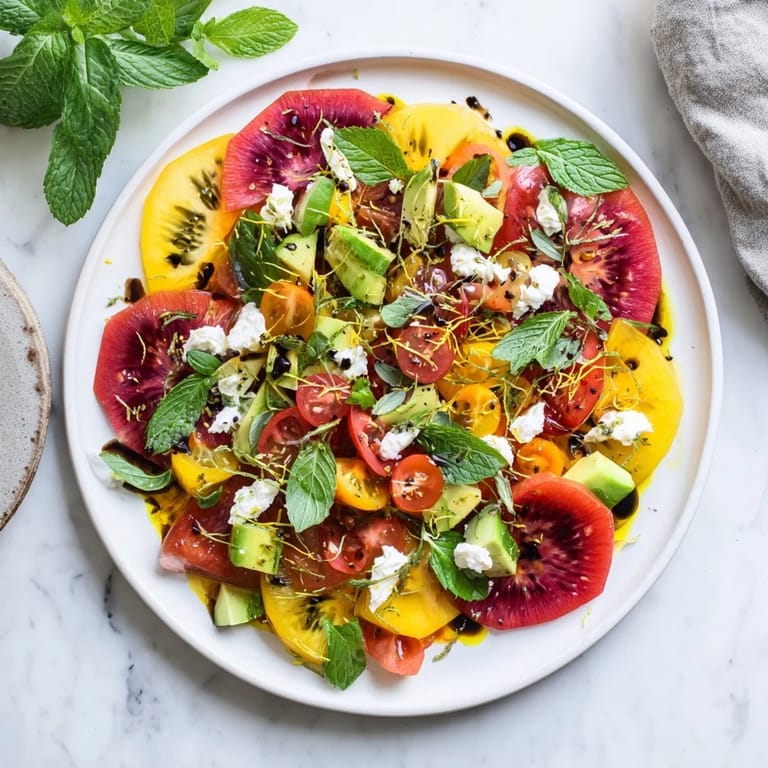
Save I'll never forget the afternoon I wandered into a modern art gallery and stood mesmerized before a Jackson Pollock painting—those wild splatters of color, the controlled chaos, the energy practically vibrating off the canvas. That evening, I came home inspired and decided to bring that same artistic spirit into my kitchen. I started pulling vegetables from the crisper drawer, suddenly seeing them not as ingredients but as a palette of colors waiting to be composed. The result was this Abstract Expressionist Splash salad, a dish that proved cooking could be as liberating and creative as throwing paint across a canvas.
I made this salad for my sister's birthday brunch last summer, and watching her face light up when I set it down—she actually gasped—reminded me that food is about more than flavor. It's about creating moments. My eight-year-old nephew immediately declared it "a painting I can eat," and suddenly everyone was taking photos before touching a single leaf. That's when I knew this recipe had captured something special.
Ingredients
- Cherry tomatoes (red and yellow), 1 cup halved: These little gems are your color anchors. The mix of red and yellow creates that natural contrast an artist would dream of, and halving them rather than leaving them whole makes them easier to distribute artistically across the plate.
- Golden beet, 1 small peeled and shaved: A mandoline is your friend here—it transforms the beet into delicate, nearly translucent shards that catch the light. Golden beets are less earthy than their red cousins, so they won't stain everything purple and look more intentionally artistic.
- Cucumber, 1 small sliced into ribbons: Use a vegetable peeler to create long ribbons that drape elegantly. Cucumber adds a refreshing crunch and those pale green ribbons provide visual texture that contrasts beautifully with deeper colors.
- Red radishes, 1/2 cup thinly sliced: Paper-thin slices reveal their almost translucent quality when backlit on the plate. They bring both peppery bite and a pop of hot pink that's impossible to ignore.
- Watermelon, 1 cup cut into irregular cubes: Cut them random sizes—some chunky, some smaller. The natural pink-red carries moisture and sweetness that balances the sharper elements. It's the unexpected summer guest that makes people do a double take.
- Avocado, 1 ripe cubed: Add this last, right before serving, so it doesn't brown. The creamy texture and pale green color provide visual and gustatory contrast to everything crisp around it.
- Mixed baby greens (arugula, baby spinach, frisée), 1 cup: These are your canvas, the base that other colors dance across. The varied greens create natural depth, and the slight bitterness grounds all the sweet and fresh elements.
- Fresh mint leaves, 2 tbsp torn: Don't chop them—tear them gently so they stay fresh and green and show their character. Mint is almost floral here, tying the whole composition together.
- Toasted pumpkin seeds, 1/4 cup: Toast them yourself if you can. They add earthiness, crunch, and those olive-green flecks that painters would call a perfect neutral accent.
- Pomegranate seeds, 1/4 cup: Jewel-like and precious. They catch light and add tartness that brightens every bite. They're your final textural surprise.
- Feta cheese, 1/4 cup crumbled: Don't crumble it too fine. Bigger chunks of white create visual punctuation marks and tangy saltiness that ties flavors together.
- Extra-virgin olive oil, 3 tbsp: Quality matters here since this is your binding element. A fruity, peppery oil complements the fresh vegetables and makes the dressing luxurious.
- White balsamic vinegar, 1 tbsp: This is gentler than dark balsamic and won't create muddy brown streaks. It brings acidity without visual heaviness.
- Honey, 1 tsp: Just enough to round the dressing's edges and provide subtle sweetness that echoes the watermelon and tomatoes.
- Dijon mustard, 1/2 tsp: An emulsifier and flavor anchor. It helps the oil and vinegar actually stay together and adds a subtle sophistication.
- Salt and freshly ground black pepper, to taste: Always finish tasting as you go. These are what make every other flavor pop.
Tired of Takeout? 🥡
Get 10 meals you can make faster than delivery arrives. Seriously.
One email. No spam. Unsubscribe anytime.
Instructions
- Gather your palette:
- Before you start plating, prepare each element in its own small bowl. This is non-negotiable. You're not rushing to assemble; you're curating. As you prep each vegetable, notice how the colors shift in your hands. The golden beet catching light differently than the red radish. The watermelon pink against the feta white. These observations inform your artistic choices.
- Create your canvas:
- On your largest, most beautiful platter or shallow bowl, scatter the mixed greens in loose, uneven clumps. Don't try to cover every inch or create a perfect bed. Leave some white space, some gaps. This is abstract, not composed. Your greens should look like they were gently tossed, not arranged.
- Splash and scatter with intention:
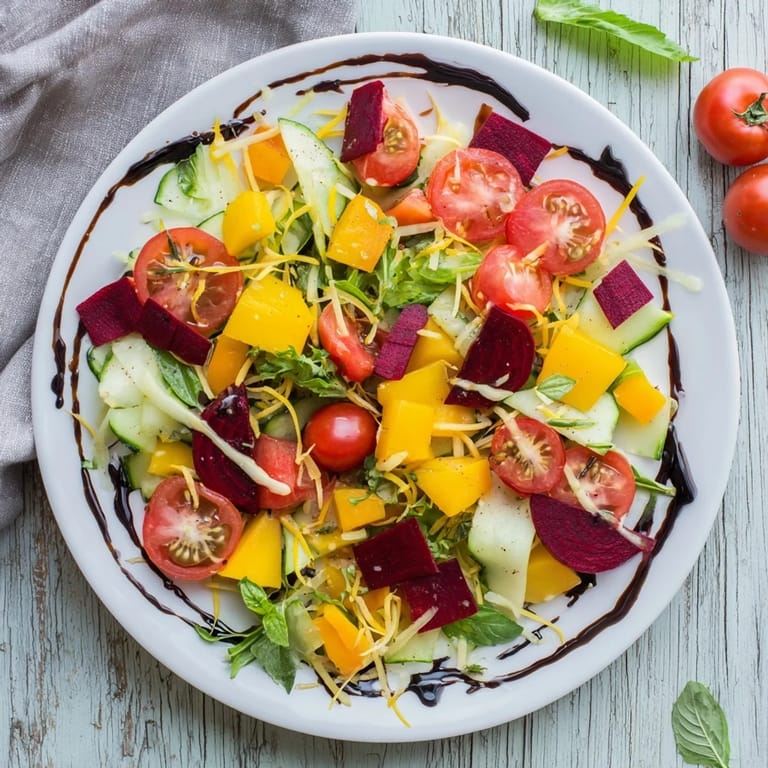
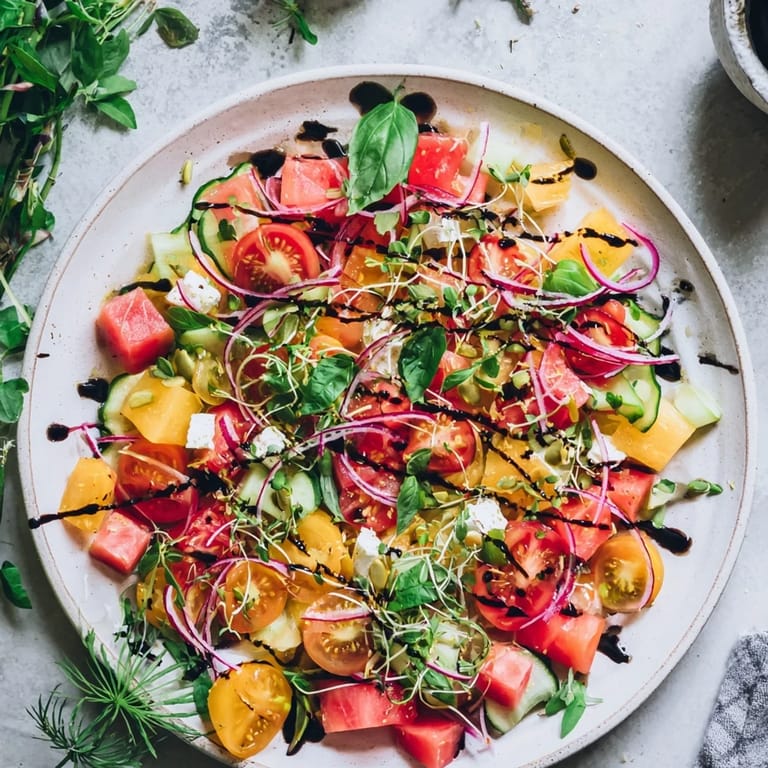
- Now this is where your kitchen becomes a studio. Take the tomato halves and distribute them across the greens in an artfully chaotic pattern. Overlap some. Let others sit alone. Do the same with beet shavings, letting them catch and curl naturally. Add cucumber ribbons in waves and swooshes. Slice the radishes and scatter them like pink confetti. Place watermelon cubes in irregular clusters, and finally add avocado pieces just before serving so they stay creamy and pale green.
- Add texture and richness:
- Sprinkle the pumpkin seeds across the salad in no particular order—but do it thoughtfully. Scatter pomegranate seeds next, letting them nestle between other elements. Finally, crumble feta cheese over the top, creating white punctuation marks across your composition. Tear fresh mint leaves and let them flutter down last. Step back and look at what you've created before you dress it.
- Make your dressing with confidence:
- In a small bowl, combine olive oil, white balsamic vinegar, honey, and Dijon mustard. Whisk until the mixture is creamy and emulsified, which means the oil and vinegar are playing nicely together instead of separating. Taste it. Adjust the salt and pepper. This dressing should be assertive enough to stand up to the vibrant vegetables but not so strong it overpowers them.
- Finish like a brushstroke:
- Drizzle the dressing across the salad in deliberate, artistic patterns. Think zigzags. Think splatters and splatches. Some areas will be more saturated with dressing; others will have just a kiss of it. This is intentional. Let the dressing pool slightly in the middle, creating a little well of flavor that diners can spoon up. Don't toss it all together—that's not the point here.
- Serve with reverence:
- Bring the salad to the table whole and plated. Let everyone admire it for a moment. Encourage people to mix their own portions so they get a bit of every color and texture in each bite. This salad is meant to be admired before consumed, to be experienced as art and food simultaneously.
 Pin it
 There's a moment that happens every time I serve this salad—right after the initial "wow," people get quiet for a second as they look at it. That pause, where food becomes something beyond sustenance, feels like the entire recipe's purpose in that single breath.
Why This Salad Works as Art
What makes this salad transcendent isn't any single ingredient—it's the principle of contrast. Every color has an opposite nearby. Every soft texture is bordered by something crisp. Every sweet note has something sharp beside it. This isn't accidental; it's intentional composition. When you look at the plate, your eye doesn't know where to land because there's visual interest everywhere, just like standing before an abstract expressionist painting where your gaze keeps discovering new details the longer you look.
Seasonality and Substitution
While this salad is most beautiful in summer when watermelon and perfect tomatoes are at peak season, you can absolutely shift the composition throughout the year. In spring, swap the watermelon for strawberries and add thin shaved asparagus. Fall begs for roasted purple sweet potato cubes and crispy apple slices. Winter calls for pomegranate (which actually hits peak season then), shredded beet, and mandolined fennel. The formula stays the same: colorful, crunchy, fresh, and intentionally scattered. Let the seasons guide your palette choices.
The Art of Dressing Salad
Most people either drowns their salad in dressing or underseasoning it to the point where vegetables taste like water. This recipe teaches a middle path. You're creating what I call a "dressed but defined" salad where the dressing enhances but doesn't conceal. The key is drizzling rather than tossing, which lets some elements stay crisp and others get lightly coated. This means every bite is slightly different in terms of moisture and flavor intensity, which actually mirrors the chaotic beauty of abstract art. You never know exactly what you're getting, and that unpredictability is the whole point.
- If you make the dressing in advance, let it sit at room temperature for at least an hour so the flavors meld and the emulsion stabilizes
- White balsamic is crucial here—dark balsamic will make your artistic colors look muddy and confused instead of vibrant and intentional
- Don't be shy with salt. Salt is what makes all these fresh vegetables sing. Taste constantly and trust your palate
 Pin it
 This salad taught me that cooking doesn't have to be complicated to be impressive, and that inviting people to engage with their food visually makes them taste it more deliberately. Every time you make it, you'll compose it differently, and that's exactly as it should be.
Frequently Asked Questions
- → What vegetables create the base of this salad?
Cherry tomatoes, golden beet shavings, sliced cucumber, red radishes, and watermelon cubes form the vibrant vegetable and fruit base.
- → Which greens and herbs are featured?
Mixed baby greens including arugula, spinach, and frisée with fresh torn mint leaves provide a fresh, aromatic foundation.
- → How is texture enhanced in this dish?
Toasted pumpkin seeds and pomegranate seeds add crispy and juicy bursts, complemented by crumbled feta cheese.
- → What flavors are in the dressing?
Extra-virgin olive oil, white balsamic vinegar, honey, Dijon mustard, salt, and black pepper combine for a tangy, slightly sweet dressing.
- → Can this dish be adapted for dietary restrictions?
Yes, replacing feta with vegan cheese adjusts it for dairy-free needs while retaining flavor and texture.
- → How should the salad be served for best presentation?
Arrange ingredients artfully on a large platter, scatter toppings unevenly, and drizzle dressing in zigzags to mimic brushstrokes.