 Save
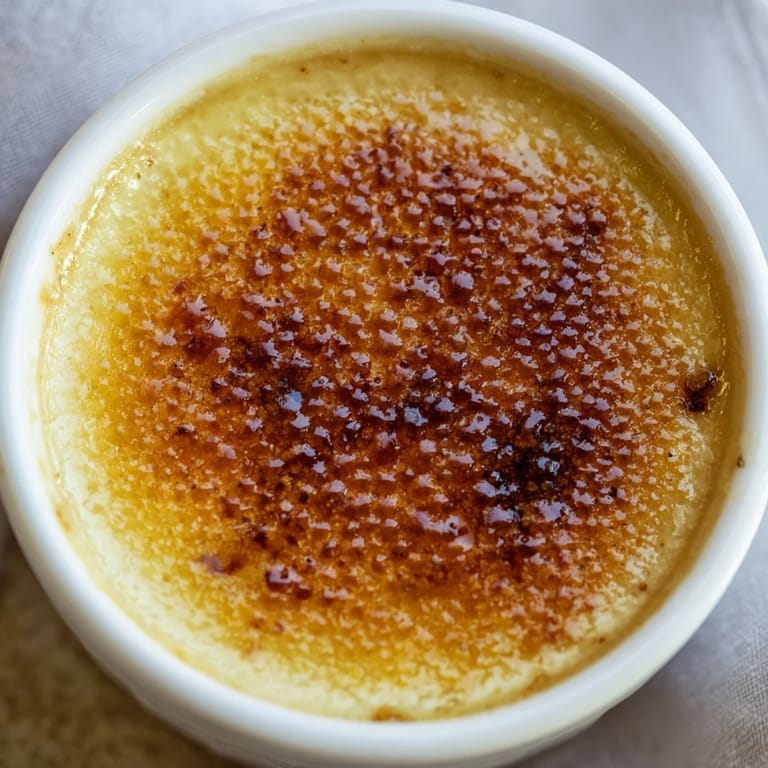
Save There's something almost magical about the first time you crack through that caramelized sugar shell and watch the spoon sink into the silky custard below. I'll never forget standing in my tiny apartment kitchen, torch in hand, feeling simultaneously nervous and exhilarated—just three ingredients between me and something that tasted like I'd trained in a French patisserie. The simplicity was almost suspicious, but that first spoonful proved the elegance was real.
I made these for a dinner party once where everything else had fallen apart—the main course was mediocre, the wine was warm, the conversation was stilted. But when I brought out those ramekins with their crackling golden tops, the whole table went quiet. Someone actually closed their eyes after the first bite. Suddenly everyone was relaxed, laughing, asking for the recipe. It taught me that sometimes the simplest things carry the most weight.
Ingredients
- Heavy cream (2 cups): This is where the magic starts—use the best quality you can find because it's the star here, and you taste every bit of it.
- Egg yolks (4 large): The yolks create that velvety texture that makes crème brûlée feel like luxury, so don't skimp on size or freshness.
- Granulated sugar (1/2 cup plus 4 tablespoons): Half goes into the custard for subtle sweetness, the rest becomes that glorious crackling shell everyone comes for.
Tired of Takeout? 🥡
Get 10 meals you can make faster than delivery arrives. Seriously.
One email. No spam. Unsubscribe anytime.
Instructions
- Heat the cream gently:
- Warm your heavy cream in a saucepan over medium heat until you see small wisps of steam rising—it should smell rich and inviting but never actually boil, which would make it separate and turn grainy.
- Whisk yolks with sugar:
- In a bowl, whisk your egg yolks with the 1/2 cup sugar until the mixture turns pale yellow and slightly thick, which takes about 2-3 minutes and means the sugar is starting to dissolve properly.
- Temper the eggs carefully:
- Pour the warm cream into the yolk mixture in a slow, steady stream while whisking constantly—this gradual warming prevents the eggs from scrambling and keeps everything silky smooth.
- Strain for perfection:
- Push the whole mixture through a fine sieve into a measuring cup or bowl, which catches any accidentally cooked egg bits and guarantees the custard will be impossibly smooth and refined.
- Fill and set up the water bath:
- Divide the strained custard evenly among four 6-ounce ramekins, then nestle them in a deep baking dish and pour hot water until it comes halfway up the sides—this gentle, moist heat cooks the custard evenly without forming a rubbery top.
- Bake until just set:
- Bake at 325°F for 30-35 minutes, watching for the moment when the edges are firm but the very center still wobbles slightly when you gently shake a ramekin—this is the sweet spot between creamy and set.
- Chill thoroughly:
- Cool the ramekins to room temperature, then refrigerate for at least an hour or up to two days, which lets the flavors meld and makes the final caramelizing step much easier.
- Caramelize the top:
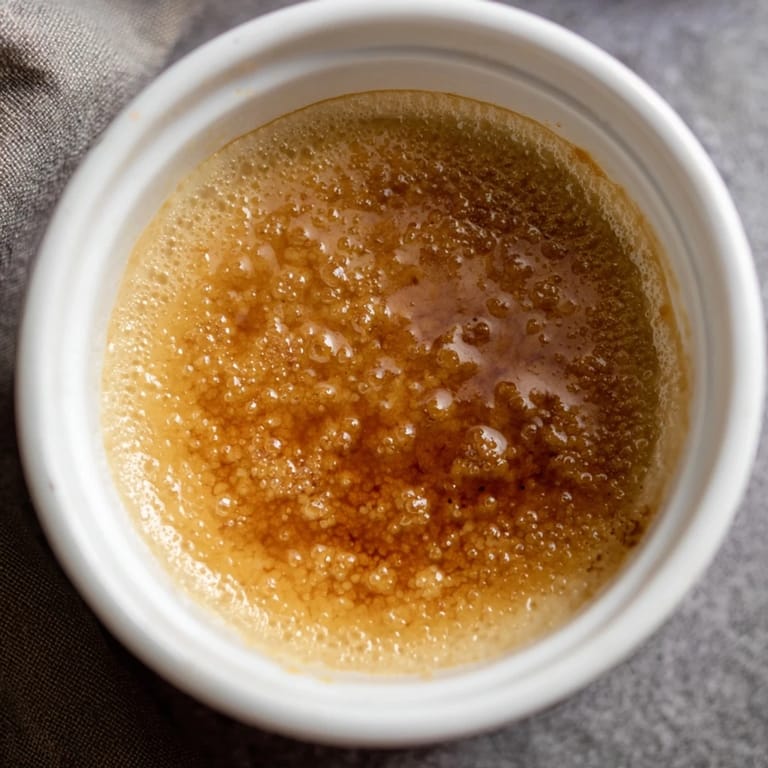
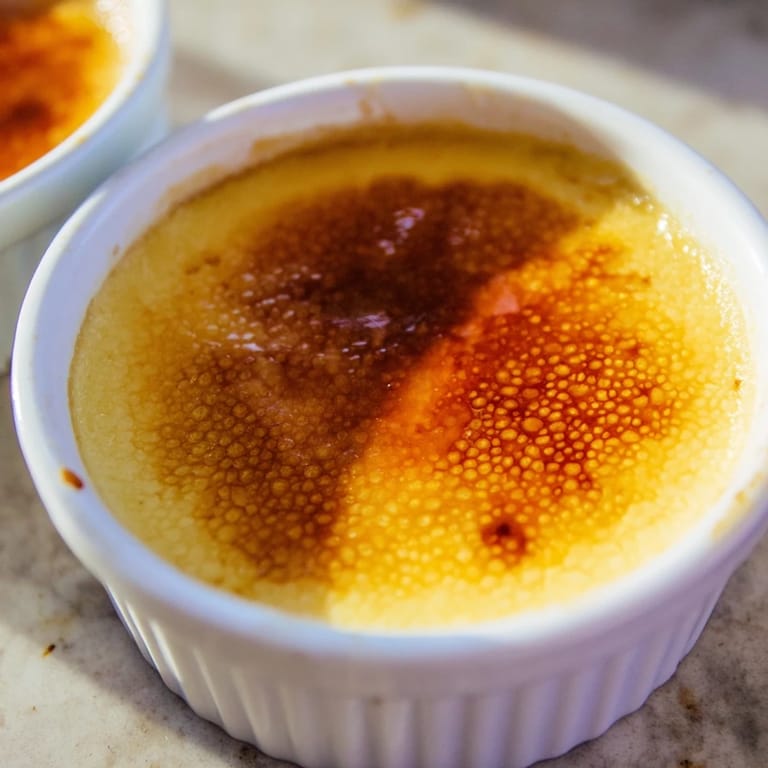
- Just before serving, sprinkle 1 tablespoon of sugar evenly over each cold custard, then hold a kitchen torch a few inches above and move it in slow circles until the sugar melts into a deep golden shell—let it sit for a minute so it crisps up properly.
 Pin it
 I once served these at a potluck where I felt wildly out of place, surrounded by casseroles and store-bought desserts. But watching a skeptical guy bite into one and then immediately reach for another reminded me why I cook—it's that moment when something transforms, when people let their guard down over something delicious.
The Three-Ingredient Philosophy
There's a reason this dessert has endured for centuries—it proves that fewer ingredients, when they're good ones, beats complexity every time. Cream, eggs, sugar. No vanilla, no extracts, no modifications needed. I've watched home cooks get nervous about recipes with twenty ingredients, but somehow a three-ingredient dessert feels attainable, even exciting. It's almost like permission to be ambitious without overthinking.
The Torch Moment
That kitchen torch sitting on your counter might seem intimidating, but it's honestly one of the most satisfying kitchen tools you'll use. The sound of the sugar crackling and darkening, the smell of caramelization, the visible transformation from grainy white to glossy amber—it engages all your senses in a way that makes you feel like an actual pastry chef. Even people who've never cooked before light up when they get to do this part.
Variations and Serving Ideas
Once you master the basic version, you can start playing with infusions—a vanilla bean split and steeped in the cream, lemon zest whisked with the yolks, or even a pinch of sea salt in the sugar topping. Each variation opens a new door without changing the fundamental simplicity that makes this recipe so reliable and rewarding.
- Fresh berries or a sprig of mint on the side add color and brightness without overwhelming the custard.
- A thin layer of liqueur like Grand Marnier under the sugar creates fancy restaurant vibes but is totally optional.
- Make these the day before a dinner party so you can focus on the rest of the meal and just torch them right before guests arrive.
 Pin it
 Crème brûlée proves that restraint and precision create something more memorable than excess ever could. Make these whenever you want to feel a little bit fancy, or when someone deserves to know you cared enough to get it right.
Frequently Asked Questions
- → What creates the signature crisp topping?
The caramelized sugar crust is crafted by sprinkling sugar on the custard surface and using a kitchen torch or broiler to melt and brown it until crisp and golden.
- → Why use a water bath during baking?
The water bath ensures gentle, even heat distribution, preventing the custard from curdling and promoting a smooth, creamy texture.
- → How do you achieve a silky custard texture?
Slowly combining warm cream with whisked egg yolks and sugar, followed by straining the mixture and careful baking, contributes to the custard’s smoothness.
- → Can the flavor be enhanced?
Yes, infusing the cream with vanilla bean or citrus zest before mixing adds subtle aromatic layers to the custard base.
- → What’s a good garnish option?
Fresh berries or a sprig of mint complement the rich custard and caramel topping, adding color and brightness to the presentation.
- → Is a kitchen torch necessary?
A kitchen torch provides precise caramelization, but using a broiler carefully as an alternative can also achieve a crisp sugar crust.