 Save
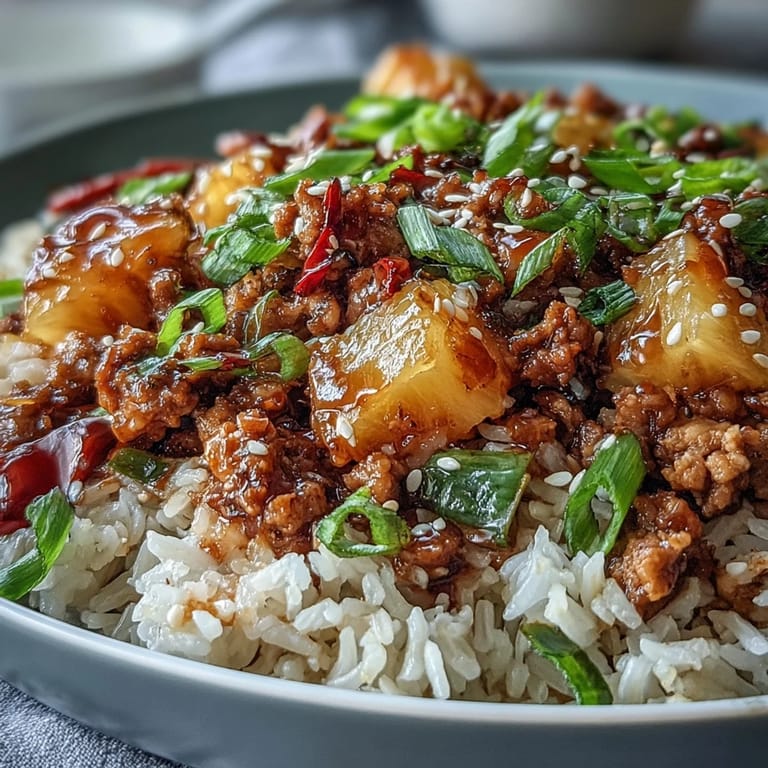
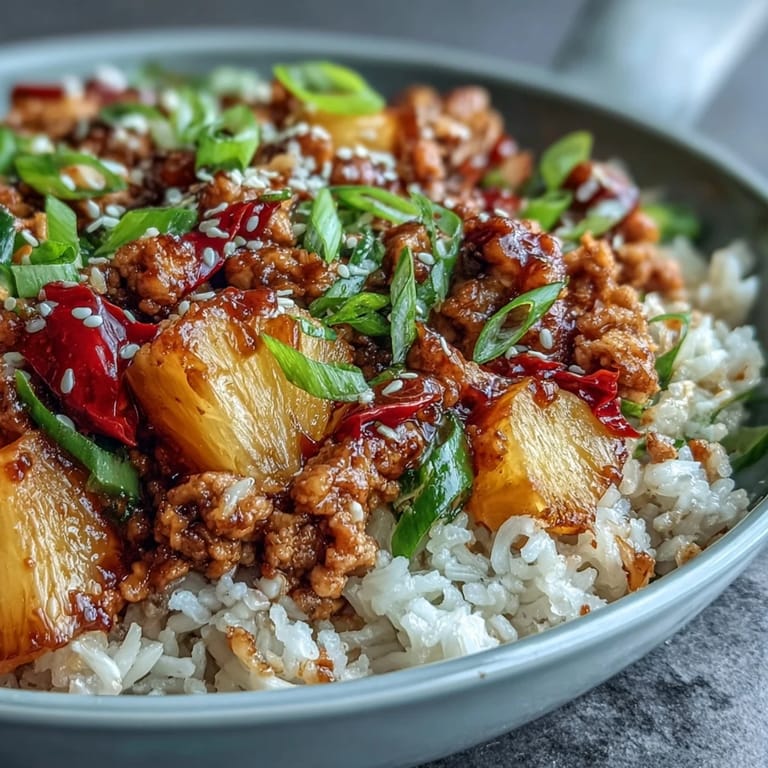
Save My partner came home one evening craving something bright and comforting, so I improvised with what we had in the freezer and pantry—ground turkey, day-old jasmine rice, and a jar of gochujang that had been waiting for its moment. The kitchen filled with this incredible aroma of caramelized meat and spiced sweetness, and by the time those pineapple chunks hit the hot skillet, they were already convinced it was a keeper. That one-pan dinner became our go-to when we wanted something that felt restaurant-quality but didn't demand hours at the stove.
I made this for a small dinner party last spring, and what surprised me most was how the ground turkey stayed tender and didn't dry out—something I'd always worried about. One guest asked if I'd marinated it overnight, and I had to laugh because the whole thing took less than an hour from pantry to table. It became the kind of dish people text you about weeks later, asking for the recipe.
Ingredients
- Ground turkey: Use fresh if possible, and don't skip the browning step—those browned bits on the pan are liquid gold for flavor.
- Yellow onion: Dicing it evenly ensures it softens at the same pace as the peppers, giving you a consistent texture throughout.
- Red and green bell peppers: They add natural sweetness and color contrast, and honestly, the kitchen smells incredible when they're sautéing.
- Garlic cloves: Three is the sweet spot here; any less and you lose that underlying savory warmth.
- Pineapple chunks: Fresh tastes brighter, but canned drained pineapple works beautifully and is often sweeter, which balances the heat from the gochujang.
- Jasmine or long-grain rice: Day-old rice is crucial—fresh rice tends to clump, and you want those individual grains to soak up sauce.
- Vegetable oil: Use neutral oil so the flavors of the turkey and sauce shine through.
- Soy sauce: Low sodium gives you control over the final saltiness without overpowering the other flavors.
- Gochujang: This Korean chili paste is the backbone of the dish, bringing depth and subtle spice that feels more sophisticated than simple hot sauce.
- Rice vinegar: It brightens everything and prevents the sauce from becoming one-dimensional or too sweet.
- Brown sugar: Works better here than white sugar because it adds a slight molasses depth that complements the pineapple.
- Tomato ketchup: Just a tablespoon adds umami and a touch of acidity that rounds out the sweet-and-sour balance.
- Sesame oil: A small amount at the end lifts the entire dish with an almost nutty aroma.
- Green onions and sesame seeds: These are your finishing touches—they add texture and visual brightness that makes the dish feel complete.
Tired of Takeout? 🥡
Get 10 meals you can make faster than delivery arrives. Seriously.
One email. No spam. Unsubscribe anytime.
Instructions
- Heat your skillet and brown the turkey:
- Pour oil into a large skillet or wok over medium-high heat and let it shimmer for a few seconds—you want it hot enough that the turkey immediately starts sizzling. Break the ground turkey into smaller pieces as it cooks so you get those flavorful browned bits rather than one big clump.
- Build your vegetable base:
- Once the turkey is cooked through and no longer pink, toss in the diced onion, both peppers, and garlic all at once. The pan is still hot enough to quickly soften them, which takes about 4 to 5 minutes—listen for the sizzle and watch until the peppers just lose their raw edge.
- Add the pineapple:
- Fold in those pineapple chunks and let them warm through for a minute or two, which brings out their sweetness and helps them soften slightly without turning mushy.
- Create and pour the sauce:
- While the pineapple is warming, whisk together soy sauce, gochujang, rice vinegar, brown sugar, ketchup, and sesame oil in a small bowl—the mixture should smell complex and balanced, not overly salty or sour. Pour it right over everything and stir well so every piece gets coated.
- Incorporate the rice:
- This is where day-old rice really pays off; break up any clumps with your spoon as you fold it in, and then stir-fry everything together for 2 to 3 minutes until the rice is heated through and the sauce has absorbed into the grains.
- Taste and adjust:
- Before plating, take a small spoonful and really taste it—if it needs more heat, add a pinch more gochujang or red pepper flakes; if it feels a bit flat, a tiny splash more rice vinegar wakes it up.
- Finish and serve:
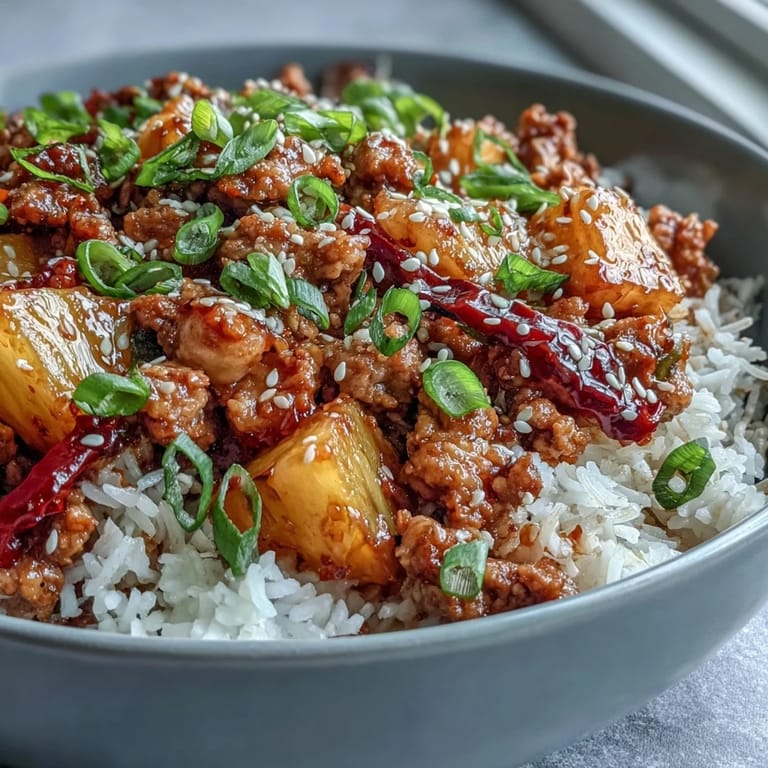
- Scatter sliced green onions and toasted sesame seeds over the top, and serve while everything is still steaming hot so you get that contrast between the warm rice and the fresh garnish.
 Pin it
  Pin it
 There was a moment while plating when my young niece asked why it smelled like a restaurant, and I realized this is the kind of dish that makes people feel cared for. It's not complicated, but it tastes like you spent the afternoon thinking about how to make them happy.
The Magic of Gochujang in Weeknight Cooking
Once you bring gochujang into your kitchen routine, you stop reaching for the same tired flavor combinations. It's earthy and slightly sweet on its own, but when it's balanced with acid and other seasonings like this, it becomes almost mysterious—people taste it and can't quite name what they're eating, which is exactly the compliment you want. I've started keeping a jar of it visible on my counter rather than hidden in the back of the fridge, partly because it looks beautiful and partly because seeing it reminds me to experiment beyond the usual recipes.
Why This Works as a One-Pan Dinner
There's something deeply satisfying about watching separate ingredients become one unified dish in a single skillet. The turkey releases its fat as it cooks, which then helps soften the vegetables and creates a base for the sauce; the rice absorbs all those flavors instead of sitting plain on the side. It feels efficient without feeling rushed, and the cleanup is honest to goodness just one pan to wash.
Serving and Storage Ideas
This dish is best served immediately while the rice is fluffy and the sauce is glossy, but it also reheats beautifully the next day if you store it in an airtight container. I've even eaten leftovers cold straight from the fridge as an afternoon snack, though it's never as good as freshly made. If you're serving this to guests, pair it with something crisp like a cold lager or a light Riesling that won't fight with the sweet-and-sour balance.
- For extra heat, add red pepper flakes or extra gochujang to your own portion rather than the whole skillet.
- Ground chicken or pork swap in seamlessly if turkey isn't what you have on hand.
- Fresh pineapple tastes more vibrant, but canned works perfectly well when you're in a hurry.
 Pin it
  Pin it
 This sweet-and-sour turkey skillet became a staple because it delivered on the promise of tasting special without demanding anything unreasonable from you. That's the kind of recipe that actually makes it into real rotation, not just pinned and forgotten.
Frequently Asked Questions
- → Can I use fresh pineapple instead of canned?
Yes, fresh pineapple works beautifully. Cut it into similar-sized chunks as you would use from a can. Fresh pineapple may release more moisture during cooking, so you might need to cook it slightly longer to evaporate excess liquid.
- → What makes day-old rice better for this dish?
Day-old rice has dried out slightly, which prevents it from becoming mushy when stir-fried. The grains separate easily and absorb the sweet-and-sour sauce without clumping together, giving you fluffy, distinct grains in every bite.
- → Is gochujang very spicy?
Gochujang has a mild to medium heat level with a deep, fermented flavor. If you're sensitive to spice, start with half the amount and taste before adding more. You can always substitute with a milder chili paste or omit it entirely.
- → Can I make this dish dairy-free?
This skillet is naturally dairy-free as written. Just ensure your gochujang and other condiments don't contain hidden dairy ingredients. Most traditional versions of these Asian condiments are dairy-free.
- → What other proteins work well in this skillet?
Ground chicken, pork, or even crumbled tofu make excellent substitutes. Each will bring slightly different flavors and cooking times—chicken and pork cook similarly to turkey, while tofu absorbs the sauce beautifully and needs less cooking time.
- → How do I store and reheat leftovers?
Store in an airtight container in the refrigerator for up to 3 days. Reheat in a skillet over medium heat with a splash of water or broth to refresh the rice, or microwave in 30-second intervals until heated through.