 Save
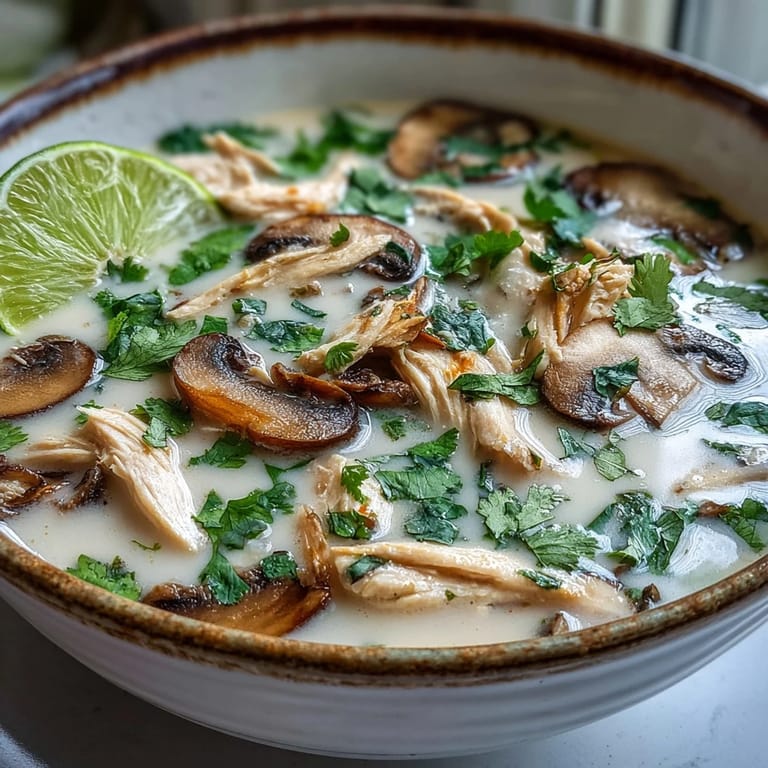
Save My first proper bowl of Tom Kha Gai arrived on a humid Bangkok afternoon, steam rising from a ceramic spoon, and I realized halfway through that I'd been holding my breath waiting for the next sip. Years later, standing in my own kitchen with lemongrass stalks bruising under the side of my knife, that same magic happens every time, though now I understand why: the soup builds itself in layers, each ingredient whispering its part until the whole thing comes alive. This isn't complicated cooking, just patient, fragrant cooking that rewards you for slowing down.
I made this for my sister on a rainy Tuesday when she'd had one of those weeks, the kind where you forget to eat lunch and then can't remember why anything matters. She took one spoonful and looked up with that expression people get when food suddenly speaks directly to them, no translation needed. That bowl did more than fill her stomach; it reminded her that sometimes the kindest thing you can offer is something warm and alive.
Ingredients
- Boneless, skinless chicken breast or thighs (300 g): Thighs stay more tender than breast, but use whichever you have; just slice them thin so they cook quickly in the simmering broth.
- Coconut cream (400 ml): The difference between canned and boxed matters here, and full-fat is non-negotiable if you want that velvety texture.
- Chicken stock (500 ml): Use homemade if you have it, but good quality store-bought works; the broth carries everything forward.
- Lemongrass stalks (2): Trim the tough ends and bruise them with your knife to release the oils, then fish them out before serving since they're not meant to be eaten.
- Fresh galangal (4 slices): If you can't find it, ginger is the honest substitute, though the flavor shifts slightly toward warmth rather than the subtle peppery note galangal brings.
- Kaffir lime leaves (4): These dried or fresh teardrops of flavor are worth seeking out; they're what separates this from just another coconut soup.
- Button mushrooms (200 g): Slice them fairly thin so they absorb the broth and soften quickly alongside the chicken.
- Shallots (2 small): They add sweetness and gentle depth; don't skip them thinking they're optional.
- Garlic (2 cloves): Smash them rather than mince to release the pungent oils that perfume the whole pot.
- Thai bird's eye chilies (2-3): Smash these whole and leave them in during cooking, then fish out the pieces if you want heat without biting into pure fire.
- Fish sauce (2 tbsp): I know it smells like the ocean floor when you open the bottle, but trust the process; it's the salty backbone that makes everything else sing.
- Lime juice (1 tbsp plus extra): Squeeze fresh if possible; bottled turns the finish flat.
- Sugar (1 tsp): A tiny pinch balances the spice and salt, the way sweetness should work in Thai cooking.
- Fresh cilantro and lime wedges: These finish the bowl with brightness and let each person tune their own bowl to taste.
Tired of Takeout? 🥡
Get 10 meals you can make faster than delivery arrives. Seriously.
One email. No spam. Unsubscribe anytime.
Instructions
- Build the aromatic broth:
- Pour coconut cream and stock into a large saucepan, then add lemongrass, galangal, kaffir lime leaves, shallots, garlic, and chilies. The moment you bring it to a gentle simmer, the kitchen fills with that distinctive fragrance that tells you everything is on track.
- Steep for flavor:
- Let it bubble softly for 10 minutes, uncovered, so the broth absorbs the personality of every aromatic element. You'll notice the color deepen and the smell become more complex as it sits.
- Add protein and mushrooms:
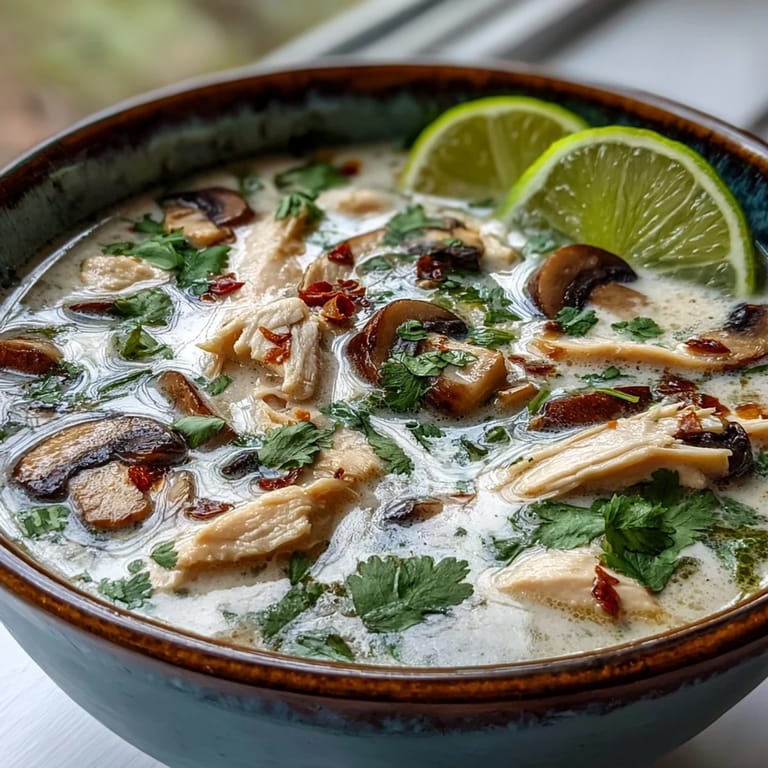
- Slide the sliced chicken and mushrooms into the simmering broth and let them cook for 8 to 10 minutes until the chicken turns opaque and the mushrooms collapse slightly into the liquid. Stir occasionally so everything cooks evenly.
- Strain out solids:
- Fish out the lemongrass, galangal, and lime leaves using a slotted spoon or small strainer; leave the softer shallots and garlic to dissolve into the broth. This step matters because those woody bits look sad floating in your finished bowl.
- Season to balance:
- Stir in fish sauce, lime juice, and sugar, then taste and adjust. The soup should taste salty-sour-slightly-sweet in equal measure, with heat from the chilies underneath. Add salt if needed, but go slowly.
- Serve hot with joy:
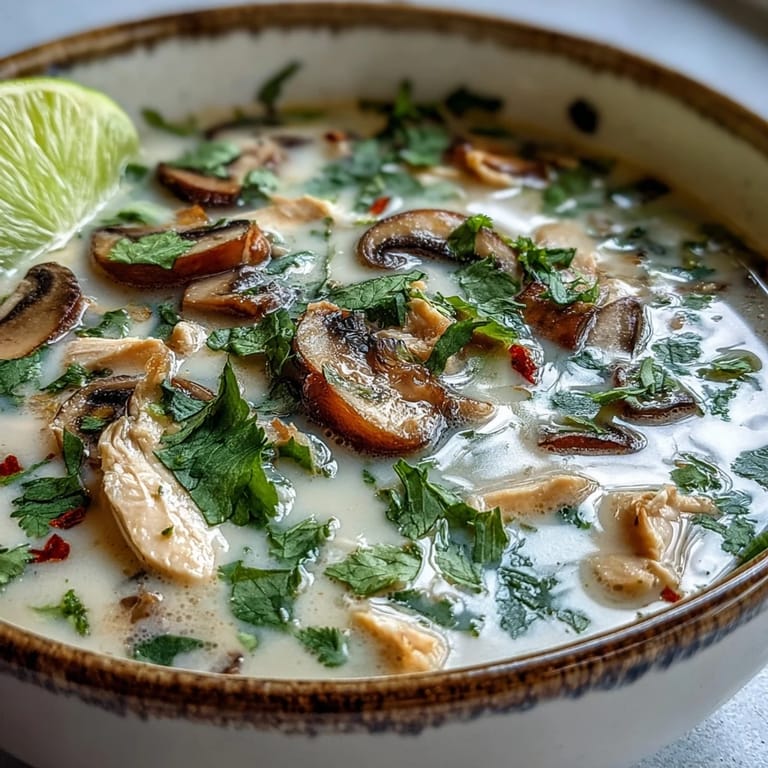
- Ladle into deep bowls, crown each with fresh cilantro, and let people add lime to their own taste at the table. The final squeeze of lime is where the magic gets personal.
 Pin it
 My partner brought home fresh galangal from the Thai market one evening and made this soup without telling me, surprising me when I walked through the door to that smell. I didn't have to ask what was happening; the aroma announced itself like an old friend arriving. We sat together without talking much, just eating, and somewhere between the second and third spoonful, I understood why some foods become reasons to gather.
The Magic of Aromatics
The lemongrass and galangal aren't there to shout; they're there to create a foundation so fragrant you can taste it before the spoon touches your mouth. I learned this by making the mistake of skipping the 10-minute infusion step once, thinking I could rush, and the broth tasted flat and confused. Now I treat that quiet simmering time like meditation—the soup is building itself, and you're just the witness.
Balancing Heat and Brightness
Thai cooking lives in balance, and Tom Kha is a masterclass in how salt, sour, spice, and sweetness can coexist without anyone drowning out the others. The fish sauce carries salt and depth, the lime brings snap, the chili adds fire, and the sugar smooths everything into harmony. I've watched people who claim they don't like spicy food fall in love with this soup because the other flavors create so much space for the heat to live without dominating.
Variations Worth Trying
Once you understand the bones of this recipe, it becomes a template for improvisation rather than a rigid instruction. I've made it with coconut milk instead of cream for a lighter version on hot nights, switched chicken for silken tofu and soy sauce for vegetarian guests, added extra mushrooms when I wanted more texture. The constant is that fragrant broth—everything else can bend to what you have and what you need.
- Substitute tofu for chicken and use soy sauce instead of fish sauce to keep it vegetarian without losing depth.
- Add a splash of extra coconut milk if you want it lighter, or use cream if you want it richer and more decadent.
- Stir in a handful of fresh basil or mint at the very end for a bright herbal note that changes the whole mood.
 Pin it
 This soup has become my go-to when I want to feel like I'm cooking something special without the stress of technique. It teaches you something true about Thai food: that simplicity and fragrance are more powerful than complexity, and that sometimes the most comforting thing is something that tastes like somewhere else entirely.
Frequently Asked Questions
- → What makes Tom Kha different from other Thai soups?
Tom Kha is distinguished by its rich coconut cream base, unlike the clear broth of Tom Yum. The combination of coconut cream with aromatic herbs like lemongrass, galangal, and kaffir lime leaves creates a velvety, deeply fragrant soup that's both creamy and refreshing.
- → Can I make this vegetarian?
Absolutely. Substitute chicken with firm tofu and replace fish sauce with soy sauce or a vegetarian fish sauce alternative. The aromatic base and coconut cream remain unchanged, preserving the authentic Thai flavors.
- → How spicy is this soup?
The heat level is easily customizable. Start with 2-3 Thai bird's eye chilies for mild to medium heat, or increase the quantity for spicier results. The chilies can also be omitted entirely for a mild version that still retains aromatic depth.
- → What can I use if I can't find galangal?
Fresh galangal has a distinct piney, citrusy flavor, but if unavailable, fresh ginger makes an acceptable substitute. Use slightly more ginger than galangal called for, though the flavor profile will be slightly different.
- → How long does this keep in the refrigerator?
Stored in an airtight container, Tom Kha keeps well for 3-4 days. Reheat gently over low heat to prevent the coconut cream from separating. The flavors often develop and deepen after a day, making leftovers even more delicious.