 Save
Save Last winter, I threw together this soup on a gray Tuesday afternoon with whatever I had left in the fridge. The kitchen windows fogged up as the broth simmered, and the smell of smoked sausage and thyme made the whole house feel smaller and warmer. My neighbor knocked on the door just as I was ladling it into bowls, and I ended up sending her home with a container. She texted me an hour later asking for the recipe, and I realized I hadn't written anything down.
I made this for my sister when she came over with a cold, convinced she needed something more than tea and toast. She sat at the table in her oversized sweater, skeptical at first, but by the second bowl she was asking if I could freeze some for her. Now every time she feels run down, she texts me a cabbage emoji.
Ingredients
- Smoked sausage or kielbasa (400 g): The smoky, savory base of the whole soup, browning it first adds a deeper flavor to the broth.
- Potatoes (3 medium, diced): They break down just enough to thicken the soup naturally without needing cream.
- Green cabbage (1 small head, chopped): It softens into silky ribbons and soaks up all the spices beautifully.
- Onion (1 large, chopped): Builds the aromatic foundation and sweetens as it cooks down.
- Carrots (2, sliced): Add a subtle sweetness and a bit of color to the pot.
- Celery (2 stalks, sliced): Brings an earthy backbone that balances the richness of the sausage.
- Garlic (3 cloves, minced): A must for warmth and depth, don't skip this.
- Chicken or vegetable broth (1.5 liters): The canvas for everything else, use good quality broth if you can.
- Olive oil (1 tablespoon): Just enough to get the sausage and vegetables started.
- Smoked paprika (1 teaspoon): Echoes the smokiness of the sausage and ties everything together.
- Dried thyme (1/2 teaspoon): A quiet herb that makes the soup taste like it simmered all day.
- Bay leaf (1): Adds a subtle herbal note you'll miss if you leave it out.
- Salt and black pepper: Season to taste, the sausage is salty so start light.
- Fresh parsley (optional, 2 tablespoons chopped): A bright finish that cuts through the richness.
Tired of Takeout? 🥡
Get 10 meals you can make faster than delivery arrives. Seriously.
One email. No spam. Unsubscribe anytime.
Instructions
- Brown the sausage:
- Heat the olive oil in a large pot over medium heat and add the sausage slices. Let them sizzle and brown on both sides for about 4 minutes, then lift them out with a slotted spoon and set aside.
- Soften the vegetables:
- Toss the onion, carrots, and celery into the same pot where the sausage left behind little caramelized bits. Stir occasionally for about 5 minutes until everything softens and smells sweet.
- Bloom the spices:
- Add the garlic, smoked paprika, and thyme, stirring constantly for about a minute. You'll know it's ready when the smell hits you and makes you lean closer to the pot.
- Build the soup:
- Return the sausage to the pot and add the potatoes, cabbage, broth, bay leaf, salt, and pepper. Stir everything together so the cabbage starts to wilt into the liquid.
- Simmer until tender:
- Bring the soup to a boil, then lower the heat and let it simmer uncovered for 25 to 30 minutes. The potatoes should be fork tender and the cabbage should melt into the broth.
- Finish and serve:
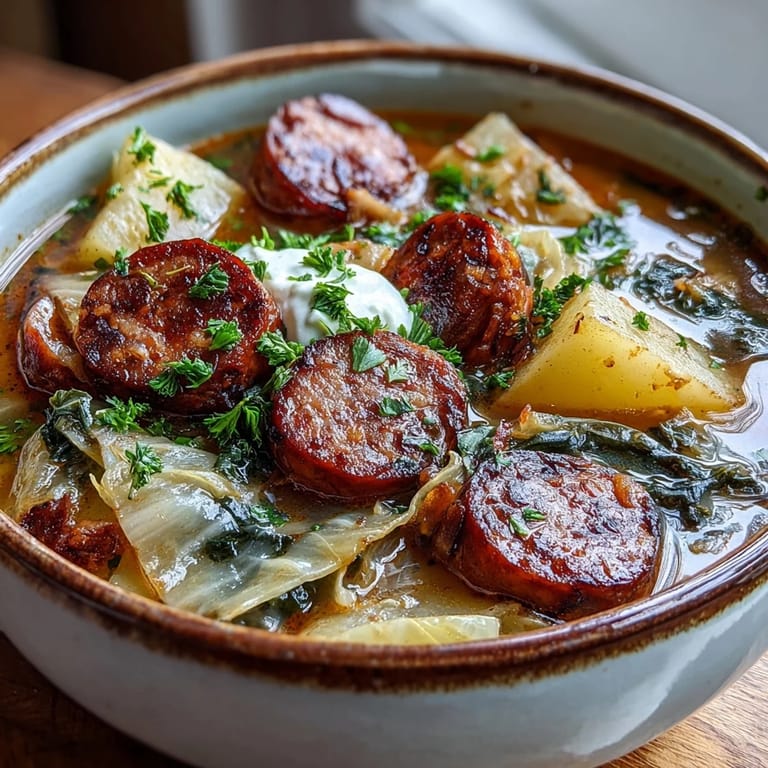
- Fish out the bay leaf, taste the soup, and adjust the salt and pepper. Ladle it into bowls, scatter parsley on top, and serve with a dollop of sour cream or a hunk of crusty bread.
 Pin it
 One evening I made a double batch and froze half in individual containers. Weeks later, after a long day at work, I pulled one out and reheated it on the stove. It tasted even better than I remembered, richer and more balanced, like the flavors had been getting to know each other in the freezer.
Choosing Your Sausage
I've made this with kielbasa, andouille, and even chicken sausage depending on what was on sale. Each one changes the personality of the soup slightly, kielbasa is classic and comforting, andouille brings a little kick, and chicken sausage keeps it lighter. If you want it spicier, grab a hot sausage or toss in some chili flakes with the paprika.
Storage and Reheating
This soup keeps in the fridge for up to four days in an airtight container, and it freezes beautifully for up to three months. When reheating, add a splash of broth or water since the potatoes will soak up liquid as it sits. I like to reheat it gently on the stove, stirring occasionally, until it's warmed through and steaming.
Serving Suggestions
I usually serve this with a thick slice of sourdough or a soft dinner roll for dipping. A spoonful of sour cream on top adds tang and creaminess, and sometimes I'll grate a little sharp cheddar over it if I'm feeling indulgent.
- Serve with crusty bread, soft rolls, or cornbread on the side.
- Top with sour cream, fresh dill, or grated cheese for extra richness.
- Pair it with a simple green salad dressed in lemon vinaigrette to balance the hearty soup.
 Pin it
 This soup has become my go to when I need something easy, filling, and forgiving. It never fails to make the kitchen feel like the best room in the house.
Frequently Asked Questions
- → Can I use a different type of sausage?
Yes, you can substitute with any smoked sausage, kielbasa, Italian sausage, or even chorizo for a spicier version. Just ensure it's fully cooked or brown it properly.
- → How do I store leftover soup?
Store in an airtight container in the refrigerator for up to 4 days. The flavors develop even more overnight. Reheat gently on the stovetop or in the microwave.
- → Can I freeze this soup?
Yes, this soup freezes well for up to 3 months. Cool completely before transferring to freezer-safe containers. Thaw overnight in the refrigerator before reheating.
- → What can I substitute for cabbage?
You can use kale, collard greens, or Swiss chard as alternatives. Add leafy greens during the last 10 minutes of cooking to prevent overcooking.
- → How can I make this soup thicker?
Mash some of the potatoes against the side of the pot, or blend 1-2 cups of the soup and stir it back in. Alternatively, add a slurry of cornstarch and water.
- → Is this soup gluten-free?
It can be gluten-free if you use sausage that's certified gluten-free. Always check labels on processed meats and broth to ensure no gluten-containing ingredients are present.