 Save
Save I discovered Safari Stripes entirely by accident at a dinner party where I'd overcommitted myself with too many dishes. Standing in front of the fridge with strips of mozzarella, leftover beef tenderloin, and a bottle of balsamic vinegar, I suddenly thought: what if I just arranged them like a pattern? The result was so visually stunning that guests started asking for the recipe before they even tasted it, and by the time they did, the combination of creamy cheese and glossy meat with that tangy-sweet glaze had them asking for seconds.
My friend Marcus watched me arrange the first platter and said, "That's restaurant-level plating," which made me laugh because I'd literally just grabbed what was in my kitchen. But that moment stuck with me—how something simple and intuitive could elevate a casual dinner into something memorable. Now whenever I make this, I think about how the right arrangement can make people slow down and actually notice what they're eating.
Ingredients
- Fresh mozzarella, 250 g: Slice it into 1 cm thick strips and pat dry with paper towels—this prevents it from becoming weepy on the platter.
- Feta cheese, 200 g: The tang here balances the richness of the mozzarella, and slicing it the same thickness keeps the visual rhythm intact.
- Beef tenderloin, 200 g: Cut against the grain into 1 cm strips so each bite is tender and doesn't require aggressive chewing.
- Chicken breast, 200 g: Pound it slightly thinner before cutting so it cooks in the same timeframe as the beef and stays juicy.
- Olive oil, 2 tbsp: Use something you actually like tasting—this isn't the moment for bottom-shelf oil.
- Salt and freshly ground black pepper: Season generously before searing; the crust that forms is where the flavor lives.
- Balsamic vinegar, 120 ml: Get the real stuff if you can; cheap balsamic tastes thin and acidic even after reduction.
- Honey, 1 tbsp: This rounds out the vinegar's bite and creates that glossy, cling-to-your-fork consistency.
- Fresh basil leaves and cracked black pepper for garnish: Don't skip this—the basil adds a brightness that makes the whole thing sing.
Tired of Takeout? 🥡
Get 10 meals you can make faster than delivery arrives. Seriously.
One email. No spam. Unsubscribe anytime.
Instructions
- Make the glaze first:
- Combine balsamic vinegar and honey in a small saucepan and bring it to a gentle simmer over medium heat. You'll notice the vinegar smelling stronger and sharper as it reduces—that's exactly what you want. Let it bubble away for 8 to 10 minutes until it coats the back of a spoon and drips slowly, then set it aside to cool completely so it doesn't wilt the cheese.
- Season and sear the proteins:
- Pat your beef and chicken strips dry, season them well with salt and pepper, then get your skillet screaming hot with olive oil. Sear the beef strips for just 1 to 2 minutes per side—you want them barely kissed with color, not gray all the way through. Remove and repeat with the chicken, which cooks even faster.
- Arrange the stripes:
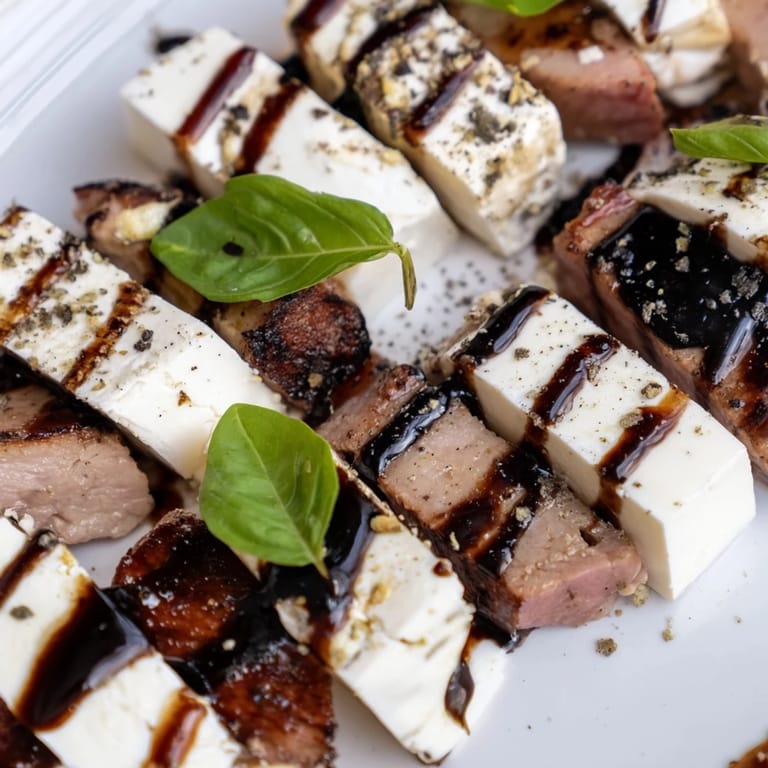
- Once the meats have cooled for a minute or two, start laying your pattern on the serving platter: mozzarella strip, beef strip, feta strip, chicken strip, repeat. There's something meditative about creating the rhythm; don't rush this part.
- Glaze and garnish:
- Drizzle the cooled balsamic glaze over just the meat strips—this keeps the cheese pristine and white. Scatter basil leaves across the platter and finish with cracked black pepper, then serve at room temperature so all the flavors are bright and present.
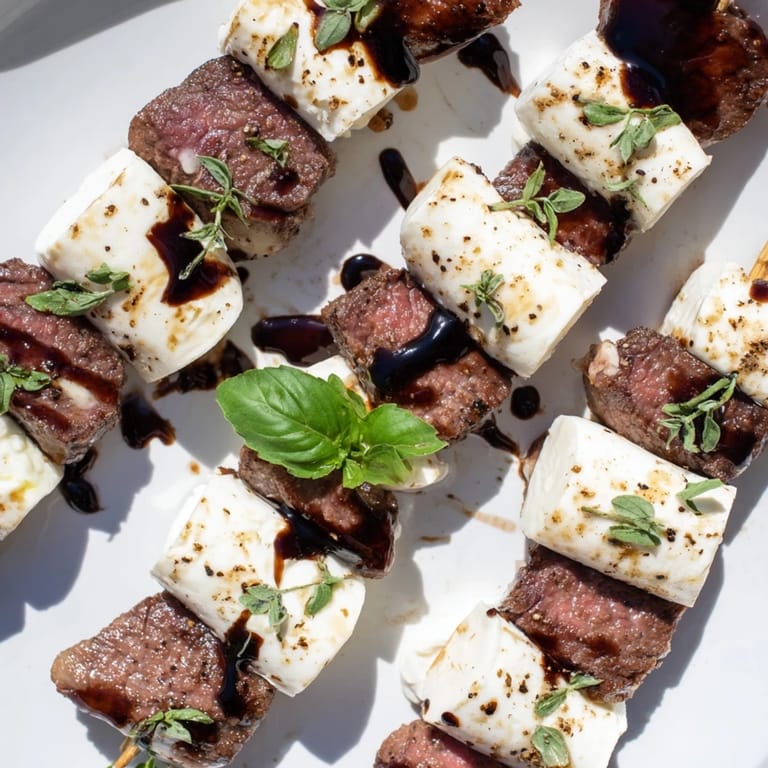 Pin it
 What surprised me most about this dish was how often it becomes a conversation starter. People photograph it, ask about the technique as if it's complicated, and suddenly a simple appetizer becomes the thing everyone remembers about the evening. That's when I realized plating isn't pretentious—it's a small gesture of care.
Why the Stripes Work
The visual pattern isn't just for show; it creates a natural rhythm that guides you through flavors. Each bite moves between creamy and savory, mild and tangy, with the balsamic bringing everything into focus. The stripe concept also means no one feels like they're eating the same thing twice, which matters more than you'd think when you're trying to keep a party interesting.
Building Your Own Variations
Once you understand the core concept, this appetizer becomes a template for your own tastes. I've done versions with prosciutto and smoked turkey, and my vegetarian friends have asked me to make it with grilled eggplant and portobello mushroom strips. The key is respecting the thickness and cooking time so everything reads as one cohesive dish instead of random toppings.
Pairing and Timing
This dish is meant to be made last and served immediately—which I've learned the hard way makes it perfect for gatherings where you want to look calm while actually being behind schedule. The stripes hold their appeal for about 20 minutes before the cheese softens too much and loses definition. Pair it with a crisp Sauvignon Blanc or a light Pinot Noir, and watch how the acidity in both the wine and the glaze create this perfect loop of flavors.
- Assemble no more than 20 minutes before serving if you're hosting outside or in a warm kitchen.
- Use a sharp knife and keep it dry between cuts so you don't drag cheese across the cutting board.
- If you need to prep ahead, slice and refrigerate everything separately, then arrange right before guests arrive.
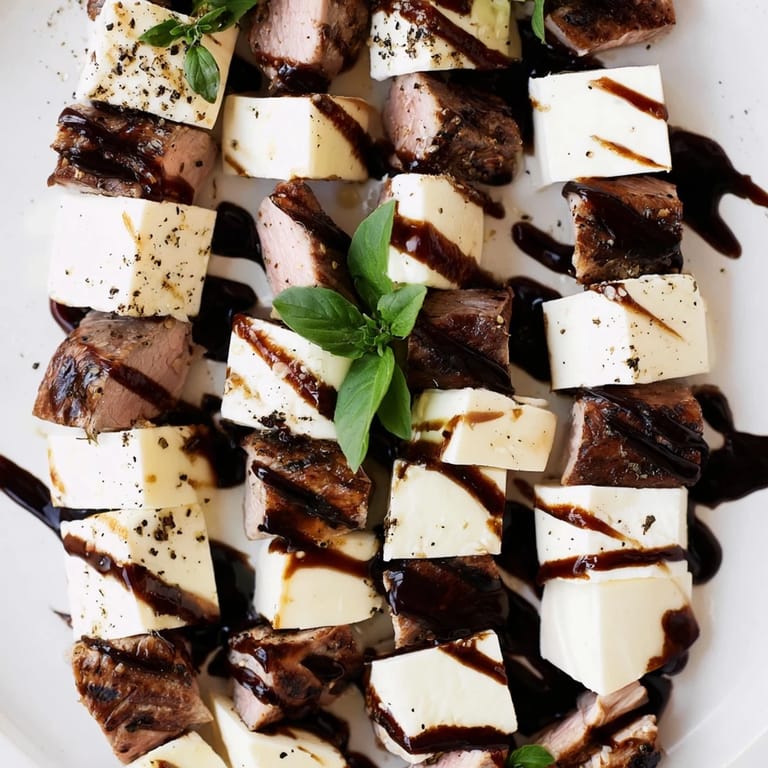 Pin it
 Safari Stripes taught me that entertaining doesn't have to mean elaborate—sometimes it just means paying attention to small details and trusting that people will taste the care you put into it. It's become my go-to when I want to impress without stress.
Frequently Asked Questions
- → Can I substitute the meats in this dish?
Yes, you can replace beef and chicken with prosciutto or smoked turkey to alter the flavor profile without compromising the visual appeal.
- → Is there a vegetarian alternative to this dish?
Grilled eggplant or portobello mushroom strips can replace the meats, preserving the layered presentation and providing rich textures.
- → How do I make the balsamic glaze thicker?
Simmer the balsamic vinegar and honey over medium heat until reduced by half or until it reaches a syrupy consistency, which usually takes about 8-10 minutes.
- → What cheeses work best for this platter?
Fresh mozzarella and feta are ideal for their contrasting textures and colors, enhancing the striped effect and layering of flavors.
- → How should this dish be served for best flavor?
Serve at room temperature shortly after assembly to allow the glaze to meld with the meats and cheese while maintaining optimal texture.
- → What wine pairs well with this dish?
A crisp Sauvignon Blanc or a light Pinot Noir complements the balance of creamy cheese and balsamic-glazed meats beautifully.