 Save
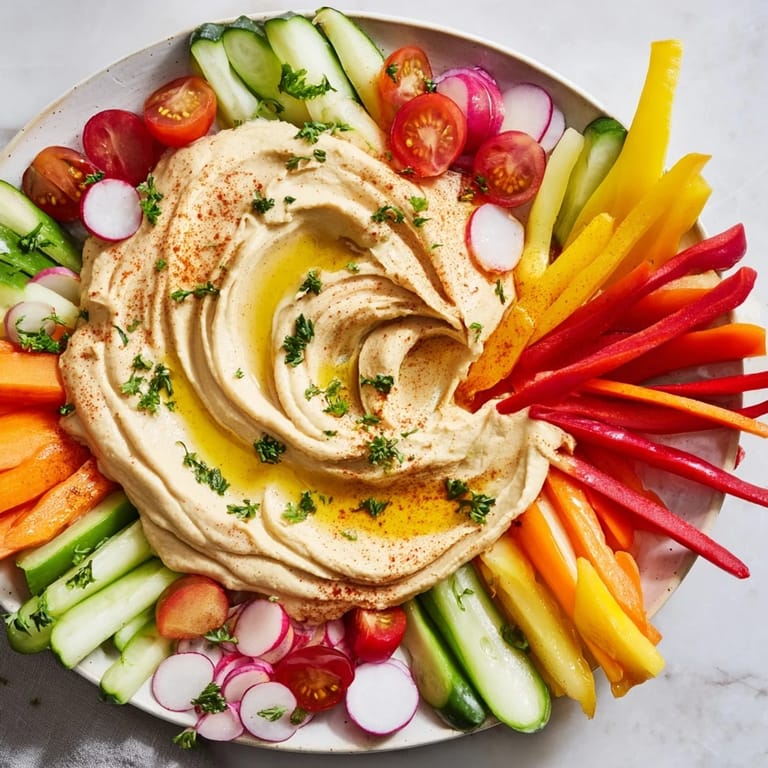
Save I still remember the moment I first created this dish for my sister's garden party last spring. I wanted something that would make guests actually pause and admire the platter before diving in, something that told a story without a single word. As I arranged those vibrant vegetables in flowing lines toward the center, it hit me: I was painting a river delta with carrots and tomatoes. My guests didn't just eat that day—they marveled at how something so simple could feel like edible art.
What really sealed this recipe's place in my regular rotation was watching my nephew, who typically refuses vegetables, deliberately fill his plate with crudités just because the river delta felt like an adventure. That's when I realized this isn't really about the dip or the vegetables—it's about creating a moment where food becomes an experience worth sharing.
Ingredients
- Hummus or Greek yogurt dip (1 1/2 cups): This is your river's foundation, so choose one you genuinely love. I've found that making your own hummus gives you control over the garlic and lemon, but store-bought works beautifully too. If you go the yogurt route, a good Greek yogurt creates an even creamier, tangier base
- Cherry tomatoes (1 cup, halved): Their natural sweetness and jewel-like color are non-negotiable. I always taste one before committing—a bland tomato ruins the entire visual
- Cucumber (1 cup, sliced into sticks): The pale green offers subtle color contrast and that satisfying crunch that keeps people reaching back
- Colorful bell peppers (1 cup, sliced into strips): Red, yellow, and orange create the tributaries that actually guide the eye toward your river. Green works too, but the warm colors feel more intentional
- Carrots (1 cup, peeled and cut into thin sticks): These are your workhorse vegetable—sturdy enough to hold their shape and visually striking. A good vegetable peeler makes them curl slightly, which adds texture
- Radishes (1/2 cup, thinly sliced): They add a peppery bite and those surprising pops of color that make people notice the detail you put in
- Snap peas (1/2 cup, trimmed): Their sweet crunch and delicate shape add sophistication to the arrangement
- Fresh parsley (2 tablespoons, chopped): This final flourish adds freshness and ties all those colors together with green
- Olive oil (1 tablespoon for drizzling): A quality oil matters here—it catches the light beautifully and adds richness to the dip
- Smoked paprika or zaatar (1 teaspoon, optional): If you use it, it adds warmth and a hint of mystery that makes people ask what that flavor is
Tired of Takeout? 🥡
Get 10 meals you can make faster than delivery arrives. Seriously.
One email. No spam. Unsubscribe anytime.
Instructions
- Set the scene with your river:
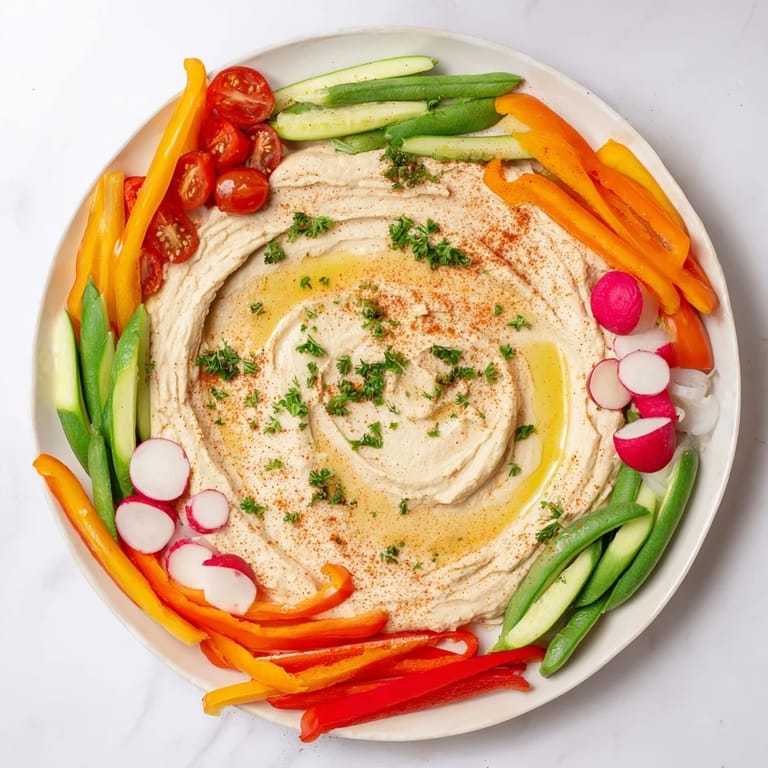
- Take your largest, flattest platter—this is your canvas. Spoon the hummus or yogurt dip in a winding line through the center, letting it meander slightly rather than run straight. Use the back of a spoon to gently shape and smooth it, creating natural-looking curves. Don't overthink this part; the beauty is in the imperfection.
- Create the flowing tributaries:
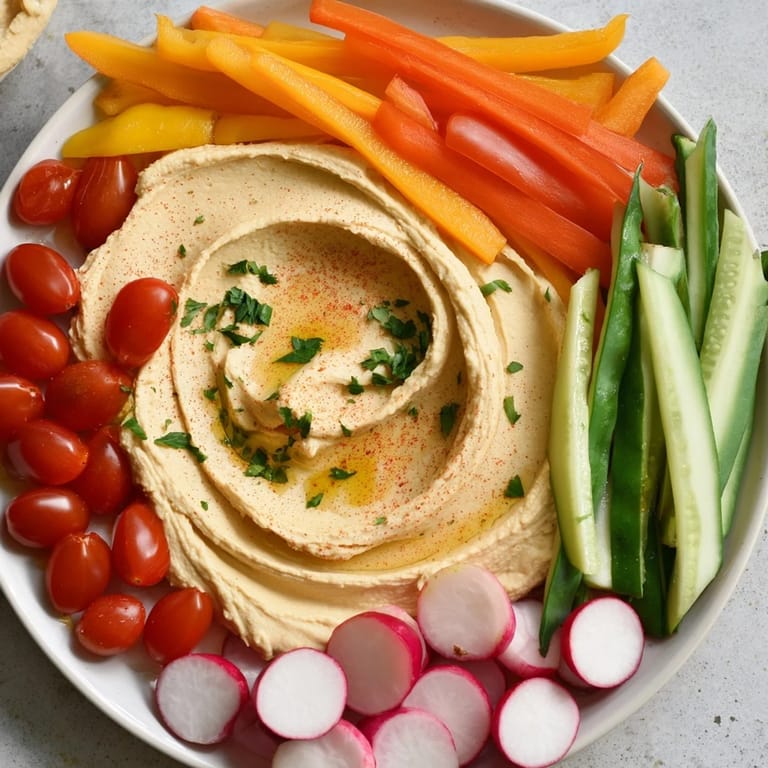
- Now here's where the magic happens. Starting at the edges of your platter, arrange your vegetables in flowing lines that seem to run toward the river. Alternate between colors and shapes as you work—a line of orange carrots, then red peppers, then pale cucumber, then pops of radish. Let each vegetable type create its own tributary. Stand back and look at it as you go; you're building a landscape.
- Dress the river:
- Drizzle your olive oil over the dip in a thin, deliberate stream. If you're using the smoked paprika or zaatar, sprinkle it across the dip where the oil has created a slight sheen. This adds depth and makes the center look even more intentional.
- Crown it with greenery:
- Scatter your fresh parsley over the entire arrangement, focusing a bit more on the river itself. This final touch of green brings everything together and adds a whisper of freshness.
- Serve with intention:
- Place your platter in the center of your gathering space and watch people pause before eating. You've created not just a snack, but a conversation starter.
 Pin it
 I'll never forget my grandmother watching me arrange this platter for the first time, then quietly saying, 'You made vegetables into art.' That might sound like a small thing, but it shifted something in how I think about cooking. Food doesn't need to be complicated to be remarkable.
Making It Your Own
The river delta concept is truly a canvas waiting for your personal touch. I've played with countless variations depending on the season and what I find at the farmers market. In autumn, I'll add roasted beets and golden beets to the mix, creating deeper, more jewel-toned colors. Summer calls for fresh corn kernels and thin rounds of summer squash. Even in winter, when fresh options feel limited, white and purple radishes can carry the visual weight beautifully. The point is this: your platter should reflect what excites you in produce at any given moment.
Dip Variations That Transform the River
The dip you choose becomes the character of your entire arrangement. Beet hummus creates a stunning deep magenta river that demands attention. Baba ghanoush offers an earthy, almost mysterious centerline that whispers sophistication. Tzatziki brings brightness and cooling properties that make the platter feel lighter and more summery. Even a simple labneh or whipped goat cheese can shift the entire mood. I like to taste-test my dip and let its flavor profile guide which vegetables I emphasize—if my dip leans earthy, I'll pull back on the radishes and lean into roasted vegetables instead.
Plating Wisdom and Party Magic
Over the years, I've learned that this platter works best when you're thinking about how people will actually interact with it. A narrow, long serving space calls for a more linear arrangement. A round platter becomes a clock face with the dip at the center and vegetables radiating outward like spokes. The height of your serving table matters too—if guests are standing and reaching down, make sure your river is positioned so they can easily reach the dip without awkwardly stretching across vegetables. One more thing I learned the hard way: leave a small empty section on the platter for people to place their small plate or napkin without disturbing the arrangement. That tiny gesture shows you've thought about the practical side of presentation.
- Always keep extra vegetables nearby to refresh the platter as the party progresses—nothing says care like a thoughtfully replenished display
- Consider your serving utensil; I use a small wooden spoon for the dip so people know exactly how much to take
- If you're making this ahead by a few hours, keep it covered loosely with plastic wrap in a cool spot to prevent the vegetables from drying out
 Pin it
 This recipe taught me that sometimes the most memorable meals aren't the complicated ones—they're the ones where someone took time to make something simple feel special. Serve this, and watch your platter become the story of your gathering.
Frequently Asked Questions
- → How do I arrange the vegetables for the best presentation?
Arrange vegetable sticks and slices in tapering lines radiating towards the dip, alternating colors and shapes to mimic river tributaries for visual appeal.
- → What dips work well as the central 'river'?
Hummus or Greek yogurt dips work well. For variety, try beet hummus, baba ghanoush, or tzatziki to add different flavors and colors.
- → Can this platter accommodate dietary restrictions?
Yes, it's naturally vegetarian and gluten-free. Choose dips accordingly if avoiding dairy or sesame.
- → How long does preparation take?
Preparation takes about 25 minutes, with no cooking required, making it quick and easy for gatherings.
- → What garnishes enhance this vegetable arrangement?
Drizzle olive oil over the dip and sprinkle smoked paprika or zaatar. Fresh parsley adds a vibrant finishing touch.