 Save
Save My sister called one rainy Tuesday asking how to use the miso paste she impulse-bought at the Asian market. I talked her through this bowl over speakerphone while I made my own version, both of us chopping vegetables and laughing at how much ginger we were grating. When we sat down to eat, miles apart, we sent each other photos of nearly identical bowls. That night, this recipe became our long-distance kitchen ritual.
I once served this to a friend who swore she hated anything with mushrooms. She picked around them at first, then tried a bite of broth-soaked shiitake and went silent. By the end of the bowl, she was fishing out every last slice. Now she requests this recipe every time she visits, mushrooms and all.
Ingredients
- Boneless, skinless chicken thighs or breasts: Thighs stay juicier and more forgiving if you slightly overcook them, but breasts work beautifully if you watch the temperature closely.
- White miso paste: This fermented soybean paste brings a gentle, sweet umami that transforms both the marinade and the broth without overpowering other flavors.
- Low-sodium soy sauce: Controls the saltiness so the miso can shine, and lets you adjust seasoning at the end without worry.
- Rice vinegar: A splash of acidity brightens the marinade and balances the richness of sesame oil and honey.
- Honey or maple syrup: Just enough sweetness to round out the savory notes and help the chicken caramelize slightly when seared.
- Fresh ginger: Grating it releases aromatic oils that perfume the marinade, and a little goes a long way in adding warmth.
- Garlic: Minced fine, it melds into the marinade and adds a pungent depth that complements the ginger.
- Toasted sesame oil: A few drops coat the marinade and noodles with a nutty fragrance that ties the whole bowl together.
- Soba noodles or whole wheat spaghetti: Soba has an earthy buckwheat flavor that pairs naturally with miso, but whole wheat spaghetti is a great pantry substitute.
- Low-sodium chicken broth: The base of your soup, choose a good-quality broth since it carries all the vegetables and miso.
- Shiitake mushrooms: Their meaty texture and woodsy flavor add substance and make the broth taste richer.
- Carrot: Julienned thin, they soften quickly and add a hint of sweetness and bright color.
- Baby bok choy: Tender, mild, and beautiful when halved, they wilt just enough to stay crisp-tender in the hot broth.
- Snow peas: Snap-crisp and vibrant green, they bring a fresh crunch that contrasts with the soft noodles.
- Baby spinach or kale: Stirred in at the last moment, they wilt into silky ribbons and boost the nutrition without any bitterness.
- Soft-boiled eggs: Creamy yolks blend into the broth, adding richness and making each bite feel indulgent.
- Scallions: Sliced thin, they offer a sharp, fresh bite that cuts through the savory richness.
- Toasted sesame seeds: A sprinkle adds a subtle crunch and reinforces the sesame oil already in the dish.
- Fresh cilantro or parsley: Bright, herbaceous, and optional, but they lift the whole bowl with a burst of green flavor.
- Nori: Thin strips add a whisper of the sea and a delicate, papery texture.
- Chili oil or Sriracha: For those who want heat, a drizzle wakes up every spoonful with a spicy kick.
Tired of Takeout? 🥡
Get 10 meals you can make faster than delivery arrives. Seriously.
One email. No spam. Unsubscribe anytime.
Instructions
- Mix the marinade:
- In a shallow bowl, whisk together 1 tablespoon miso paste, soy sauce, rice vinegar, honey, ginger, garlic, and sesame oil until the mixture is smooth and no lumps of miso remain. The aroma alone will make you hungry.
- Marinate the chicken:
- Add the chicken, turning each piece to coat evenly in the marinade. Cover and refrigerate for at least 30 minutes, or up to 8 hours if you have time.
- Cook the noodles:
- Bring a large pot of water to a boil and cook soba noodles according to package directions until just al dente. Drain, rinse under cold water to stop the cooking, and toss with a few drops of sesame oil to prevent sticking.
- Sear the chicken:
- Heat a grill pan or skillet over medium-high heat, remove excess marinade from the chicken, and cook for 4 to 5 minutes per side until the internal temperature reaches 165°F. The edges should be golden and slightly caramelized.
- Rest and slice:
- Transfer chicken to a cutting board and let it rest for 5 minutes before slicing into thin strips. This keeps the juices inside and ensures tender, flavorful meat.
- Build the broth:
- In a clean soup pot, bring chicken broth and water to a gentle simmer, then whisk in the remaining 1 tablespoon miso paste until fully dissolved. The broth should smell warm, savory, and inviting.
- Simmer the vegetables:
- Add mushrooms, carrots, bok choy, and snow peas, simmering for 3 to 4 minutes until vegetables are just tender. Stir in spinach or kale and remove from heat so the greens wilt without overcooking.
- Assemble the bowls:
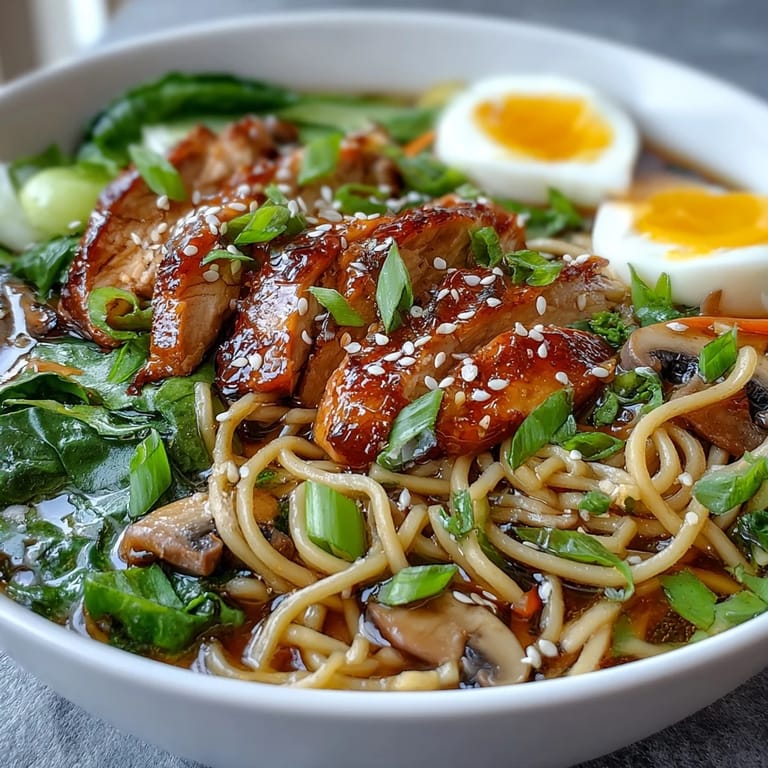
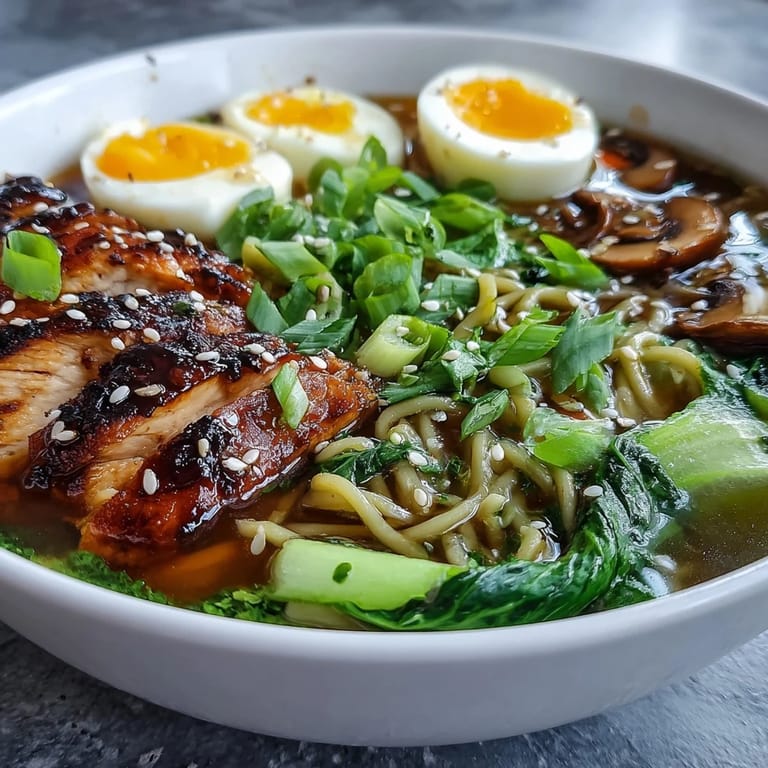
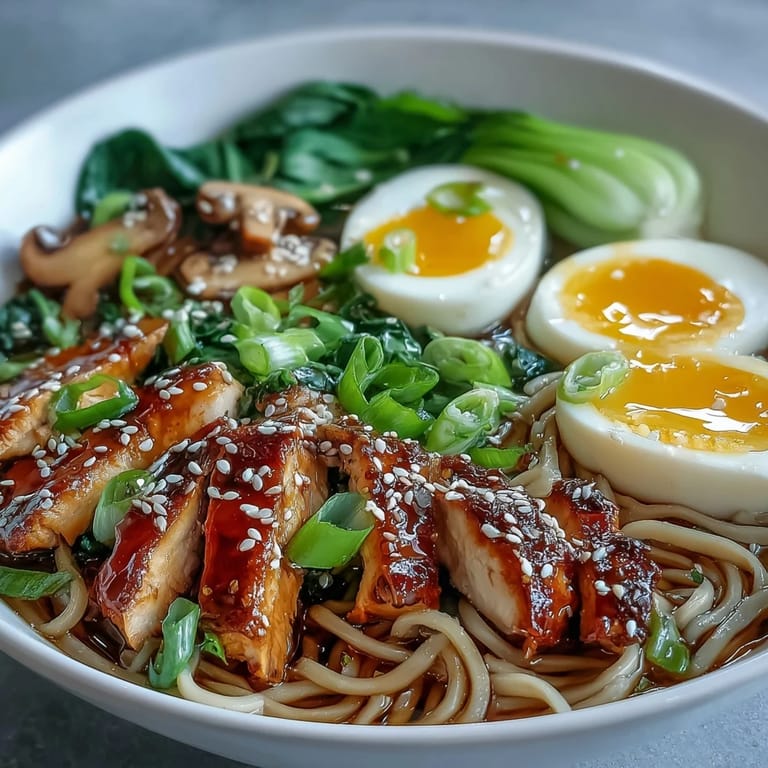
- Divide the noodles between two bowls, arrange sliced chicken on top, and ladle hot broth and vegetables over the noodles. The steam rising from the bowl is part of the experience.
- Add the toppings:
- Top each bowl with soft-boiled egg halves, scallions, sesame seeds, cilantro, and nori strips. Drizzle with chili oil or Sriracha if you want heat.
- Serve immediately:
- Serve while hot for the best flavor and texture. The contrast between the warm broth, tender noodles, and crisp vegetables is at its peak right now.
 Pin it
 One evening, I made this for my neighbor who had just moved in and did not know anyone yet. We sat at my tiny kitchen table, slurping noodles and talking about our favorite places to eat. By the time we finished, the bowls were empty and we had plans to cook together the following week. Food has a way of turning strangers into friends.
Making It Your Own
This recipe is forgiving and adaptable, so feel free to swap vegetables based on what you have or what looks good at the market. I have used broccoli florets, snap peas, and even thinly sliced bell peppers with great results. If you want to make it vegetarian, replace the chicken with extra-firm tofu that has been pressed, cubed, and marinated the same way, then pan-fry until golden on all sides. The tofu soaks up the miso marinade beautifully and adds a satisfying chew.
Storing and Reheating
Store leftover broth, noodles, chicken, and toppings separately in airtight containers in the refrigerator for up to three days. When you are ready to eat, reheat the broth gently on the stovetop, warm the noodles in a strainer under hot water, and assemble fresh bowls. This method keeps the noodles from turning mushy and the vegetables from losing their color. I actually prefer the second-day bowl sometimes because the flavors have had time to deepen.
Customizing the Heat and Flavor
If you love spice, stir a teaspoon of gochugaru or red pepper flakes into the broth while it simmers, or drizzle chili oil over the finished bowl. For a richer, creamier broth, whisk in a tablespoon of tahini or peanut butter along with the miso paste. I have also added a splash of lime juice at the end for a bright, citrusy finish that cuts through the richness. Do not be afraid to taste and adjust as you go.
- Try adding a handful of edamame or corn for extra texture and sweetness.
- Garnish with pickled ginger or a few drops of black vinegar for a tangy contrast.
- If you want more protein, add a second egg or a few cooked shrimp to each bowl.
 Pin it
 This bowl has become my answer to long days, cold nights, and moments when I need something nourishing that does not take forever. I hope it brings you the same kind of warmth and comfort it has brought to my kitchen.
Frequently Asked Questions
- → Can I make this vegetarian?
Yes, substitute chicken with extra-firm tofu and use vegetable broth instead of chicken broth. The miso and soy sauce will still provide plenty of savory depth.
- → What type of noodles work best?
Soba noodles made from buckwheat are traditional, but whole wheat spaghetti or rice noodles also work well. For gluten-free options, use 100% buckwheat soba or dedicated gluten-free noodles.
- → How long should I marinate the chicken?
Minimum 30 minutes for basic flavor absorption, but marinating overnight yields more tender, flavorful meat. Bring refrigerated chicken to room temperature before cooking for even results.
- → Can I prepare components in advance?
Absolutely. Marinate chicken up to 8 hours ahead, cook noodles and vegetables separately, then store broth apart from solids to maintain texture. Reheat broth and assemble when ready to serve.
- → What vegetables can I substitute?
Bok choy, snow peas, and spinach are classic choices, but broccoli, edamame, snap peas, or sliced bell peppers also work beautifully. Adjust cooking times based on vegetable density.
- → Is this suitable for meal prep?
Perfect for meal prep. Store broth, noodles, chicken, and vegetables in separate containers. Reheat broth on the stove, then combine with other components just before eating for best texture and flavor.