 Save
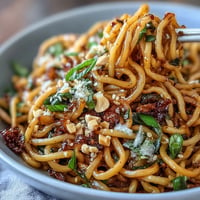
Save There's something almost meditative about the moment when hot oil hits cold ginger and scallions—that sharp sizzle that fills your kitchen with a fragrance so good it stops you mid-thought. I discovered this noodle dish on a quiet weeknight when I had nothing but pantry staples and the desperate hope of eating something memorable. What emerged was this perfectly balanced bowl: silky noodles coated in a sauce that tastes like it took hours to develop, yet comes together faster than you'd believe.
I made this for my partner one rainy evening when we were both tired from work, and I watched their face change the moment they took that first bite. They looked up and asked what restaurant I'd been hiding visits to, which honestly felt like the highest compliment. Now it's become our default emergency dinner—the one we reach for when we need something nourishing but don't have the energy for anything complicated.
Ingredients
- Wheat noodles (lo mein, udon, or ramen): Use 350g total; these absorb the sauce beautifully and have just the right texture when they're still slightly warm but not piping hot.
- Scallions: Slice them finely (about the width of a thin coin) so they release their flavor and distribute evenly through the sauce.
- Fresh ginger: Mince it finely so every noodle gets flecks of that warm, almost spicy kick; pre-grated ginger won't give you the same textural experience.
- Garlic cloves: Use three and mince them small so they soften when the hot oil hits them and become almost sweet.
- Neutral oil: Heat it until it shimmers because that's the moment it's hot enough to open up all those aromatic flavors in the ginger and garlic.
- Soy sauce: This is what adds umami depth; don't skip it or use it sparingly.
- Rice vinegar: Just enough to brighten everything without making it sour; it's the balance point in the sauce.
- Toasted sesame oil: A teaspoon might seem small, but it's what makes people ask what's in this.
- Sugar: One teaspoon rounds out the flavors and softens any sharp edges from the vinegar and soy.
- Baby bok choy or alternative greens: Choose whatever is freshest at the market; tender greens wilt in seconds once they hit the hot pan.
- Snap peas or snow peas: These stay crisp and add a sweet crunch that balances the richness of the sauce.
- Toasted sesame seeds and fresh chili: These are the final flourish that make the dish feel intentional and restaurant-quality.
Tired of Takeout? 🥡
Get 10 meals you can make faster than delivery arrives. Seriously.
One email. No spam. Unsubscribe anytime.
Instructions
- Cook your noodles until just tender:
- Bring a large pot of water to a rolling boil, add noodles, and cook according to package time (usually 4–8 minutes depending on the type). Drain in a strainer, rinse quickly with cold water to stop them cooking, then set them aside in a clean bowl.
- Prepare the aromatics for the sauce:
- In a heatproof bowl that can handle hot oil, combine your finely sliced scallions, minced ginger, and minced garlic. This is your flavor foundation, so take a moment to make sure everything is finely cut.
- Heat the oil until it shimmers:
- Pour 1/4 cup neutral oil into a small saucepan and set it over medium-high heat. Watch it carefully—when it just begins to shimmer (not smoke), you'll know it's ready. This usually takes 2–3 minutes.
- Bloom the aromatics with hot oil:
- Slowly and carefully pour the hot oil over your scallion-ginger-garlic mixture; it will sizzle dramatically and smell absolutely incredible. Let it sit for a moment to let the heat do its work, then stir gently to combine.
- Build the sauce:
- Add soy sauce, rice vinegar, toasted sesame oil, sugar, and white pepper to your bloomed aromatics. Stir everything together until the sugar dissolves and the sauce smells balanced and rich. Taste it—it should be savory with brightness and a hint of sweetness.
- Sauté your greens quickly:
- Heat 1 tablespoon oil in a large skillet or wok over medium-high heat. Add your chopped bok choy and snap peas, sprinkle with salt, and sauté for just 2–3 minutes until they're tender but still vibrant green. Don't overcook them—this is where they lose their texture.
- Coat the noodles in sauce:
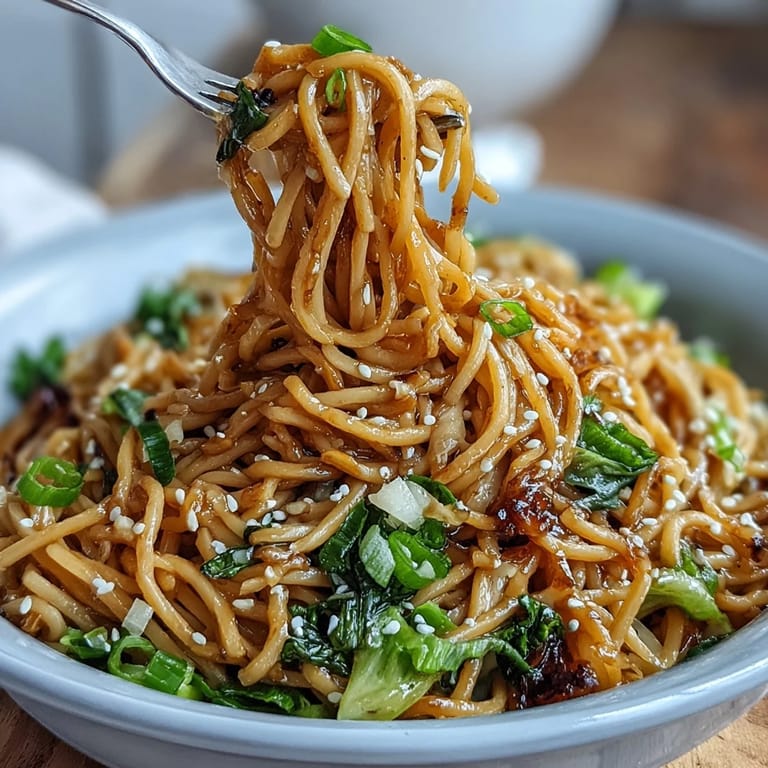
- Transfer your drained noodles to a large mixing bowl, pour the ginger-scallion sauce over them, and toss everything together until every strand is evenly coated. The sauce should cling to the noodles and smell intoxicating.
- Assemble and garnish:
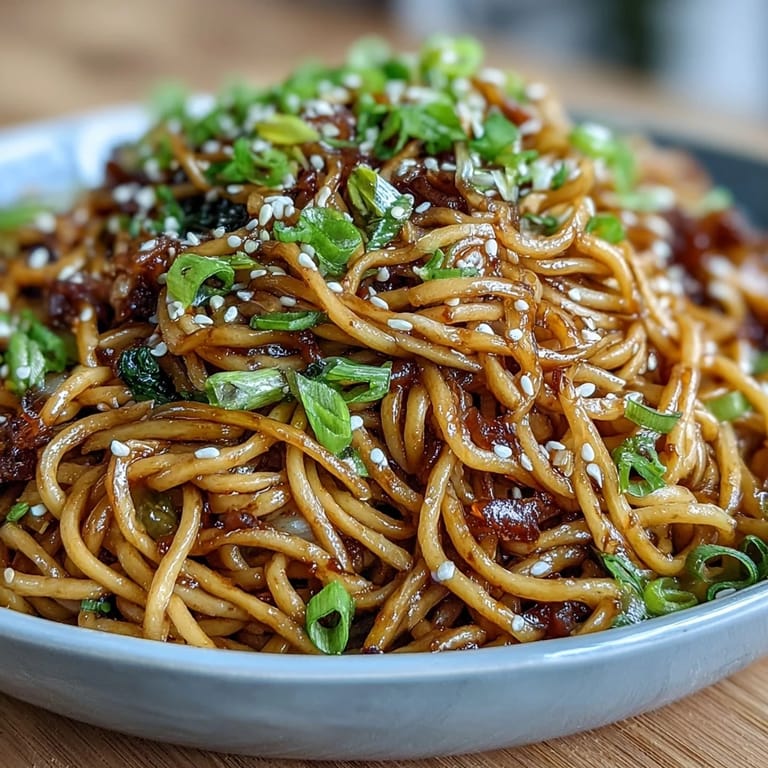
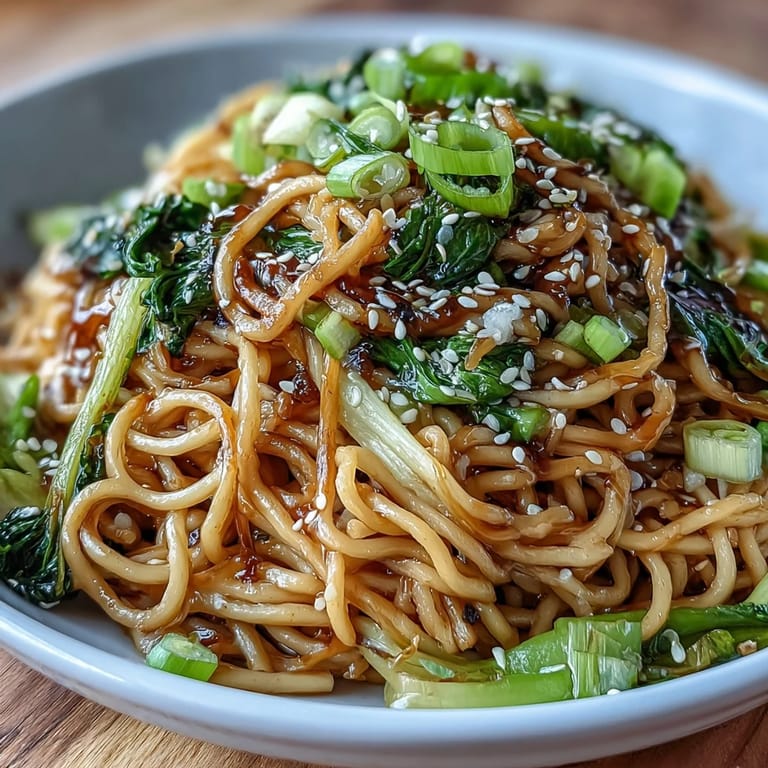
- Divide the noodles among bowls, top each with some of the sautéed greens, and finish with toasted sesame seeds, extra sliced scallions, and thin slices of fresh chili if you like heat. Serve immediately while everything is still warm.
 Pin it
 There was an afternoon when my neighbor smelled this cooking and literally knocked on my door asking what I was making. We ended up sharing a bowl at my kitchen counter, and that simple act of feeding someone made me realize this dish is more than just noodles—it's an invitation. The aroma alone does half the work for you.
Why the Oil-Blooming Technique Matters
Most home cooks overlook this step and just mix cold oil with the aromatics, which is a missed opportunity. When you heat oil until it shimmers and then pour it over fresh ginger, scallions, and garlic, you're essentially tempering those raw flavors into something warm, mellow, and infinitely more complex. The heat softens the sharp edges and coaxes out oils and essences that wouldn't develop any other way. It's a technique borrowed from Asian cooking that transforms simple ingredients into something that tastes intentional and sophisticated.
Choosing Your Greens and Making Substitutions
Baby bok choy is my default because it's tender, has a mild flavor that doesn't compete with the sauce, and wilts at exactly the right pace. But I've made this with spinach on busy weeknights, kale when I wanted something with more bite, and chard when that's what looked fresh at the market. The key is to choose something that won't overpower the delicate balance of ginger and scallion. If you're using tougher greens like kale, chop them smaller so they cook through in the limited time you have them on heat.
Building Flavor Layers and Balancing the Sauce
This dish teaches you something fundamental about cooking: that a great sauce isn't one ingredient doing all the work, but several working in harmony. The soy sauce provides umami and saltiness, the vinegar adds brightness and cuts through richness, the sesame oil brings nuttiness and depth, and the sugar softens everything and helps flavors meld. I've learned to taste constantly as I build the sauce, adjusting as I go. If it tastes too salty, add a pinch more sugar. Too sharp? More sesame oil. This intuitive tasting is what separates good cooking from great cooking.
- Start with less sauce and add more if needed—you can always increase, but you can't take it back.
- The sauce should coat your noodles and cling to them, not pool at the bottom of the bowl.
- Make the sauce first so it can cool slightly before tossing with noodles, preventing them from getting mushy.
 Pin it
 This recipe has become my go-to proof that simple ingredients, when treated with respect and intention, create something that feels restaurant-quality but is genuinely weeknight-friendly. It's the kind of dish that reminds you why you love cooking in the first place.
Frequently Asked Questions
- → What type of noodles work best in this dish?
Wheat noodles like lo mein, udon, or ramen bring a chewy texture, but rice noodles can also be used for a gluten-free option.
- → How is the ginger-scallion sauce prepared?
Fresh scallions, ginger, and garlic are combined, then hot neutral oil is poured over to release their flavors, followed by soy sauce, rice vinegar, sesame oil, sugar, and pepper for balance.
- → Can I substitute the greens used here?
Yes, baby bok choy can be swapped for spinach, kale, chard, or any preferred seasonal greens for variety.
- → How can I adjust the heat level of the dish?
Adding sliced fresh chili or mixing chili oil into the sauce offers extra spiciness according to taste.
- → What protein options complement this noodle preparation?
Tofu, tempeh, or shredded chicken can be added for extra protein without overpowering the vibrant flavors.