 Save
Save I still remember the moment my niece asked me to create something for her biology class potluck that would make everyone smile. She wanted science brought to life, literally. That's when I thought of building a DNA double helix out of food—something edible, something that would spark conversations. I spent an afternoon arranging colorful vegetables and cheese on a board, twisting them into those iconic parallel strands, and when I saw her face light up, I knew this appetizer had become more than just a dish. It's become my secret weapon for impressing guests and celebrating curiosity at the table.
I'll never forget serving this at my friend Marcus's surprise birthday party. He's a genetics researcher, and when he walked into the kitchen and saw the DNA helix on the board, he actually gasped. He spent twenty minutes just examining it, pointing out the rungs and the twist, and it became the centerpiece of the entire evening—more memorable than the birthday cake, honestly.
Ingredients
- Black olives, pitted and sliced (100 g): These create a bold, dark anchor for one strand of your helix. I learned to pit them myself rather than buying pre-pitted ones—they taste fresher and you avoid that metallic flavor. Drain them well so they don't make your board soggy.
- Cherry tomatoes, halved (100 g): The vibrant red provides stunning visual contrast. Choose tomatoes that are just ripe, firm enough to slice cleanly but sweet enough to remind people this is delicious, not just decorative.
- Cucumber, cut into thin half-moons (100 g): The pale green brings freshness and a cool crunch. I slice mine on a mandoline to keep them uniform and elegant—it makes the whole presentation feel intentional.
- Roasted red peppers, sliced (100 g): Buy these jarred and save yourself an hour. They're already sweet and silky, and they catch the light beautifully on the board.
- Smoked salmon or marinated tofu strips (100 g, optional): This adds protein and sophistication. For a vegetarian version, marinated tofu works beautifully and absorbs flavors better than you'd expect.
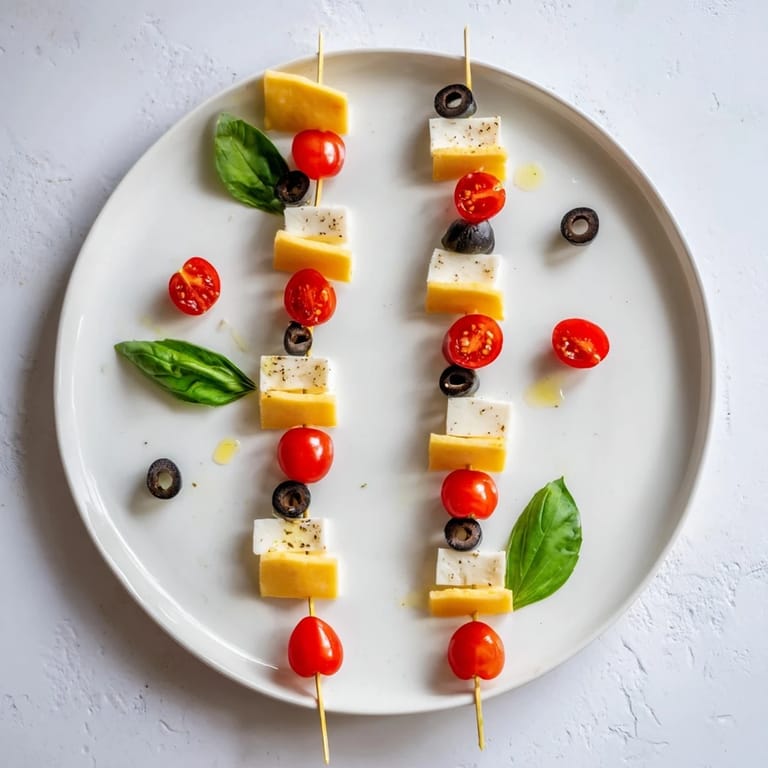
- Mozzarella cheese, cut into thin strips or small cubes (150 g): This is your connective rungs. Fresh mozzarella is ideal—it's mild and lets other flavors shine. Cut it just before assembling so it stays soft and pliable.
- Cheddar cheese, cut into thin strips or small cubes (100 g): A sharper, deeper flavor that balances the mozzarella. The color variation between the two cheeses enhances the visual effect.
- Fresh basil leaves (50 g): Tuck these along the strands for color and aroma. They wilt slightly as they sit, which actually makes them cling better to your creation.
- Crackers or gluten-free crackers (50 g, optional): Serve alongside for people who want something to build with, or skip them entirely if you want the helix to be the main event.
- Olive oil (1 tbsp): A light drizzle at the end brings all the colors to life and adds a subtle richness. Use your best oil—this is the final touch that matters.
- Freshly ground black pepper, to taste: Added at the very end, this grounds the entire arrangement with a tiny bit of heat and earthiness.
Tired of Takeout? 🥡
Get 10 meals you can make faster than delivery arrives. Seriously.
One email. No spam. Unsubscribe anytime.
Instructions
- Visualize Your Canvas:
- Start with your large serving board or platter in front of you. Take a moment to imagine two long, gently twisting lines running parallel to each other. This isn't a straight geometry project—let the lines curve slightly, mimicking how a real helix spirals and dances. You're about to create edible art.
- Build Your First Strand:
- Using one type of ingredient, create the first parallel line by arranging items in a gentle S-curve or spiral pattern. Black olives work beautifully for this—their dark, glossy surfaces create an anchor. Don't worry about perfection; nature isn't perfectly straight.
- Build Your Second Strand:
- Using a contrasting ingredient like cherry tomato halves, create a second parallel line that mirrors the curve of your first. The visual contrast between the two ingredients is what makes this come alive. Step back and look at what you're creating from the side—you should see that DNA-like twist emerging.
- Layer in Variety:
- Now weave in additional ingredients between your two main lines. Cucumber half-moons and roasted red peppers create depth and fill the space, building visual richness. If you're using smoked salmon or marinated tofu, arrange these thoughtfully—they add a gourmet touch. Think of this as adding dimension to your design.
- Connect with Cheese Rungs:
- This is where the magic happens. Take your mozzarella and cheddar strips and lay them perpendicularly across the two parallel lines, connecting them like the base pairs in actual DNA. Space them about 3 to 4 inches apart along the length of your helix. Alternate between mozzarella and cheddar for visual interest. These rungs are functional and beautiful—they hold the concept together literally and visually.
- Garnish with Basil:
- Tuck fresh basil leaves along your two main strands. They should sit naturally in the curves and hollows of your vegetables, adding pops of green and releasing their fragrance when guests lean in to examine your work.
- Final Touches:
- Drizzle the entire creation with olive oil in a thin, controlled stream. Watch how it catches and highlights each ingredient. Finish with a whisper of freshly ground black pepper scattered across the top. This final seasoning ties everything together and invites people to taste what they're looking at.
- Present and Serve:
- Arrange crackers on the side if you're using them, or place small serving tongs nearby so guests can pick pieces to sample. Stand back and admire your work. This is a centerpiece that happens to be delicious.
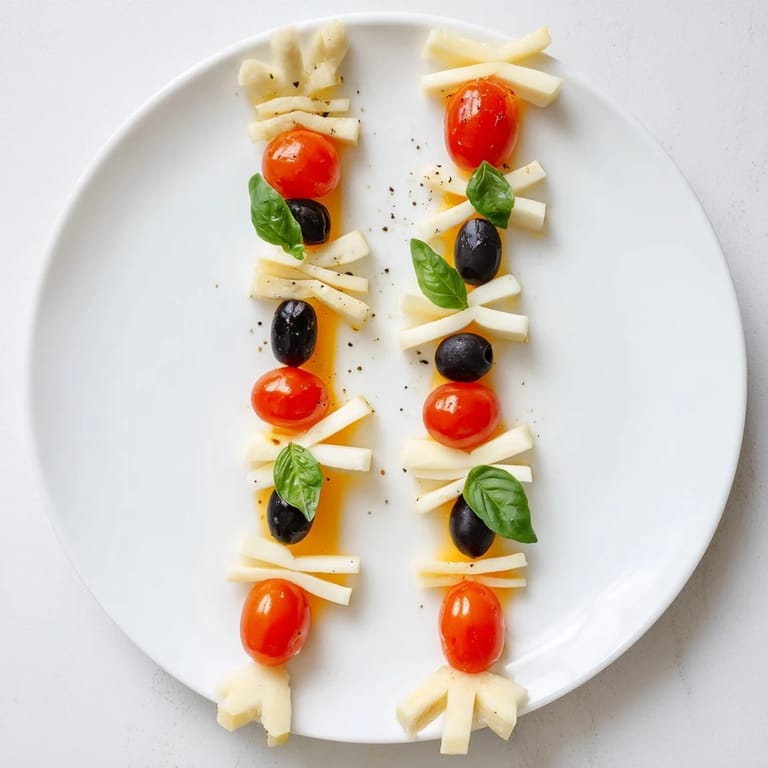 Pin it
 What struck me most about making this recipe repeatedly is that it changed how people interact with food at gatherings. Instead of everyone clustering around the cheese board, they gather around this, pointing and talking and getting curious. Food became a conversation starter, a teaching moment, a memory. That's when I realized this wasn't just an appetizer—it was a way to bring people together through science and creativity.
The Art of Arrangement
Building a food helix taught me something unexpected about kitchen work: it's an art form that requires both precision and intuition. You need to think about color theory—which ingredients will pop next to each other, which will fade into the background. You need to consider height and texture so that when light hits your board, every element shows. I started sketching my designs on paper first, mapping out where dark ingredients would sit next to bright ones, where the eye would naturally travel. It sounds fussy, but honestly, that five minutes of planning made every execution smoother. You're not just placing ingredients; you're composing a visual story that says, 'I cared enough to think about this.'
Customization and Flexibility
The beauty of this recipe is that it's a template, not a decree. I've made versions with artichoke hearts, caramelized onions, fresh mozzarella balls, smoked cheddar—whatever was in my kitchen or what my guests preferred. The DNA concept stays the same; the ingredients become a conversation about what tastes good together. This flexibility means you can make it in summer with peak tomatoes and fresh basil, or in winter with roasted root vegetables and aged cheeses. It's also infinitely adaptable for dietary restrictions. Use vegan cheese and marinated mushrooms instead of salmon, and suddenly you have a plant-based showstopper that feels just as sophisticated.
Why This Works for Every Occasion
I've served this at birthday parties, corporate events, casual dinner parties, and educational settings. What I've learned is that it transcends the typical appetizer role. It's substantive enough that people feel satisfied nibbling on it, visual enough that it photographs beautifully for social media, and conceptual enough that it sparks genuine conversation. It's gluten-free without feeling like a limitation, vegetarian without being boring, no-cook without being lazy. It checks boxes you didn't even know needed checking.
- Pair it with crisp white wine or sparkling water with lemon for a refreshing combination that lets the fresh vegetables shine.
- If you're worried about things shifting, use small decorative skewers inserted vertically to anchor the rungs in place—it adds another layer of visual interest too.
- Make this the centerpiece of a science-themed party, a biology class event, or just a dinner where you want people to remember how thoughtful you are.
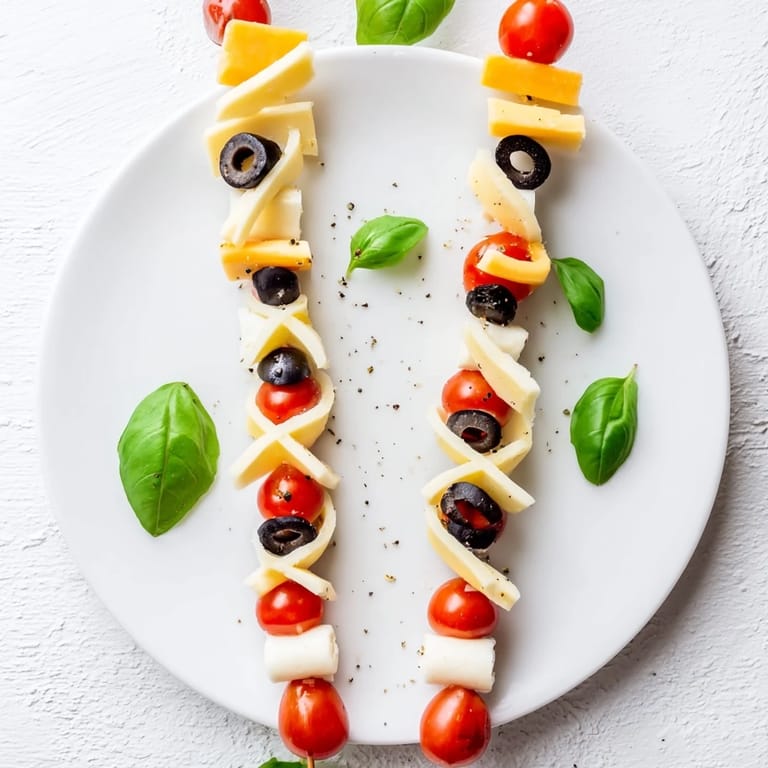 Pin it
 Every time I make this dish, I'm reminded that food is more than sustenance—it's a way of saying, 'I thought about you, I created something beautiful for you, I brought science and art and flavor to your table.' That's the real helix here: the connection it creates.
Frequently Asked Questions
- → What ingredients create the twisted lines?
Black olives, cherry tomatoes, cucumber slices, roasted red peppers, and optionally smoked salmon or marinated tofu form the twisting parallel lines.
- → How are the cheese rungs arranged?
Mozzarella and cheddar strips or cubes are placed perpendicularly between the two lines to resemble connecting rungs in a double helix structure.
- → Can this appetizer be adapted for a vegan diet?
Yes, substituting smoked salmon with marinated tofu and using plant-based cheeses makes this dish suitable for vegan diets.
- → What is the best way to serve this dish?
Arrange on a large serving board, drizzle lightly with olive oil, season with freshly ground black pepper, and optionally serve with crackers on the side.
- → How long does preparation take?
About 25 minutes, with no cooking required, making it a quick and easy appetizer to assemble.
- → What flavors enhance the overall experience?
Fresh basil adds aroma and freshness, while the combination of olives, vegetables, cheese, and olive oil provides a balanced medley of flavors and textures.