 Save
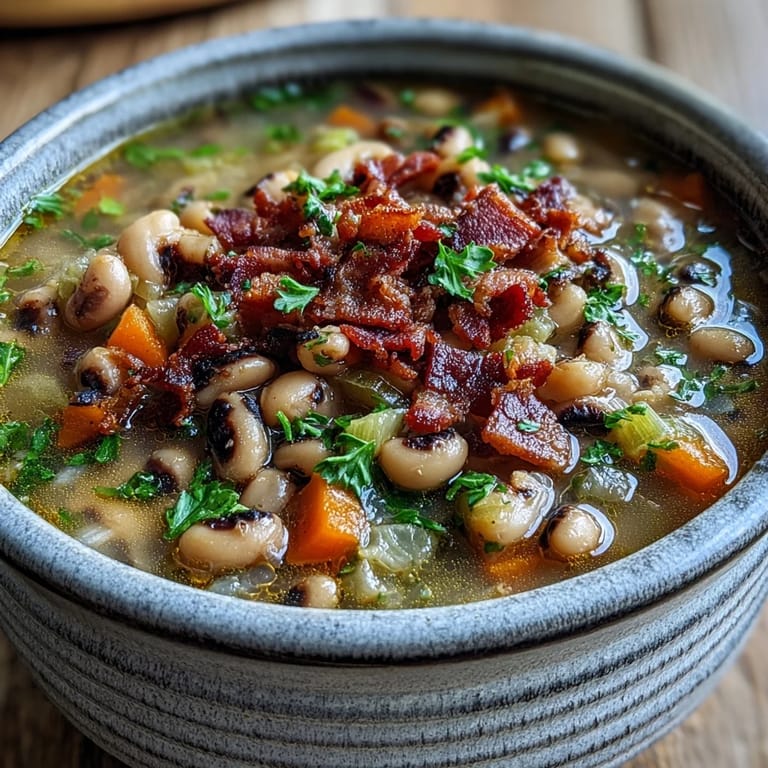
Save There's something about a bowl of black-eyed peas and bacon soup that stops time. My grandmother used to make it on cold mornings, the kind where your breath shows before you even open the back door, and the kitchen would fill with this incredible smoky warmth that made you forget how bitter it was outside. I didn't appreciate it then the way I do now, but somewhere between my twenties and today, I realized I was craving exactly that feeling—the one where soup becomes a small act of taking care of yourself. This version is her memory translated into a recipe I can actually follow without calling her.
I made this for my partner on a Sunday when we'd spent all morning at the farmer's market and came home exhausted. Instead of ordering takeout, I pulled out the pot and started browning bacon, and by the time the house smelled like it had been simmering for hours, suddenly we weren't tired anymore. We sat at the kitchen counter with bowls in our hands, not talking much, just listening to the sound of spoons against ceramic and the rain starting outside. That's when I knew this recipe belonged in regular rotation.
Ingredients
- Smoked bacon, 8 oz diced: Don't skip the smoking—it's the whole flavor backbone, and rendering it first seasons the entire pot without needing extra oil or butter.
- Black-eyed peas, 2 cups dried (soaked overnight) or 3 cans: If you're using dried, the overnight soak isn't just tradition; it cuts cooking time and makes them tender instead of splitting apart.
- Yellow onion, 1 medium finely chopped: The size matters here because you want them to nearly dissolve into the broth, creating body without chunks.
- Carrots, 2 medium diced: Carrots add natural sweetness that balances the salt and smoke perfectly.
- Celery, 2 stalks diced: This is the holy trinity talking—celery builds flavor depth that most people never notice but absolutely taste.
- Garlic, 3 cloves minced: Add it after the vegetables soften so it doesn't burn and turn bitter.
- Low-sodium chicken broth, 6 cups: Low-sodium lets the bacon and peas shine; you'll season at the end when you actually taste it.
- Bay leaf, thyme, smoked paprika, black pepper: Bay leaf is your silent partner here, and the paprika echoes the bacon's smoke without overpowering.
- Fresh parsley for garnish: It's not decoration—it brightens the whole bowl at the last second.
Tired of Takeout? 🥡
Get 10 meals you can make faster than delivery arrives. Seriously.
One email. No spam. Unsubscribe anytime.
Instructions
- Render the bacon until it shatters:
- Cut your bacon into small dice and lay it into a cold pot, then turn the heat to medium. Watch it slowly turn golden, listening for the sizzle to get quieter as it releases its fat. By 6 to 8 minutes, it should be crisp enough that it breaks between your fingers.
- Build your flavor base with the trinity:
- Use a slotted spoon to pull out the bacon and set it aside, leaving every drop of that rendered fat behind. Chop your onion, carrots, and celery into small, uniform pieces, then add them all at once to the hot fat. Stir occasionally for 5 to 6 minutes until the onion starts turning translucent and you can smell the carrots releasing their sweetness.
- Wake up the garlic:
- Add your minced garlic and give it a full minute—just time enough to stop smelling raw and start smelling alive. Don't walk away or it'll turn acrid.
- Bring the pot together:
- Dump in your drained peas, pour in the broth, then add the bay leaf, thyme, paprika, and pepper. Stir once to make sure nothing's stuck to the bottom, then bring it to a rolling boil, which takes about 5 minutes.
- Let it simmer and do the work:
- Cover the pot, turn the heat down to low, and ignore it for 30 to 35 minutes if you used dried soaked peas, or just 20 minutes if you used canned. The peas will soften completely and start to break down slightly, thickening the broth on their own.
- Find your salt balance:
- Fish out the bay leaf, then taste the soup before adding any salt—the bacon and broth already contributed plenty. Season gradually until it tastes like comfort.
- Serve with ceremony:
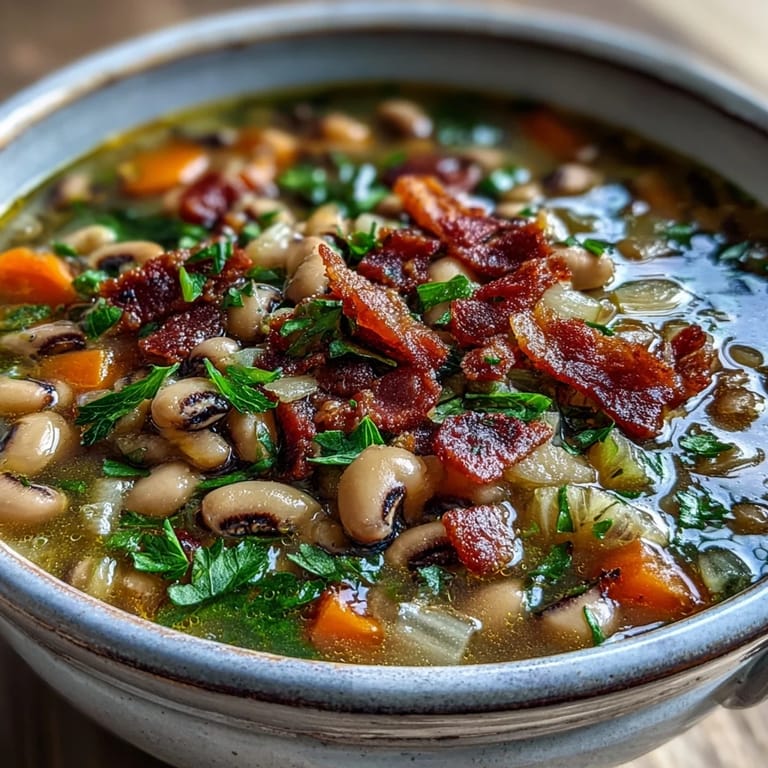
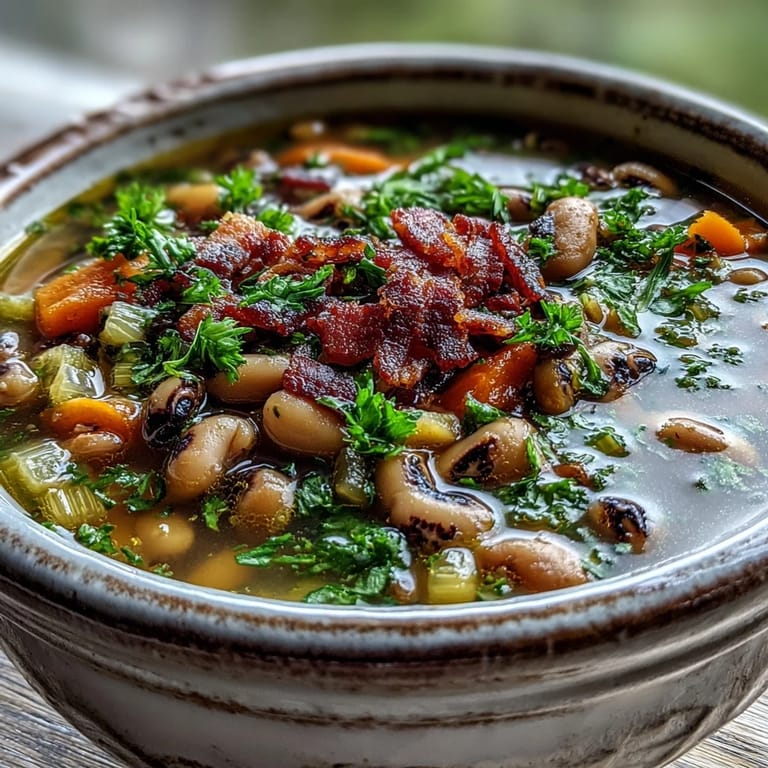
- Ladle into bowls, sprinkle with that reserved bacon and fresh parsley, and serve it hot enough to steam.
 Pin it
 My neighbor came by unexpectedly one afternoon and caught me halfway through making this, and she stayed just to smell it. We ended up eating bowls together at my small kitchen table, and she told me stories I'd never heard before about her own kitchen growing up in Georgia. Food has a way of unlocking those conversations, doesn't it? That's when I realized this soup was less about nutrition or efficiency and more about creating the kind of moment that makes a house feel like a home.
Dried Versus Canned, and Why It Actually Matters
I've gone back and forth, and honestly, both work. Dried peas that you've soaked overnight give you more control and a slightly earthier flavor, plus they've got a texture that's almost creamy when they start to break down. Canned peas are faster and more forgiving, and there's zero shame in that—some nights you need soup in 45 minutes, not an hour. The real lesson is not to mix the two or you'll end up with some peas that are mushy and others still toothy.
The Bacon Fat is Non-Negotiable
Years ago I tried making this with the bacon cooked separately and then added back in at the end, thinking I could save the fat and drain it off to make it lighter. What a mistake. The whole soup tasted flat and one-dimensional, like I'd cooked it in olive oil instead of smoke and tradition. That rendered bacon fat coating the vegetables is where the magic actually lives—it's infusing every layer with flavor that no amount of seasoning powder can replicate. If you're concerned about fat content, just have a smaller bowl; don't rob yourself of the real thing.
Make It Your Own
This is the skeleton, but it loves company. Some people add hot sauce at the end, others swear by a splash of apple cider vinegar to brighten it up. I've thrown in collard greens or kale in the last ten minutes, and they absorb the broth like they were meant to be there all along. You could skip the bacon entirely and use vegetable broth with a dash of liquid smoke if that's where your kitchen lives.
- Collard or kale greens added in the last 10 minutes turn this from soup into a full meal without feeling heavy.
- A pinch of cayenne or a dash of hot sauce at the table lets people adjust heat to their own preference.
- Serve alongside cornbread or crusty bread because something about dunking matters.
 Pin it
 This soup has a way of showing up exactly when someone needs it, whether that's you on a Tuesday night or a friend who just needs a reason to sit down together. It's the kind of cooking that changes nothing about the world and changes everything about the moment.
Frequently Asked Questions
- → Can I use canned black-eyed peas instead of dried?
Yes, you can substitute three 15-ounce cans of black-eyed peas, rinsed and drained. Reduce the simmering time to about 20 minutes since the peas are already tender.
- → How do I make this vegetarian?
Omit the bacon and use vegetable broth instead of chicken broth. Add a dash of liquid smoke to maintain the smoky flavor that bacon provides.
- → Can I freeze this soup?
This soup freezes well for up to 3 months. Let it cool completely before transferring to airtight containers. Thaw overnight in the refrigerator before reheating.
- → What goes well with this soup?
Cornbread or crusty bread pairs perfectly. You can also add chopped greens like collard greens or kale during the last 10 minutes of simmering for extra nutrition.
- → Do I need to soak the peas overnight?
Using dried peas requires overnight soaking for even cooking. If you're short on time, canned black-eyed peas work perfectly and skip the soaking step entirely.