 Save
Save There's a particular Tuesday evening I won't forget, when my neighbor came home from Bangkok and brought back a jar of Thai curry paste she'd bought at a night market. She made this Tom Kha Gai in her kitchen while I sat at her counter, and the smell—coconut, lemongrass, lime all mingling together—was so intoxicating that I had to learn it myself that very week. Now whenever I make it, I'm transported back to that moment of culinary revelation, though my version has become something entirely my own through happy accidents and late-night tweaks.
I made this for my partner during a particularly dreary February, when we were both working from home and the idea of opening a takeout container felt depressing. Instead, I simmered this pot on the stove while we worked, and the gentle bubbling became a kind of background meditation. By lunchtime, the entire apartment smelled like a Thai restaurant, and something about that shifted the whole mood of the day.
Ingredients
- Boneless, skinless chicken breast (400 g), thinly sliced: Slice against the grain if you want tender pieces that won't turn rubbery—I learned this the hard way after my first batch turned into little rubber nuggets.
- Chicken stock (800 ml): Use the best quality you can find or make your own; it's the foundation, and watery stock will make watery soup.
- Full-fat coconut milk (400 ml, one can): Don't reach for lite or reduced-fat versions here—the richness is non-negotiable for authentic flavor and silky texture.
- Lemongrass stalks (2), trimmed and smashed: Smashing releases the fragrant oils; I use the side of my knife and really lean into it, which is oddly therapeutic.
- Kaffir lime leaves (4), torn: These citrus-forward leaves are essential, but if you can't find them, lime zest works as a backup (though the flavor is never quite identical).
- Galangal (3 slices) or ginger: Galangal has a sharper, more peppery bite than ginger, so if you substitute, use slightly less and taste as you go.
- Thai bird's eye chilies (3), crushed: These tiny things pack a serious punch, so start with one and add more if you're brave—or if you're cooking for people who actually enjoy heat.
- Garlic (4 cloves), smashed: Smashing rather than mincing keeps the garlic in larger pieces you can remove later, which I prefer for texture.
- Small shallots (4), sliced: Shallots add a gentle sweetness that regular onions would overpower; they dissolve slightly into the broth and become part of the magic.
- Oyster or white mushrooms (200 g), sliced: Any mushroom works, but oyster mushrooms have a delicate flavor that won't compete with the coconut and lime.
- Cherry tomatoes (100 g), halved: They burst during cooking and add brightness—I've used regular tomatoes and it's fine, but cherry tomatoes are worth seeking out for their sweetness.
- Fish sauce (2½ tbsp): This is the umami backbone; it's pungent on its own but transforms into savory depth in the finished soup.
- Fresh lime juice (1½ tbsp): Squeeze it fresh; bottled lime juice tastes like regret.
- Palm sugar (1 tsp) or light brown sugar: This balances the heat and salt, creating a subtle sweetness that most people won't even consciously notice but will definitely miss if it's absent.
- Salt (½ tsp): Start with this amount and add more after tasting, since fish sauce already brings salinity to the party.
- Fresh cilantro, sliced green onions, lime wedges, thinly sliced red chili for garnish: These aren't optional flourishes—they're flavor and textural contrasts that make each spoonful interesting.
Tired of Takeout? 🥡
Get 10 meals you can make faster than delivery arrives. Seriously.
One email. No spam. Unsubscribe anytime.
Instructions
- Build Your Aromatic Base:
- Pour the chicken stock into a large saucepan and bring it to a gentle boil over medium-high heat. Add the smashed lemongrass, torn kaffir lime leaves, galangal slices, crushed chilies, smashed garlic, and sliced shallots all at once, then reduce the heat to medium and let everything simmer for 5 minutes so the aromatics can release their fragrant oils into the liquid. You'll notice the broth turning golden and fragrant—that's when you know the infusion is working.
- Introduce the Chicken:
- Slice your chicken breast thin (about the thickness of a coin) and add it to the simmering broth, then reduce the heat to low-medium so it stays at a gentle simmer rather than a rolling boil. Cook for 5 to 7 minutes until the chicken is completely white and cooked through—if you poke a piece with a spoon, it should break apart easily.
- Marry in the Coconut Milk:
- Pour the full-fat coconut milk into the pot while stirring gently, then immediately add the mushrooms and halved cherry tomatoes. The soup will become creamy and pale, and you'll notice the aroma shifting from spicy-herbaceous to rich-and-aromatic all at once. Simmer everything together for another 5 minutes, being careful not to let it boil hard or the coconut milk can separate.
- Season to Your Taste:
- Stir in the fish sauce, fresh lime juice, palm sugar, and salt, then taste a spoonful of broth before deciding if anything needs adjustment. Some people want more lime brightness, others need more fish sauce depth—this is your moment to make it exactly how you like it.
- Optional Finishing Touch:
- Use a slotted spoon to fish out the larger aromatics (lemongrass stalks, galangal slices, smashed garlic cloves) if you prefer a cleaner presentation, though leaving them in is traditional and adds continued flavor as you eat. Some people enjoy biting into soft pieces of lemongrass and galangal, so this is entirely personal preference.
- Serve With Joy:
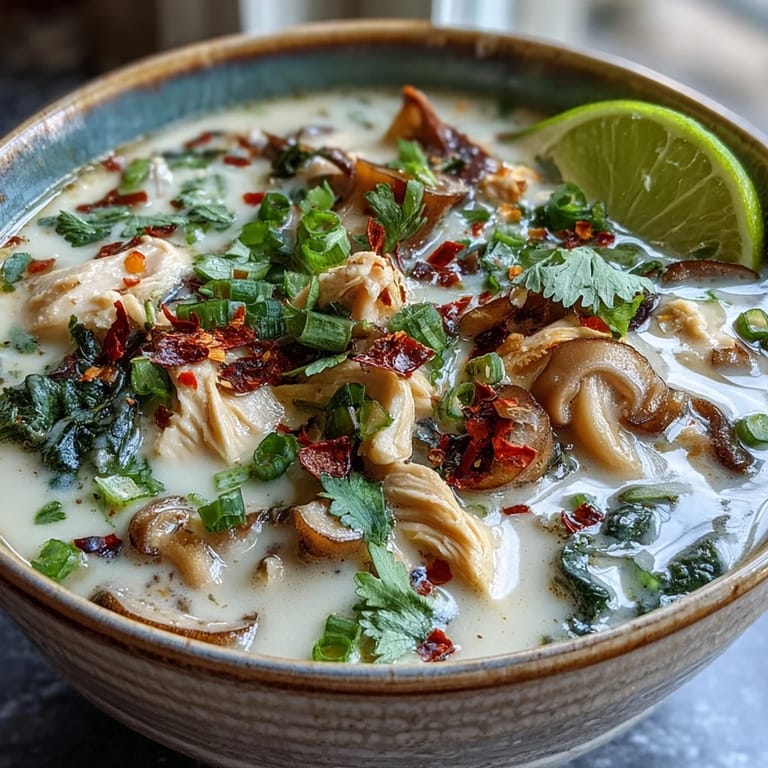
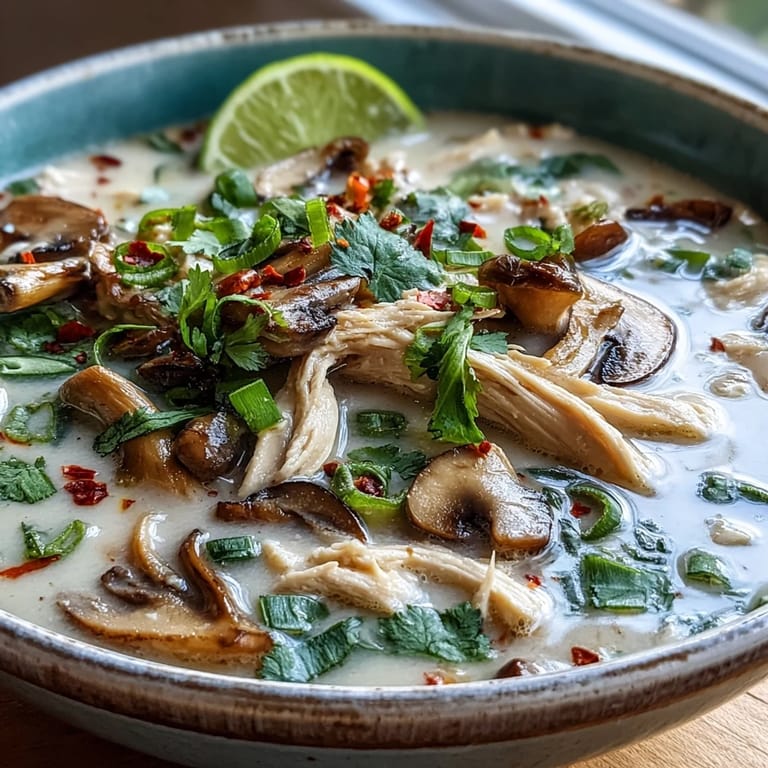
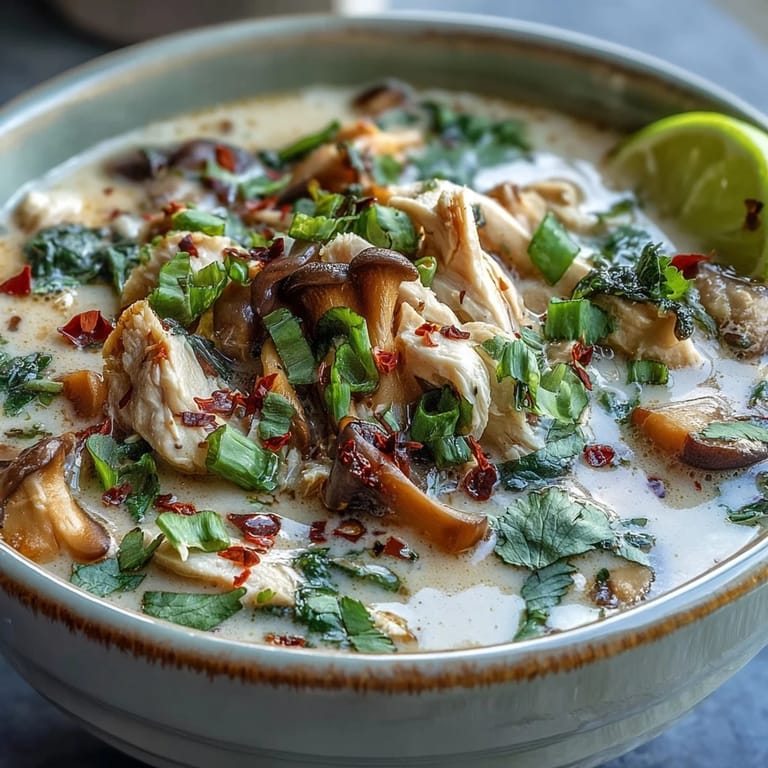
- Ladle the soup into bowls and top each one with a generous handful of fresh cilantro, sliced green onions, a wedge of lime to squeeze in, and extra sliced red chili if you're feeling spicy. Serve immediately while it's steaming and the herbs are still bright and aromatic.
 Pin it
 My most surprising moment with this soup came when I made it for a dinner party and someone who claimed to hate cilantro ate three bowls. Watching people hunched over their bowls, unselfconsciously slurping, stealing each other's lime wedges—that's when I realized this soup had become more than a recipe in my life; it was something I could offer that made people feel welcomed and cared for.
The Difference Between Good and Great Tom Kha Gai
The distinction comes down to two things: respecting the aromatics and not rushing the infusion. I've made versions where I dumped everything in at once, and the result was muddy and flat. The moment I started treating those first 5 minutes like a sacred ritual—actually listening to the pop and sizzle, actually smelling how the broth transforms from plain to fragrant—everything changed. It's the difference between feeding yourself and creating an experience.
Playing With Heat and Balance
Heat in this soup isn't about burning your mouth; it's about creating flavor dimension. Three Thai chilies gives you a noticeable kick, but I've learned to add them whole and slightly crushed rather than finely chopped, which means guests can bite into bigger pieces if they want more heat or avoid them if they don't. The interplay between heat, lime acidity, and coconut sweetness is what makes this soup so craveable—mess with one element and the whole balance shifts.
Making It Work for Everyone at Your Table
This soup adapts beautifully to different dietary preferences without losing its soul. I've made vegetarian versions with extra mushrooms and tofu, and they're genuinely delicious rather than feeling like sad compromises. The key is understanding what each element does so you can replace thoughtfully rather than just removing things.
- For vegetarian versions, use vegetable stock and swap the fish sauce for tamari or soy sauce, keeping the same volume for balanced seasoning.
- If you're cooking for people with different heat tolerances, leave the chilies whole and let each person manage their own spice level by moving them around their bowl.
- Make the soup base ahead of time and add the chicken and delicate components right before serving, which keeps everything at its best texture and temperature.
 Pin it
 This soup has become my go-to when I want to feel like I'm cooking something impressive without actually spending hours in the kitchen. It's the kind of dish that makes your whole apartment smell like a place where good things happen.
Frequently Asked Questions
- → What makes Tom Kha Gai different from other Thai soups?
Tom Kha Gai stands out for its rich coconut milk base, which creates a creamy texture unlike the clear broth of Tom Yum. The combination of galangal, lemongrass, and kaffir lime leaves gives it a distinctively aromatic and complex flavor profile.
- → Can I make this soup vegetarian?
Yes, substitute chicken with firm tofu and use vegetable broth instead of chicken stock. Replace fish sauce with soy sauce or tamari to maintain the salty depth of flavor while keeping it plant-based.
- → What can I use if I can't find galangal?
Fresh ginger makes the best substitute for galangal, though it has a slightly different flavor profile. Use the same amount and add it with the aromatics. Lime zest can help replace the citrus notes from kaffir lime leaves if needed.
- → How spicy is this soup?
The heat level depends on the Thai chilies you use. Three bird's eye chilies provide a medium spice level. Adjust to your preference by adding fewer chilies for milder heat or more for extra kick, or remove them entirely before serving.
- → Should I remove the aromatics before serving?
It's traditional to remove large pieces of lemongrass, galangal, and kaffir lime leaves as they're meant for flavor infusion rather than eating. However, leaving them adds visual appeal—just warn diners not to eat them.
- → How long does this soup keep in the refrigerator?
Store cooled soup in an airtight container for up to 3 days. The flavors often develop and improve overnight. Reheat gently over medium-low heat, being careful not to boil the coconut milk which can cause separation.